Ever looked up at your roof and had a minor panic attack? We get it. That brown patch isn’t a new desert camo trend, and that leak in the spare room isn’t a built-in water feature. Your roof is the literal hat for your house or business, and when it’s failing, the stress is real. But navigating the world of roofing can feel like trying to read a map in a hurricane—confusing, overwhelming, and you’re pretty sure you’re getting soaked.
Well, take a deep breath. We’re here to cut through the noise. We’ve been the go-to roofing company in Los Angeles for years, and we’ve seen it all, from minor roofing repair dramas to full-blown roof installation contractor sagas. Let’s have a real chat about what your roof is trying to tell you, what your options are, and how to handle it without, you know, your wallet filing for divorce.
Table of Contents
Your Roof is Talking. Are You Listening?
We often treat our roofs like that quiet, reliable friend who never complains—until they do, and then it’s a full-blown crisis. Proactive roofing maintenance is the secret handshake to avoiding 99% of roofing nightmares. It’s the difference between a small, manageable price and a catastrophic financial gut-punch.
Think about it. The sun here isn’t just sunny; it’s a relentless laser beam. Then, when it does rain, it’s like the sky forgot how to do it gently. This brutal cycle of expansion, contraction, baking, and soaking is tough on any material. A small crack in a tile roof repair job can quickly become a pathway for water to throw a party in your attic. And trust us, you don’t want to be on the guest list for that one.
So, what are the whispers before the scream? Here’s a quick checklist:
- Curled or Missing Shingles: They’re basically waving little white flags of surrender.
- Granules in the Gutters: Your asphalt shingles are shedding their protective skin. Not a good sign.
- Stains on Interior Ceilings or Walls: This is the roof’s version of sending a formal, written complaint.
- Sagging Areas: This is a five-alarm fire. Call a roof repair specialist immediately. No, seriously, stop reading and call someone. We’ll wait.
The Repair vs. Replace Conundrum (It’s Not as Scary as It Sounds)
This is the million-dollar question, isn’t it? Well, hopefully not a million, but you get the point. The decision to patch things up or go for a whole new look isn’t just about the immediate cost; it’s about the long-term health of your biggest asset.
When a Repair is Your Best Bet
If your roof is relatively young (under 15 years for most types) and the damage is localized, a repair is probably your most affordable and sensible path. This is where finding a great roofing repair team is crucial. A quality repair isn’t just slapping some tar on a hole; it’s about matching materials, addressing the root cause, and integrating the fix seamlessly with the existing structure.
For instance, a tile roof repair requires a specific skill set. You can’t just have anyone climbing up there, or you’ll end up with more broken tiles than you started with. At California Green Roofing, we treat every repair, whether it’s a residential roof repair or a larger commercial roof repairs project, with the same surgical precision. Why? Because a botched repair today is a guaranteed replacement tomorrow.
When It’s Time to Pull the Plug on the Old Roof
Let’s be honest, everything has a lifespan. If your roof is showing its age all over, constantly springing new leaks, or has suffered major storm damage, replacement is the only sane choice. You’re not just buying a new roof; you’re buying peace of mind for the next couple of decades.
A full replacement is also a golden opportunity. It’s your chance to upgrade to more durable, energy-efficient materials that can actually lower your energy bills. Modern cool-roof coatings and reflective tiles are a game-changer in our climate. IMO, if you’re already up there, you might as well get the best long-term value.
A Quick and Dirty Look at Roofing Materials
Let’s break down some common options without putting you to sleep. Here’s a simple table to give you the basics.
| Material | The Vibe | The Real Talk |
|---|---|---|
| Asphalt Shingles | The reliable, affordable workhorse. | Great for most homes. Lifespan is decent, but they take a beating from the sun. The cost is usually the biggest selling point. |
| Clay & Concrete Tiles | The classic Southern California look. | Super durable and fire-resistant. But, they’re heavy and can be brittle (walking on them is a no-no). Tile roof repair is common after heavy winds or… over-enthusiastic satellite installers. |
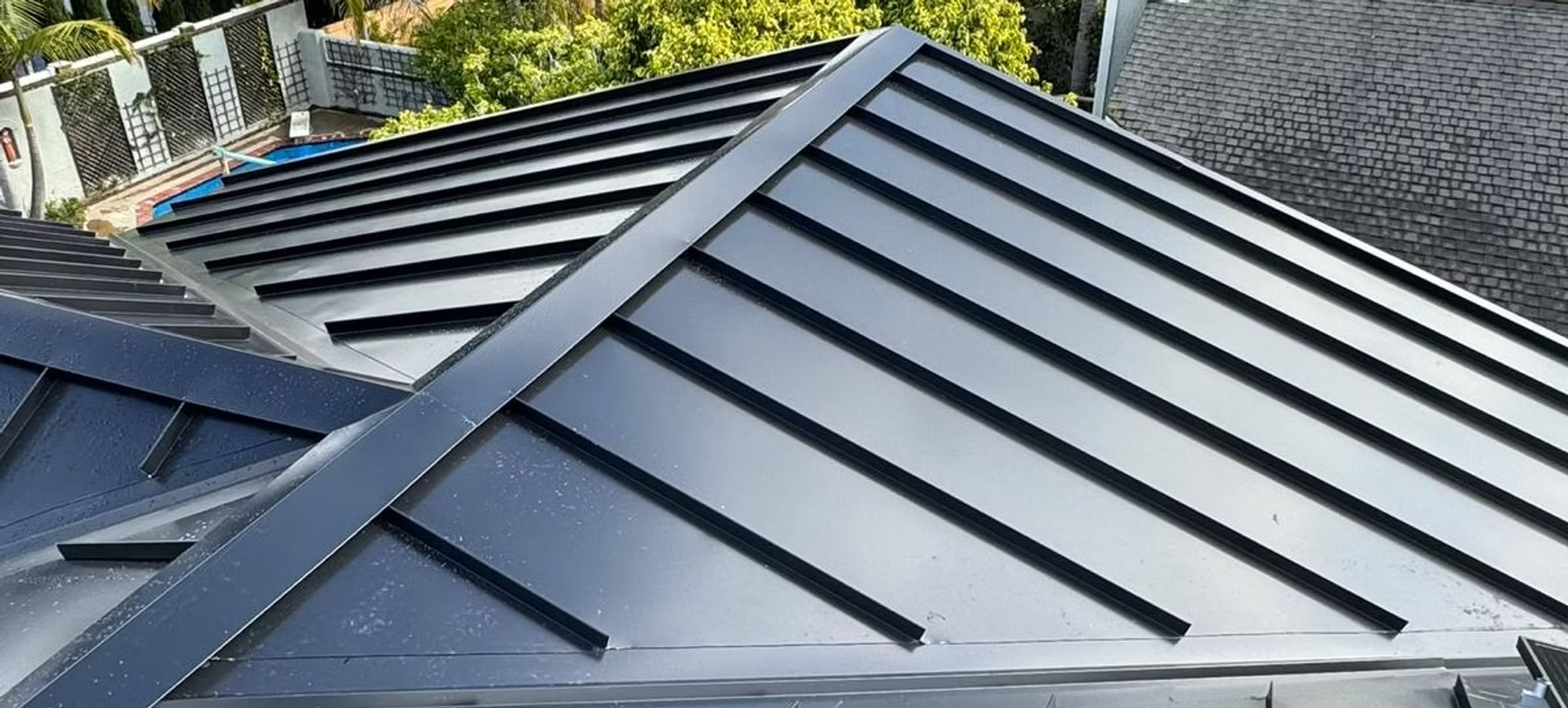
| Metal Roofing | The modern, sleek option. | Lightweight, reflective, and can last 50+ years. The upfront price is higher, but the longevity and energy savings are fantastic. |
| Single-Ply (TPO/PVC) | The king of commercial roof maintenance. | Brilliant for flat or low-slope roofs. Highly reflective, durable, and relatively easy to install. This is our go-to for many commercial roof repairs. |
See? Not so bad. The right choice depends entirely on your budget, your building’s style, and how long you plan to stay put.
The Unseen Hero: Roof Coatings and Maintenance
Okay, let’s talk about one of the most underrated roof service offerings out there: roof coating services. Think of a roof coating as a giant, liquid shield for your roof. It’s not a cover-up for a failing system; it’s a performance enhancer for a sound one.
We apply these reflective coatings to existing roofs to extend their life, boost energy efficiency, and add an extra layer of waterproofing. For a relatively low cost compared to a full replacement, you can get years of extra life out of your current roof. It’s a bit like finding a way to make your old car get better gas mileage and never rust. Pretty cool, right?
And this brings us back to maintenance. Commercial roof maintenance plans, in particular, are a no-brainer. We schedule regular roof inspections and minor tune-ups to catch small issues before they become invoice-generating monsters. It’s the roofing equivalent of getting regular oil changes. You can skip it, but you’ll probably regret it later :/
Your Top Roofing Questions, Answered (Without the Sales Pitch)
We hear these all the time, so let’s get straight to the answers.
1. How do I find a reputable roofing company near me?
Start with a simple search for “roofing company near me” or “nearest roofing company,” but don’t just click the first ad. Dig into reviews, ask for proof of insurance and licenses (this is non-negotiable), and look at their portfolio. Any reputable company, like ours at California Green Roofing, will be happy to provide all of this upfront. We’re proud of the work we do all over Los Angeles.
2. What does a new roof actually cost?
We wish we could give you one number, but it’s like asking “how much does a car cost?” The final price depends on the size of your roof, the materials you choose, the complexity of the job, and even the time of year. The only way to get a real, affordable quote is to have a professional come out for an in-person assessment. Anyone who gives you a firm number over the phone without seeing your roof… run.
3. How long will a roof repair or replacement take?
A standard residential roof repair can often be done in a day. A full replacement on an average home typically takes 2-5 days, depending on weather and complexity. For larger commercial roof repairs, the timeline is more variable, but a good contractor will give you a clear schedule and stick to it as much as humanly possible. FYI, we build in weather buffers because we know Mother Nature has a sense of humor.
Wrapping This Up (And Keeping Your Roof Watertight)
So, there you have it. Your roof doesn’t have to be a source of anxiety. It all boils down to being proactive, understanding your options, and partnering with a roofing company you can trust.
Regular roof inspections are your first and best line of defense. They give you the power of knowledge and prevent small issues from becoming budget-killers.
Whether you need a simple repair, a new installation, or just want to explore roof coating services to extend your roof’s life, the team at California Green Roofing is here to help. We’re based right here in Los Angeles, so we understand the unique demands our climate places on your property.
Why not start with a no-obligation inspection? Let’s get you that peace of mind you deserve. After all, the only water feature you should have is the one you intentionally install in the backyard.
People Also Ask
The 25% rule is a common industry guideline used by building codes, particularly for roof recover or re-roofing projects in the Los Angeles and San Fernando Valley area. It states that if more than 25% of a roof's total area is being replaced or repaired within any 12-month period, the entire roof must be brought up to current code standards. This often means stripping the existing roof down to the deck, rather than simply adding a new layer. For homeowners, this rule helps ensure structural integrity and fire safety. At California Green Roofing, we always evaluate your project against this threshold to provide compliant, long-lasting solutions.
For a flat roof in the Los Angeles and San Fernando Valley area, the average lifespan depends heavily on the material used. A standard built-up roof (BUR) or modified bitumen system typically lasts 15 to 20 years with proper maintenance. Single-ply membranes like TPO or PVC can offer 20 to 30 years of service life. However, the intense sun and heat in our region can accelerate wear, making professional installation and regular inspections critical. At California Green Roofing, we always recommend choosing a cool-roof coating to reflect sunlight and extend your roof's durability. To maximize your investment, schedule annual check-ups to catch small issues before they shorten your roof's lifespan.
Insurance companies often view flat roofs as higher risk due to their tendency for water pooling and drainage issues. Unlike sloped roofs that shed water quickly, flat roofs can develop standing water, leading to leaks, structural damage, and mold growth. This increases the likelihood of costly claims. Additionally, flat roofs typically have a shorter lifespan and require more frequent maintenance, which insurers factor into their risk assessment. For homeowners in the Los Angeles and San Fernando Valley area, proper installation and regular upkeep are critical. For more insight on roofing material choices, our internal article titled 'Architectural Vs. 3-Tab Shingles: Is The Upgrade Worth It?' provides valuable guidance. Architectural Vs. 3-Tab Shingles: Is The Upgrade Worth It? California Green Roofing recommends consulting a professional to ensure your flat roof meets modern standards, which can help mitigate insurance concerns.
For homeowners in the Los Angeles and San Fernando Valley area, the most affordable time to replace a roof is typically during the late fall and winter months, from November through February. This period is considered the "off-season" for roofing contractors because cooler temperatures and shorter daylight hours reduce demand. Many companies offer discounts or more competitive pricing to keep their crews busy. Additionally, scheduling during this time allows you to avoid the peak summer season, when prices are highest due to increased demand. For a full assessment of whether your home is ready for this investment, we recommend reading our internal article titled Does Your Los Angeles Home Need A Roof Replacement? 10 Tell-Tale Signs. California Green Roofing can help you plan a cost-effective replacement that fits your budget and timeline.