We get it. You’re looking at a new roof—maybe a tile upgrade, maybe solar panels, or perhaps that beautiful living green roof you’ve been daydreaming about. And then someone mentions “structural load,” and suddenly the whole project feels like it’s hanging by a thread. The fear is real: nobody wants to be the person who accidentally turns their living room into a skylight. But here’s the thing—this isn’t as complicated as the internet makes it sound.
The real issue isn’t how much your roof weighs. It’s whether your house was built to handle it. Most homes in Los Angeles, for example, were framed to a specific standard. A standard that assumed you’d slap on some asphalt shingles and call it a day. The moment you start stacking clay tiles, heavy pavers, or six inches of soil for a garden, you’re asking the framing to do something it wasn’t originally designed to do.
The good news? We’ve walked through this with dozens of homeowners. The vast majority of the time, the house is fine—or needs only modest reinforcement. The nightmare scenarios you read about are almost always cases where someone skipped the math entirely.
Key Takeaways
- Most residential roofs can handle 15–20 pounds per square foot (psf) of dead load. Standard asphalt shingles weigh about 2–4 psf. Concrete tiles can hit 10–15 psf. Green roofs (with saturated soil) can push 30–60 psf.
- The weak link is rarely the rafters—it’s the connections: hangers, bearing walls, and foundation ties.
- You don’t need a structural engineer for every project, but you absolutely need one if you’re adding more than 5 psf above the original design load.
- In older Los Angeles neighborhoods (think Silver Lake or Echo Park), homes built before the 1960s often have undersized rafters and unbraced cripple walls. That’s where we see most surprises.
Table of Contents
Where Most People Get This Wrong
The biggest mistake we see is homeowners assuming that because their roof “feels solid,” it can handle anything. Roofs are designed to be light. That springiness you feel when walking on a plywood deck? That’s intentional—it allows the structure to flex under wind and seismic loads. But that same flexibility becomes a liability when you add dead weight that the framing wasn’t designed to carry.
We had a client in the Hollywood Hills who wanted to install a rooftop deck with heavy porcelain pavers. He’d already bought the materials. When we ran the numbers, his 2×8 rafters at 24 inches on center were rated for about 10 psf of dead load. The pavers alone were 12 psf—before the waterproofing, the pedestals, and the furniture he planned to put up there. That project needed a full structural retrofit. It wasn’t cheap, but it was a lot cheaper than pulling a collapsed deck off his living room.
Another common blind spot: people forget about live load. A roof isn’t just holding up the materials. It’s also holding up rain, snow (rare in LA, but we do get heavy storms), workers during installation, and in some cases, a solar panel crew walking around. Live load is typically 20 psf for residential roofs. If your dead load eats up most of that budget, you’ve got no room for anything else.
The Unseen Culprit: Connection Failure
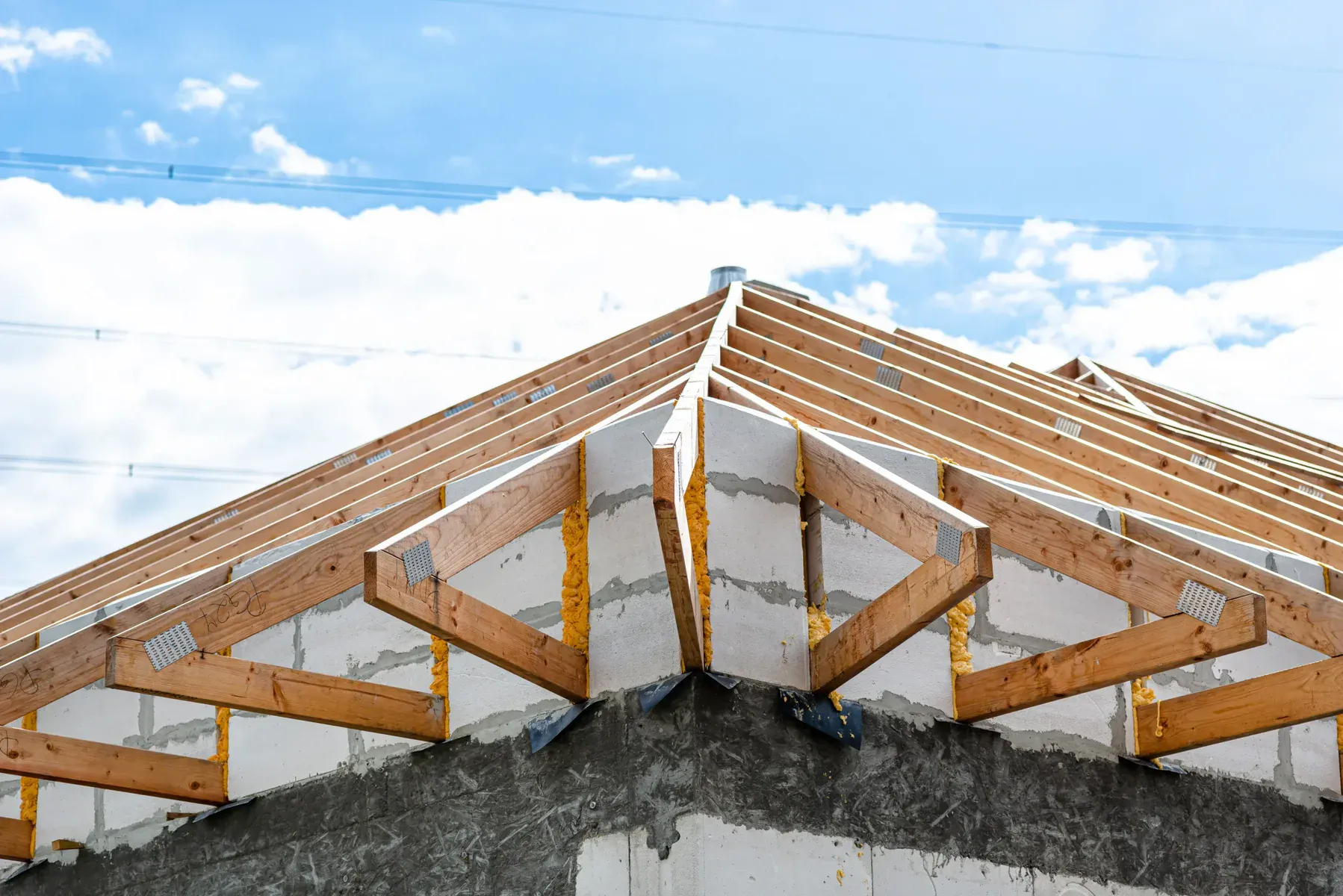
Even if your rafters are beefy enough, the connections often aren’t. Hurricane ties, joist hangers, and the way the roof ties into the top plate of the wall—these are the points where loads transfer down to the foundation. We’ve seen perfectly sized rafters pull away from a wall because the nails were undersized or the hangers were missing entirely. This is especially common in older homes where the original builder skipped the hardware.
If you’re planning a heavy roof system, have someone inspect the connections before you order materials. It’s a cheap check that can save you from a very expensive surprise.
How to Actually Figure Out What Your Roof Can Handle
You don’t need to be an engineer to get a ballpark number. Here’s the practical approach we use on every estimate.
First, find the span of your rafters—the distance between bearing points (usually the exterior wall and a ridge beam or interior bearing wall). Then look at the rafter size and spacing. A 2×6 at 16 inches on center spanning 12 feet can handle about 10–15 psf dead load. A 2×10 at 16 inches spanning 18 feet can handle closer to 20–25 psf. These are rough numbers, but they’ll tell you if you’re in the right ballpark.
Second, consider the age of your home. If it was built before 1970, there’s a good chance the lumber is actually stronger than modern dimensional lumber (old-growth wood is denser), but the framing may be undersized by modern codes. If it was built after 1990, the framing is likely optimized for minimum cost, which means you have less margin.
Third, look at the roof slope. Low-slope roofs (flat or nearly flat) are much more sensitive to weight because the load doesn’t distribute as efficiently. A steep pitch actually helps shed load to the bearing walls. That’s why you see heavy tile roofs mostly on steep slopes—they’re structurally more forgiving.
When the Numbers Say “No”
If your calculations show you’re close to the limit, you have options. You don’t have to abandon the project. You can:
- Sister new rafters alongside the existing ones (doubling the capacity).
- Add a beam or a column to reduce the span.
- Switch to a lighter roofing material (synthetic slate instead of real slate, for example).
- Use a structural insulated panel (SIP) system that distributes load better.
We’ve done all of these. The cost varies wildly. Sistering rafters in an attic that’s already finished is a pain. Doing it in an open attic is straightforward. The point is: there’s almost always a path forward. It just might not be the cheapest one.
The Green Roof Question
This is where things get interesting. A green roof—like the ones we install at California Green Roofing—isn’t just heavy. It’s heavy in a way that changes over time. Dry soil is light. Saturated soil is heavy. And if you’re in Los Angeles, where we get those sudden winter downpours, your green roof can gain 20–30 pounds per square foot in a single storm.
That’s why we always recommend a structural analysis before any green roof installation. It’s not optional. We’ve turned down jobs where the homeowner insisted on a full garden on a roof that was clearly undersized. It’s not worth the risk. But for homes that can handle it, a green roof is one of the best investments you can make—it extends the life of the membrane, reduces cooling costs, and handles stormwater better than any other roofing system.
If you’re in Los Angeles and considering a green roof, call us at California Green Roofing. We’ll walk through the structural assessment with you, give you the real numbers, and tell you honestly whether it makes sense for your home. No pressure, just practical advice.
A Real-World Comparison: Tile vs. Shingle vs. Green
To make this concrete, here’s a table that shows what you’re actually dealing with.
| Roofing Material | Dead Load (psf) | Typical Rafter Requirement | Common Issues |
|---|---|---|---|
| Asphalt shingles | 2–4 | 2×4 at 24” OC | None. Almost always fine. |
| Concrete tile | 9–15 | 2×6 at 16” OC or engineered trusses | Overloading older homes. Fasteners can pull out. |
| Clay tile | 7–12 | Similar to concrete | Fragile. Heavy. Needs solid decking. |
| Slate (natural) | 10–20 | 2×8 at 16” OC or better | Very expensive to reinforce. Often requires new framing. |
| Green roof (extensive, 4–6” soil) | 20–40 | 2×10 at 12” OC or engineered | Saturation weight. Drainage failures. Root penetration. |
| Green roof (intensive, 8”+ soil) | 40–80+ | Steel or engineered wood | Requires full structural redesign. Rare in residential. |
The takeaway: if you’re considering anything heavier than asphalt shingles, you need to verify the framing. And if you’re considering a green roof, you need an engineer. Period.
Trade-Offs You Don’t Hear About
There’s always a trade-off. Heavier roofs are more durable and often look better, but they cost more to install and require more maintenance over time. Lighter roofs are cheaper and easier to work with, but they don’t last as long and they don’t handle impact as well.
For example, concrete tile is heavy but lasts 50+ years. Asphalt shingles last 20–30 years and are lighter. The math isn’t just about structural capacity—it’s about lifetime cost. If you plan to stay in your home for 20 years, a heavy tile roof might still be worth it. If you’re flipping the house, stick with shingles.
Another trade-off: insulation. A green roof adds significant thermal mass, which helps regulate indoor temperatures. But that same thermal mass means the roof structure has to handle both the dead load and the thermal expansion. We’ve seen green roofs that were perfectly engineered for weight but failed because the expansion joints were omitted. The roof moved, the waterproofing tore, and the homeowner had a leak six months later.
When to Walk Away
Not every roof is a candidate for a heavy system. If your home has:
- Rafters smaller than 2×6
- Spans longer than 16 feet with no intermediate support
- A flat roof with no slope
- A history of sagging or visible deflection
…you should be very cautious. In some cases, the cost of reinforcing the structure exceeds the value of the roof itself. We’ve had to tell homeowners that a green roof or a tile roof simply isn’t practical for their home. It’s not what they want to hear, but it’s better than the alternative.
If you’re in Los Angeles and your home was built before 1950, you should also check for unbraced cripple walls. These are short walls between the foundation and the first floor that are common in older homes. They’re often not tied into the roof structure properly, and adding weight to the roof can make them fail during an earthquake. This is a real concern in LA. We’ve seen it happen.
The Bottom Line
Roof weight is a solvable problem. It’s not magic. It’s math and materials. The key is to do the assessment before you commit to a roofing system, not after you’ve already fallen in love with a look. A few hundred dollars spent on an engineer’s review can save you thousands in repairs—and a lot of sleepless nights.
If you’re in the Los Angeles area and want a straight answer about what your roof can handle, give us a call at California Green Roofing. We’ll come out, take a look at your framing, and tell you what’s possible. No fluff, no sales pitch. Just honest advice from people who’ve done this work.
At the end of the day, a roof is a system. The deck, the framing, the waterproofing, the insulation, the covering—they all have to work together. When you get it right, it’s invisible. When you get it wrong, it’s expensive. We’d rather help you get it right the first time.