Look, if you own a home or manage a building in Los Angeles, you’ve probably heard about “cool roofs.” Maybe your HVAC guy mentioned it, or you got a flyer, or you’re just staring at your energy bill in the middle of another San Fernando Valley heatwave and wondering what you can actually do. The real push, though, comes from California’s Title 24 energy code. It’s not just a suggestion anymore; it’s a requirement for most reroofing jobs. And if you’re in a place like Reseda, with its mix of older ranch homes and newer builds, navigating this feels like a part-time job.
Here’s the core of it: When you replace your roof in Los Angeles, you’re almost certainly required to install a “cool roof” that meets specific solar reflectance and thermal emittance values. The goal is to reduce the urban heat island effect and slash cooling costs. But the how—the materials, the costs, the trade-offs, and what “compliance” really means for your specific home—that’s where most of the confusion and costly mistakes happen.
Key Takeaways:
- Title 24 cool roof compliance is mandatory for most reroofing projects in LA, not optional.
- Compliance isn’t one-size-fits-all; your roof’s slope and material choice create different rules.
- The biggest mistake is focusing only on the initial product rating, not long-term performance and proper installation.
- In older neighborhoods like Reseda, a roof retrofit is a prime opportunity to address underlying issues like decking or ventilation.
- A professional assessment is almost always worth the cost to avoid failed inspections and maximize your energy savings.
Table of Contents
What Title 24 Actually Demands From Your Roof
Forget the jargon for a second. The state wants your roof to do one main thing: reflect sunlight and re-radiate absorbed heat back into the atmosphere, rather than baking your attic and living spaces. They measure this with two numbers: Solar Reflectance (SR) and Thermal Emittance (TE). You need to hit minimum values for both, and those values change based on your roof’s slope.
Here’s the quick breakdown most contractors will reference:
Low-Sloped Roof (less than 2:12 pitch): SR ≥ 0.70, TE ≥ 0.75.
Steep-Sloped Roof (2:12 pitch or greater): SR ≥ 0.20, TE ≥ 0.75.
Wait, why is the requirement for a steep roof so much lower? It’s a practical concession. The sun strikes a steeper roof at a more oblique angle, so it absorbs less direct heat to begin with. Also, the aesthetics of a pure white, highly reflective roof on a Spanish tile or classic composite shingle home can be… challenging. The code allows for more visually pleasing, darker-colored “cool” options on sloped roofs.
The Cool Roof Product Maze: It’s More Than Just Color
This is where we see homeowners get overwhelmed. You walk into a supply store or search online and see a hundred options all claiming to be “cool” or “energy star.” Not all are Title 24 compliant, and even fewer are the right choice for your house.
Cool Roof Coatings: These are fluid-applied products (like elastomeric or silicone coatings) rolled or sprayed onto an existing roof surface. They’re fantastic for low-slope applications (think your garage or addition with a flat roof) and can be a cost-effective retrofit. In the Valley sun, though, the quality is everything. A cheap, thin coating will chalk and degrade in a few years, losing its reflectivity and leaving you non-compliant and needing a re-do.
Cool Roofing Materials: These are manufactured with cool properties built-in.
- Modified Bitumen & TPO/PVC Membranes: The go-to for commercial and residential low-slope. They’re durable and reliably hit the high SR numbers.
- Cool Asphalt Shingles: These use special granules to reflect more heat. They look nearly identical to standard shingles but carry the ratings. This is probably the most common solution we install on Reseda homes—it meets code without altering the neighborhood’s character.
- Concrete & Clay Tile: Naturally thermally massive, they can be factory-coated to boost reflectance. Great for our Mediterranean-style homes, but the weight is a major structural consideration for older frames.
- Metal Roofing: Can be factory-painted with highly reflective pigments. A fantastic, durable option, but the upfront cost gives many pause.
The trap is thinking your job is done once you pick a compliant material. The installed system is what matters. A “cool” shingle installed over rotten decking or with inadequate ventilation will underperform dramatically. The heat gets trapped, your attic becomes a furnace, and your AC never stops running.
The Reseda-Specific Considerations (It’s Not Just Paperwork)
Working across the Valley, from older neighborhoods off Reseda Blvd to newer developments, you see patterns. Title 24 is a state code, but your house has local history.
The Age & Structure Factor: Many homes in Reseda are 50+ years old. The original roof decking might be 1x planks, not modern plywood OSB. Some coatings or adhesives don’t play well with that. More critically, older homes were often built with minimal attic ventilation. Adding a super-reflective roof over a stifling attic is like putting a shiny lid on a boiling pot. Part of any legitimate cool roof retrofit should include an assessment of your attic ventilation. This isn’t always explicitly in the code, but it’s essential for the system to work as intended. We’ve had to explain to frustrated homeowners that their new compliant roof isn’t “broken”—the heat is just coming from a different part of the assembly now.
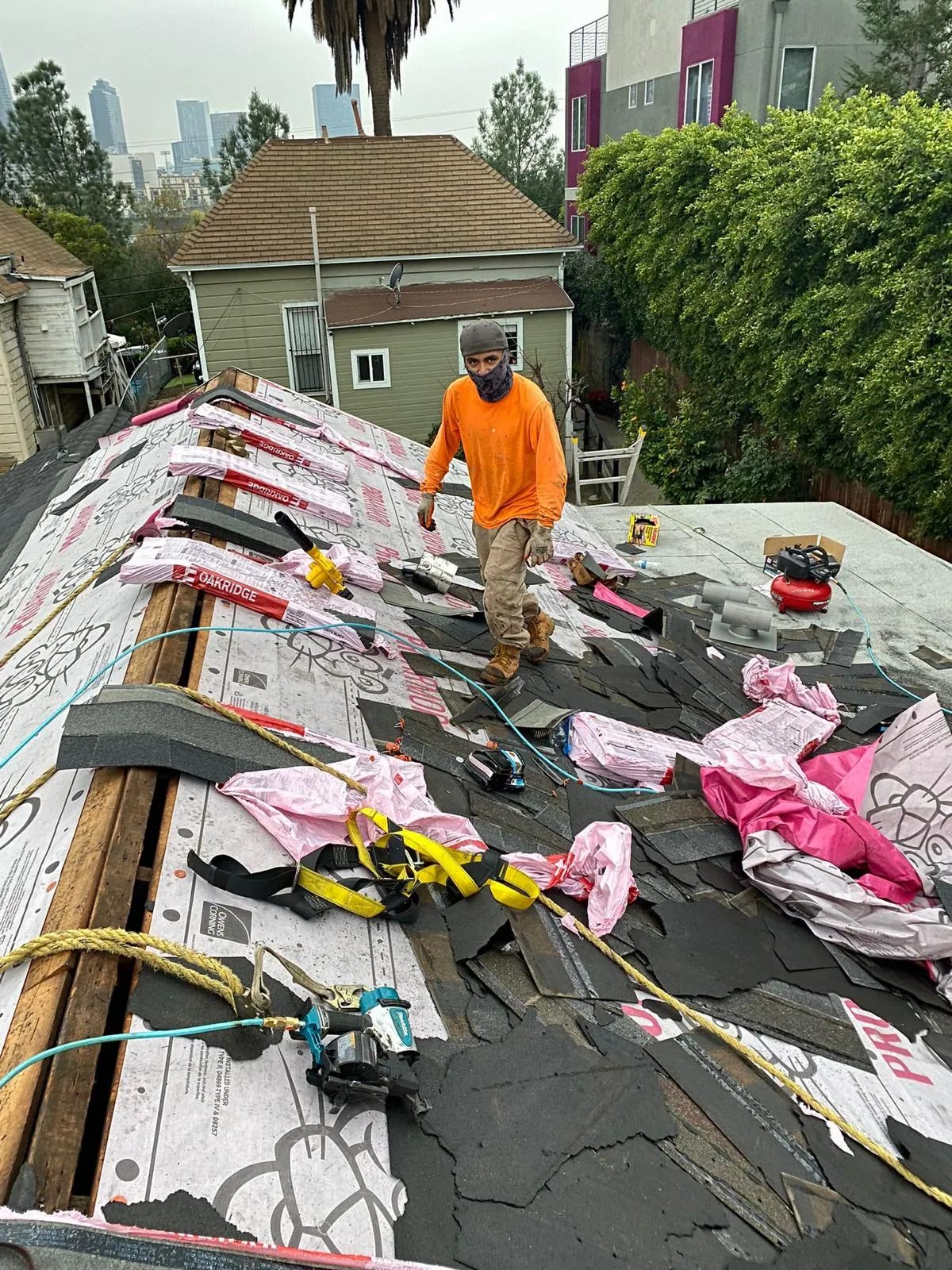
The Inspection Reality: LA City and County inspectors are stretched thin. They will check for your CRRC (Cool Roof Rating Council) label or product documentation to verify the SR/TE ratings. But they’re also looking for proper flashing, nail patterns, and general workmanship. If your roof deck is visibly sagging or you have obvious ventilation issues, they can flag it under broader building safety codes. A good contractor manages the entire compliance process, not just the material spec.
Climate & Savings: The benefit here in the interior Valley is more pronounced than in coastal LA. More sun, higher summer temperatures. The U.S. Department of Energy notes that cool roofs can lower roof surface temperature by 50°F or more. In practical terms, we see clients shave 10-20% off their summer cooling bills. That’s a tangible return on investment.
Common Pitfalls We See Homeowners Stumble Into
Let’s be blunt: most mistakes come from trying to cut corners or misunderstanding the scope.
- Choosing on Price/Color Alone: The darkest “compliant” shingle might be cheaper and look how you want, but it’s operating at the bare minimum. A lighter-toned compliant shingle will perform significantly better. You’re buying an energy-saving asset, not just a cover.
- Ignoring the Substrate: Applying a cool coating over a roof with alligatoring cracks, ponding water, or failed seams is a waste of money. It will fail quickly. The existing roof must be sound.
- DIY Disasters: We get the appeal. But proper installation for compliance isn’t just nailing shingles down. The required documentation, understanding of air gaps, insulation, and ventilation interplay, and handling of warranty validation is complex. We’ve been called to fix DIY jobs where the homeowner bought the right materials but created thermal bridging or moisture traps that voided the product warranty and killed the efficiency.
- Forgetting About the Whole System: Windows, insulation, and HVAC are part of your home’s thermal envelope. A cool roof is a powerful tool, but it’s not a magic fix for single-pane windows or an R-11 attic insulation. Think of it as the most impactful single upgrade you can make to the shell.
When a Cool Roof Retrofit Might Not Be the Right Move (Yes, Really)
It’s not a universal panacea. Here are two scenarios where you should pause:
- In Predominantly Heating-Climate Zones: If you lived in Big Bear, the math changes. A cool roof lowers cooling costs but can slightly increase heating costs by reducing beneficial winter heat gain. For most of LA, the cooling benefit dwarfs any winter penalty, but it’s a trade-off to understand.
- On Historically Designated Homes: If your home is a designated historic resource (more common in other parts of LA), visual changes may be restricted. There may be compliance alternate paths, but it requires extra approvals.
Making the Decision: A Practical Comparison
So, you’re re-roofing. Here’s a realistic look at your main paths for a standard 2,000 sq. ft. steep-slope home in Reseda.
| Option | Typical Cost Range (Installed) | Pros | Cons & Trade-Offs | Best For… |
|---|---|---|---|---|
| Cool Asphalt Shingles | $12,000 – $20,000 | Familiar look, wide color choices, meets code easily, contractor-friendly. | Lower reflectivity than other options; performance degrades slightly over time. | The majority of homeowners wanting a balance of cost, aesthetics, and compliance. |
| Elastomeric Coating (over comp.) | $8,000 – $15,000 | Excellent reflectivity, can extend life of existing roof, seamless. | Only for low-slope or suitable substrates; requires periodic re-coating; can look “industrial.” | Flat garage roofs, additions, or commercial sections of a property. |
| Standing Seam Metal | $25,000 – $40,000+ | Exceptional durability & longevity, highest reflectivity options, great for rain capture. | Very high upfront cost; installation is specialized; can be noisy during rain. | Long-term owners planning to stay 20+ years, or for modern architectural styles. |
| Clay/Concrete Tile | $30,000 – $50,000+ | Unmatched durability & classic aesthetic, excellent thermal mass. | Extremely heavy (structural review needed), very high cost, fragile to walk on. | Authentic restoration of period homes where budget is secondary. |
Costs are rough estimates for Greater LA as of 2026; always get multiple detailed quotes.
The Professional Assessment: Why It’s Worth Your Time
Given all these variables, here’s my strongest opinion: pay for a professional, detailed assessment. Not just a quote from a salesperson, but an inspection from a contractor or consultant who will get in your attic, check your decking, assess your ventilation, and model your sun exposure.
For a homeowner in Reseda, this step can reveal that your project isn’t just a “roof replacement.” It’s an opportunity to:
- Add radiant barrier sheathing when the decking is off.
- Install proper ridge and soffit ventilation channels.
- Seal attic bypasses that let cool air escape.
- Plan for future solar panel installation with proper mounting points.
This holistic view turns a code-mandated expense into a genuine home performance upgrade that you’ll feel in your comfort and your utility bills for the life of the roof. The few hundred dollars it might cost can save you thousands in missed opportunities or corrective work down the line.
Wrapping It Up
Navigating a cool roof retrofit for Title 24 compliance in Los Angeles is a blend of bureaucracy, material science, and old-fashioned construction know-how. The goal isn’t just to pass inspection and get a certificate of occupancy. It’s to end up with a roof that makes your home more resilient, more comfortable, and less expensive to operate in our specific climate.
Start with the code requirements, but don’t end there. Look at your whole house system, understand the long-term performance of your material choices, and partner with a professional who can see the potential pitfalls hidden under the existing shingles. In the end, a well-executed cool roof is one of the smartest, most substantive upgrades you can make to a home in the Valley. It’s a direct response to the environment we live in, and that just makes sense.