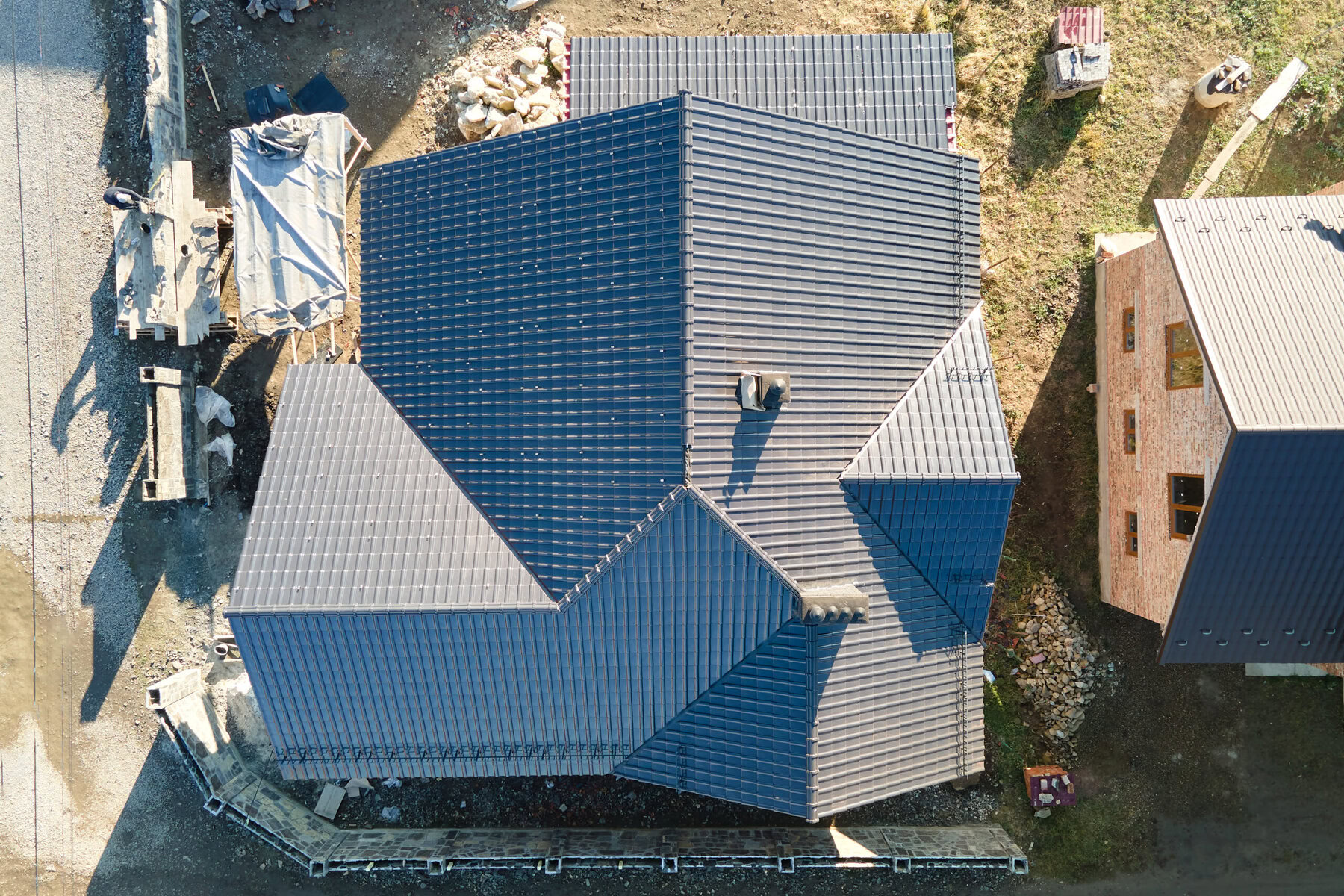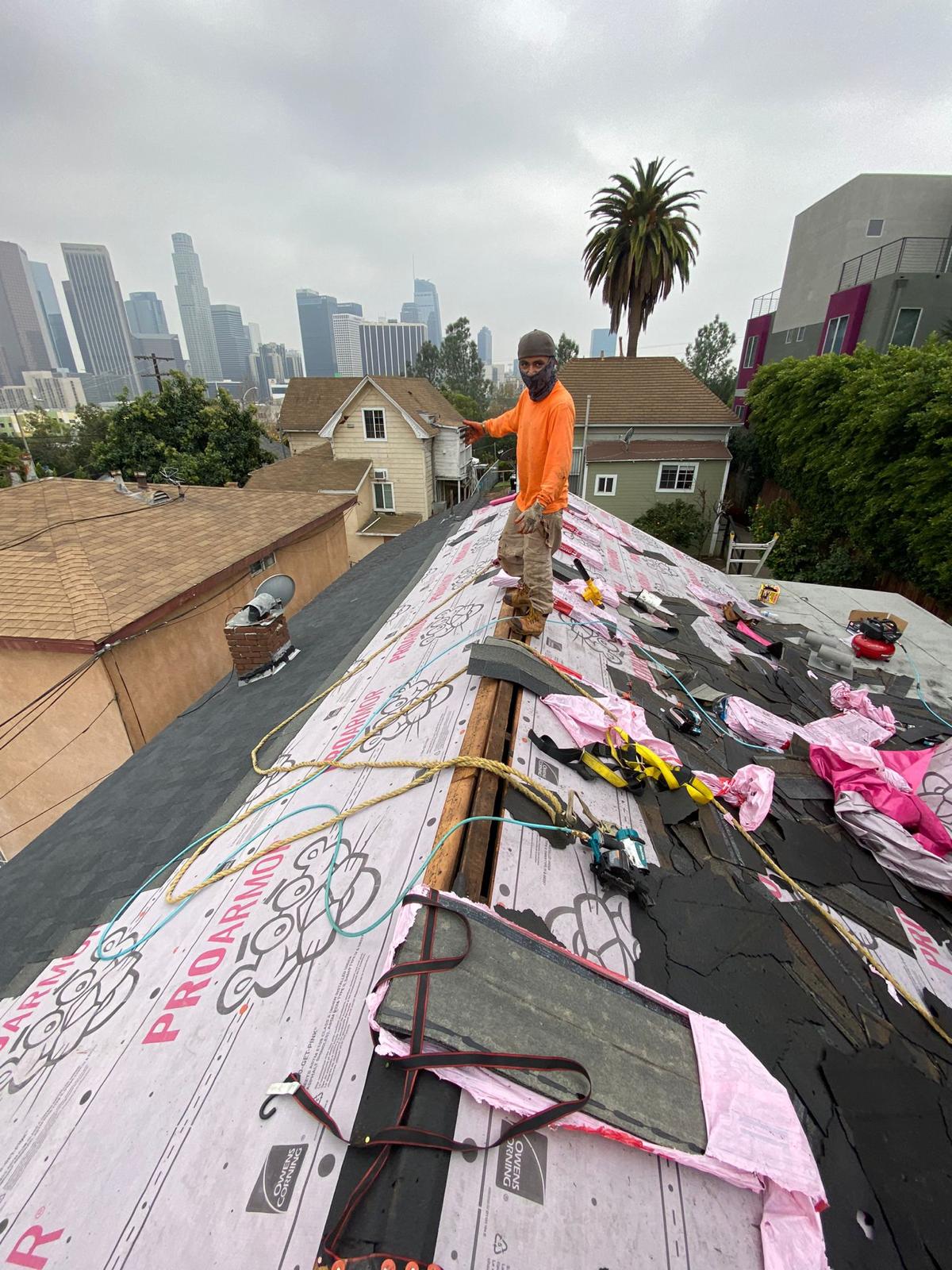
Key Takeaways: If your roof is leaking after a storm, your immediate goal is to stop water intrusion, not fix it permanently. A properly installed tarp is your best first line of defense. In Los Angeles, our specific challenges include sudden, intense rain after long dry spells and the unique wind patterns that can tear a bad tarp job apart. Safety is non-negotiable—if you can’t access your roof safely, call a pro.
Let’s be honest, when a storm rips through Los Angeles, it’s rarely a gentle drizzle. It’s a sudden, violent downpour that finds every weak spot in a roof that’s spent nine months baking in the sun. You hear that dreaded drip-drip-drip in the middle of the night, and panic sets in. The immediate instinct is to stop the water, right now. We’ve been on thousands of those emergency calls across LA, from the San Fernando Valley to South Bay, and the first few hours are critical. This isn’t about a pretty fix; it’s about damage control.
Table of Contents
The First Rule: Don’t Make It Worse
Before you even think about climbing a ladder, take a breath. Most of the secondary damage we see—both to property and people—happens during the panicked, DIY repair attempt. Your roof is wet, slippery, and likely damaged. If you have a steep pitch, tiles that are cracked underfoot, or any doubt about your ability, the best temporary repair is making a phone call. Seriously. The emergency service fee you pay a professional is cheaper than an ER visit.
If you are going to proceed, wait for daylight and clear weather. Never attempt a roof repair in active rain or high winds. Your safety gear is non-negotiable: sturdy, rubber-soled shoes, a secure harness if you have one, and a spotter on the ground.
Your Best Friend: The Heavy-Duty Tarp
For a temporary seal, nothing beats a properly installed tarp. The keyword is properly. We’ve seen too many “repairs” where a blue tarp is tossed over the ridge and secured with a couple of bricks. The next gust of Santa Ana wind turns it into a giant, destructive sail that damages more shingles.
What is emergency roof tarping?
Emergency roof tarping is a temporary mitigation technique used to prevent further water intrusion into a structure after storm damage. It involves securing a heavy-duty polyethylene or canvas sheet over the compromised section of the roof using a system of wooden battens (2x4s) and nails or screws. The goal is to create a water-shedding barrier that protects the interior until permanent repairs can be made.
First, you need the right materials. That flimsy tarp from the gas station won’t cut it. Look for a 10-mil or thicker poly tarp, at least 6 feet longer and wider than the damaged area you can see. You’ll also need un-treated 2x4s (eight-foot lengths), roofing nails (at least 1 ½ inch), and a hammer. Un-treated wood is key because it’s more flexible and less likely to split.
The Right Way to Secure a Tarp: The Batten Method
The toss-and-brick method is for patio furniture. For a roof, you use the batten method. Here’s how we do it, and why it works even in our quirky LA winds coming over the Hollywood Hills or through the Cahuenga Pass.
- Locate the Damage: From inside your attic (if it’s safe to access), mark the area of leakage. It’s often uphill from where the water appears on your ceiling. That’s your target zone on the roof.
- Position the Tarp: Unfold the tarp and center it over the damaged area. The goal is to cover from the ridge (peak) down over the leak, extending past it by several feet on all sides. The tarp must go over the ridge. This is the single most important step. Water running down the roof plane must flow over the tarp, not under it.
- Secure the Top First: Place a 2×4 along the top edge of the tarp, on the opposite side of the ridge. Nail through the tarp and the wood into the roof sheathing. This anchors the highest point.
- Create the Battens: Lay additional 2x4s horizontally across the tarp, about every 2-3 feet down its length. Nail through these battens into the roof. These wooden strips weigh down the tarp, prevent flapping, and create channels for water to run off.
- Seal the Sides: Finally, run 2x4s along the sides of the tarp, nailing them down. Don’t pull the tarp drum-tight; a slight sag in the middle is good to channel water.
This system distributes wind force, prevents tearing at the nail holes, and creates a robust, temporary roof. It’s not elegant, but it’s effective.
When Tarping Isn’t Enough: Other Temporary Measures
Sometimes the damage is more localized—a puncture from a fallen branch, a few missing tiles. For small, accessible holes, a piece of sheet metal flashing or even a thick piece of plywood screwed down over a layer of roofing cement can be a stopgap. For a leak around a vent pipe that’s suddenly spraying, a generous application of roofing cement (available in caulk tubes) around the base can slow it down.
But I have to be straight with you: these are Hail Marys. They rarely hold up to sustained rain and are prone to failure. They might buy you a few hours to get a pro on site. In our experience, the older homes in neighborhoods like Burbank or Pasadena, with their clay tile roofs, present a specific challenge. A single broken tile can let in a lot of water, but trying to walk on undamaged tiles to fix it often breaks more. In these cases, a tarp over the affected section is still the wiser choice.
The Hidden Costs of a “Good Enough” Temporary Fix
This is where real-world experience shapes our opinion. The trade-off with any DIY temporary repair is risk versus reward. Let’s break down the common mistakes and what they actually cost you down the line.
- The Tarp That’s Too Small: It covers the visible hole but not the water path. Water gets under it, soaks the roof deck, and now you have hidden rot. The permanent repair just went from replacing a few shingles to replacing a 4×8 sheet of plywood decking.
- Nails Driven Willy-Nilly: Every nail hole you put in an undamaged part of your roof is a new potential leak point. A pro knows how to nail into the sheathing securely without causing collateral damage. We’ve seen DIY jobs that required sealing two dozen unnecessary nail holes.
- Ignoring the Attic: The temporary fix stops the drip, but what about the water already in your insulation? Wet insulation loses its R-value and becomes a mold incubator. Part of a professional emergency response is often pulling out soaked insulation and setting up fans to dry the structure—a step most homeowners understandably miss.
- The False Sense of Security: You slapped on a tarp, the sun came out, and you think, “I can deal with this next month.” LA weather fools you. A week later, another atmospheric river hits, your hasty repair fails, and now you have catastrophic interior damage. A proper temporary repair should be robust enough to last 30-90 days while you arrange permanent work.
So, When Do You Absolutely Call a Professional?
I’m not saying never DIY. If you’re handy, have a low-pitch roof, and the damage is minor and accessible, you might be okay. But here are the hard lines we draw based on what we’ve seen go wrong:
- Steep or High Roofs: If your home is a two-story or has a pitch over 6/12, just call.
- Extensive Damage: If more than one section is leaking or you see multiple missing shingles/tiles.
- You Lack the Materials or Confidence: If you’re reading this from the hardware store parking lot, unsure what to buy, that’s your sign.
- The Leak is Near a Valley or Chimney: These are complex flashings areas. A botched temp fix here can cause massive, expensive water diversion issues.
- You Value Your Time and Sanity: Sourcing materials, climbing up in a stressful situation, and doing the hard labor is a half-day project. A crew from a company like ours, California Green Roofing in Los Angeles, can often be on site within hours and have it secured professionally in under one.
The calculus is simple. A few hundred dollars for an emergency tarping service protects you from thousands in interior water damage, not to mention the physical risk.
What to Expect From a Professional Emergency Service
If you do call a pro, you should expect a specific process. A reputable company won’t just show up, tarp it, and hand you a huge bill. They should:
- Perform a safety assessment.
- Conduct a visual inspection (often with binoculars or a drone first) to assess damage.
- Explain the plan clearly, including the exact area to be covered and the method.
- Provide a written, itemized invoice for the temporary mitigation work only.
- Not pressure you to sign a contract for the permanent repair on the spot. They should give you a separate, detailed estimate for that, allowing you to get other quotes.
Their quote should reflect the real-world constraints of your situation—access, roof pitch, material type. For example, tarping a composite shingle roof in the Valley is different from securing a tile roof in Santa Monica where extra care is needed to avoid breaking adjacent tiles.
Making the Decision: A Practical Guide
Let’s put this into a simple framework. Ask yourself these questions in order:
| Your Situation | Recommended Action | Why |
|---|---|---|
| Safe, accessible, small damage (e.g., a few lifted shingles on a low-pitch roof) | Consider DIY tarping with the batten method. | You can likely mitigate the immediate risk with careful work. Have a pro inspect it later. |
| Unsafe or complex (steep pitch, tile roof, leak near a valley) | Call a professional. | The risk of personal injury or causing more damage is too high. The cost is justified. |
| Active leaking with major interior damage (water pouring in, ceiling sagging) | Call a professional immediately. Also, puncture the ceiling sag to drain it and move belongings. | This is beyond a stopgap. You need rapid, expert mitigation and likely interior restoration. |
| Minor leak that’s stopped, sunny weather ahead | You might have time for a careful DIY or to schedule a pro non-emergency. | Monitor the weather forecast closely. One more rain could change everything. |
The Path to a Permanent Fix
A temporary repair is just that—temporary. It buys you time, but it’s not a solution. The UV rays from our relentless LA sun will degrade a tarp in a matter of weeks. The next wind event will test it. Your job now is to use the time you’ve bought wisely.
Get at least two detailed estimates for the permanent repair. A good roofer will want to inspect the decking underneath the tarp to assess for rot. They’ll also check for proper attic ventilation, a key factor in roof longevity that’s often overlooked. Be wary of any contractor who wants a huge upfront payment or only accepts cash.
The goal of emergency tarping isn’t to be a hero. It’s to be a competent first responder for your home. It’s about making a calm, informed decision under pressure to prevent a bad situation from becoming a catastrophic one. Sometimes, the most hands-on thing you can do is pick up the phone and let a professional with the right tools, materials, and experience take the risk off your shoulders. After all, the real work starts when the sun comes back out and you have to navigate the insurance claim and permanent repair. That’s a whole other story, but at least you’ll be starting with a dry house.