Before we get into the numbers, let’s get one thing straight: most people don’t think about their roof’s load-bearing capacity until something goes wrong. Maybe a contractor shows up with a truck full of heavy tile, or you start planning a rooftop deck, or you live in an area where snow actually happens. The moment that question hits—can my roof handle this?—it becomes the only thing that matters.
We’ve worked on hundreds of roofs across Los Angeles, from 1920s bungalows in Silver Lake to modern flat-roof builds in the Valley. And the single most common mistake we see? Assuming the roof is stronger than it actually is. It’s not a sexy topic, but getting it wrong can cost you tens of thousands in structural repairs—or worse.
Key Takeaways
- Dead load (the roof itself) and live load (people, snow, equipment) are calculated separately.
- Most residential roofs in the U.S. are designed for a live load of 20–30 pounds per square foot (psf).
- Adding heavy materials like clay tile or a rooftop deck without proper engineering review is risky.
- Los Angeles has unique considerations: seismic codes, older construction, and minimal snow load.
- A professional structural engineer is almost always required for any significant change.
Table of Contents
The Two Numbers That Actually Matter
Every roof has two distinct load categories. Understanding these is the foundation of any calculation.
Dead Load: The Weight of the Roof Itself
Dead load is the permanent weight of all the materials that make up the roof assembly. This includes:
- Roof decking (plywood, OSB, or planks)
- Underlayment and felt paper
- Insulation
- The roofing material itself (asphalt shingles, tile, metal, etc.)
- Any permanently attached mechanicals (HVAC units, solar panels, etc.)
For a typical asphalt shingle roof, dead load runs around 10–15 psf. Switch to concrete tile, and you’re looking at 16–20 psf. That difference might not sound like much, but over a 2,000-square-foot roof, it’s an extra 10,000–20,000 pounds.
Live Load: The Temporary Weight
Live load covers everything that isn’t permanently attached. This includes:
- Snow accumulation (in areas that get it)
- Rainwater ponding (common on flat roofs with poor drainage)
- People walking or working on the roof
- Equipment staging during construction
- Furniture or planters on a rooftop deck
Most residential building codes specify a live load of 20 psf for sleeping areas and 30 psf for general living space. For roofs, the minimum is typically 20 psf, but that can vary based on local codes and intended use.
How to Actually Calculate It
Here’s where things get real. You can’t just look at a roof and guess. You need to do the math—or hire someone who will.
Step 1: Determine the Total Load Capacity
Your roof’s load-bearing capacity is determined by the structural elements underneath: rafters, trusses, beams, and the connections to the walls and foundation. If you have original plans, they should specify the design loads. If not, you’ll need to measure.
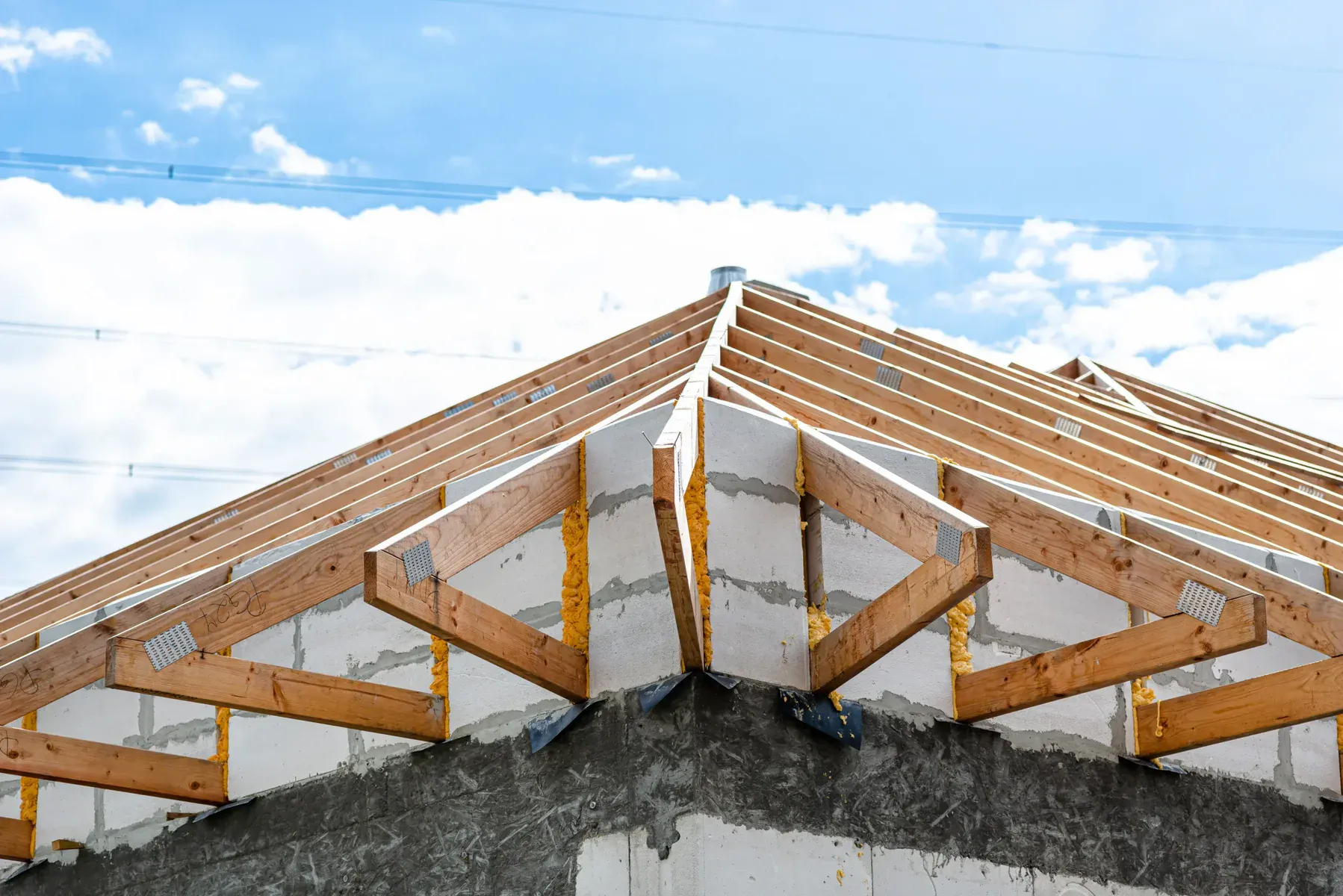
For a simple pitched roof with rafters, the span and spacing of the rafters dictate capacity. A typical 2×6 rafter on 24-inch centers spanning 12 feet might support about 30 psf total load (dead + live). A 2×8 on 16-inch centers spanning 14 feet might handle 40 psf.
We’ve seen homeowners assume that upgrading to heavier tile is fine because “the roof feels solid.” That’s not how it works. The roof feels solid because it’s designed to carry exactly its own weight plus the live load. Adding more dead load eats into the live load margin.
Step 2: Calculate the Existing Dead Load
Weigh every layer. If you’re replacing an old roof, you might be removing three layers of asphalt shingles. That’s roughly 6–9 psf of dead load. If you switch to a lighter material like standing seam metal (about 1.5 psf), you actually gain capacity. But if you go from asphalt to concrete tile, you’re adding 8–12 psf.
Step 3: Subtract Dead Load from Total Capacity
Total capacity – existing dead load = available live load.
Let’s say your roof is designed for a total load of 40 psf. Your current dead load (including the new roofing material) is 15 psf. That leaves 25 psf for live load. That’s fine for normal use. But if you want to add a rooftop deck with furniture and people, you’ll need at least 40–60 psf of live load capacity. Suddenly, you’re over.
Step 4: Factor in Local Conditions
In Los Angeles, snow load is essentially zero. But seismic load is a major factor. The International Building Code (IBC) requires that roofs be designed to resist lateral forces from earthquakes. Adding heavy roofing materials increases the seismic mass, which can require reinforcing the shear walls and connections. We’ve seen projects where the roof itself was fine, but the walls weren’t tied in well enough to handle the extra weight during a quake.
For more on how building codes define these loads, the Wikipedia article on building codes offers a solid overview of how these standards are developed and enforced.
Common Mistakes We See in the Field
After years of working on roofs in Los Angeles, certain patterns keep showing up. These are the ones that make us cringe.
Ignoring the Rafter Span
People focus on the roofing material but forget the structure underneath. We once worked on a 1920s home in Echo Park where the original rafters were 2x4s on 24-inch centers. The homeowner wanted to install heavy Spanish clay tile. The math didn’t work. We had to sister new rafters alongside the old ones to increase capacity. That’s not cheap.
Assuming All Tiles Are the Same
Concrete tile and clay tile look similar but weigh very differently. Concrete tile runs about 9–12 psf installed. Clay tile is lighter at 7–9 psf, but still much heavier than asphalt (2–4 psf). We always ask: what exactly are you installing? The answer changes everything.
Overlooking the Roof Deck Condition
Even if the rafters can handle the load, the decking might not. Old 1×6 tongue-and-groove decking can rot or split. Plywood sheathing that’s been exposed to moisture can delaminate. We always recommend inspecting the deck before committing to a heavy roofing material. It’s much cheaper to replace decking now than to repair a collapsed section later.
Forgetting About Point Loads
A flat roof with a single HVAC unit might be fine for distributed loads, but that unit concentrates weight on a small area. The same applies to solar panels, satellite dishes, or a hot tub on a rooftop deck. Point loads need to be transferred through beams or bearing walls. We’ve seen roofs that were fine for uniform snow load but failed under a concentrated load from a heavy AC unit.
When a Professional Is Absolutely Necessary
We’re all for DIY when it makes sense. But roof load calculations are not the place to guess. Here’s when you absolutely need to call in a structural engineer:
- Any change in roofing material that adds more than 3 psf of dead load
- Adding a rooftop deck, patio, or garden
- Installing solar panels on an older roof (especially if the roof wasn’t designed for them)
- Any sign of existing sagging, cracking, or water damage
- If the roof is part of a building that was constructed before modern building codes (pre-1970s in most areas)
A structural engineer will cost $500–$1,500 for a residential inspection and report. That’s cheap insurance compared to the cost of a roof failure.
For homeowners in Los Angeles, we also recommend checking with the Los Angeles Department of Building and Safety. They have specific requirements for seismic retrofitting and roof load calculations, especially for older buildings in historic districts like Angelino Heights or West Adams.
Alternatives When the Numbers Don’t Work
Sometimes the math just doesn’t add up. Your dream of clay tile might be impossible without major structural reinforcement. Here are alternatives we’ve used with customers:
Switch to a Lighter Material
Synthetic slate or shake weighs about half as much as real slate or concrete tile. Standing seam metal is even lighter. You can get the look you want without the weight.
Reinforce the Structure
Sistering rafters, adding beams, or installing steel columns can increase load capacity. It’s expensive and invasive, but sometimes it’s the only option if you’re set on a particular material.
Reduce the Scope
Instead of covering the entire roof in heavy tile, use it only on the front-facing slope and a lighter material on the back. Or limit a rooftop deck to a small area that can be reinforced independently.
Accept the Limitations
Sometimes the honest answer is: your roof can’t handle it, and it’s not worth the cost to make it work. We’ve had those conversations with customers. It’s never fun, but it’s better than a failed roof.
A Real-World Example from Los Angeles
We worked with a homeowner in the Hollywood Hills who wanted to replace old asphalt shingles with concrete S-tile. Beautiful look, but the house was built in the 1950s with 2×6 rafters on 24-inch centers spanning 14 feet. The existing dead load was about 12 psf. The new tile would add 10 psf, bringing total dead load to 22 psf. With a total design load of 35 psf, that left only 13 psf for live load—well below the minimum 20 psf.
The homeowner had three options:
- Reinforce the rafters (cost: $8,000–$12,000)
- Switch to a lighter tile (cost: similar to concrete tile, but less weight)
- Keep the asphalt shingles (cost: lowest, but not the look they wanted)
They chose to reinforce the rafters and install the concrete tile. The project took an extra week and cost more, but the roof is now structurally sound and looks fantastic. The key was doing the math before committing to the material.
Why This Matters More Than You Think
Roof load calculations aren’t just about preventing collapse. They affect:
- Insurance premiums (some insurers require load documentation)
- Resale value (a roof that’s been properly engineered is a selling point)
- Safety during construction (staging heavy materials on an under-designed roof is dangerous)
- Long-term performance (overloading a roof accelerates wear and tear)
We’ve seen too many people skip this step and regret it later. The roof is one of the most expensive components of a building. Getting the load calculation right is the cheapest way to protect that investment.
Final Thoughts
Calculating your roof’s load-bearing capacity isn’t complicated, but it does require attention to detail and a willingness to call in experts when needed. Start with the dead load and live load numbers. Factor in your local climate and building codes. And never assume that because a roof looks solid, it can handle whatever you throw at it.
If you’re in the Los Angeles area and considering a roof replacement or addition, we’re always happy to take a look. California Green Roofing has been working with local homeowners for years, and we know the unique challenges of this market—from seismic codes to the quirks of older construction. Sometimes the right answer is a lighter material. Sometimes it’s reinforcement. But it’s always better to know before you start.
Related Articles
People Also Ask
To calculate roof load bearing capacity, you must first determine the dead load (weight of roofing materials and structure) and live load (snow, wind, or maintenance traffic). For a green roof in the Los Angeles area, consider saturated soil weight, which can exceed 20 pounds per square foot. Consult local building codes for minimum requirements. A structural engineer should evaluate the existing framing, joist spacing, and material condition. For professional guidance, California Green Roofing recommends a thorough site assessment to ensure your roof can safely support the added weight without compromising integrity.
The 25% rule in roofing is a common industry guideline used by many local building departments, including those in the Los Angeles and San Fernando Valley area. It states that if a roof repair or replacement involves more than 25% of the roof's total surface area within a 12-month period, the entire roof must typically be brought up to current building code standards. This often includes requirements for proper underlayment, flashing, and ventilation upgrades. For homeowners in our service area, compliance is essential to avoid permit issues. California Green Roofing always advises clients to check with their local building department, as the rule can vary by jurisdiction and is strictly enforced to ensure structural safety and energy efficiency.
The ability of a roof to support a 400 lb person depends entirely on its structural design and load rating. Most residential roofs are designed for a live load of 20 to 30 pounds per square foot, which means a concentrated 400 lb weight on a small area could exceed safe limits. A 400 lb person standing in one spot may create dangerous stress, especially on older or poorly constructed roofs. For a professional assessment, a structural engineer should evaluate the roof's framing, joist spacing, and material condition. At California Green Roofing, we always recommend consulting a qualified expert before any heavy load is placed on a roof. Never assume a roof can support such weight without proper verification.
For homeowners in the Los Angeles and San Fernando Valley area, a lighter-colored roof is generally the best choice to increase home value. Light or cool-colored roofing materials, such as white, beige, or light gray, reflect more sunlight and reduce heat absorption. This energy efficiency is highly attractive to buyers in our warm climate, as it can lower cooling costs significantly. A cool roof not only improves comfort but also extends the lifespan of the roofing system. For a stylish and valuable option, consider the benefits of synthetic materials. For more details, you can read our internal article titled Synthetic Spanish Roof Tiles Cost And Benefits For LA Homes. At California Green Roofing, we recommend selecting a color that complements your home's architecture while maximizing energy savings.
For a precise roof dead load calculation, you must account for the weight of all permanent materials, including roofing layers, decking, insulation, and any fixed mechanical units. In the Los Angeles and San Fernando Valley area, standard residential dead loads typically range from 10 to 15 pounds per square foot, but this can vary with tile or heavy green roofing systems. A professional structural engineer should verify your specific roof's capacity before adding any significant weight. For more details on safe load limits, refer to our internal article titled Weight Capacity How Much Can A Typical Roof Hold. California Green Roofing always recommends consulting a licensed engineer to ensure your project meets local building codes and safety standards.
For a precise roof live load calculation, you must consider local building codes, which in Los Angeles typically require a minimum live load of 20 pounds per square foot for standard residential roofs. However, this number can increase for specific uses like rooftop decks or gardens. The live load includes temporary, movable weight such as snow, maintenance workers, or furniture. To calculate, multiply the required live load (psf) by the total square footage of the roof area. For a green roof, you must also account for the saturated weight of the growing medium and plants, which is a dead load. For comprehensive guidance on how much weight your specific roof structure can safely support, please refer to our internal article titled Weight Capacity How Much Can A Typical Roof Hold. California Green Roofing always recommends consulting a structural engineer before adding any heavy rooftop system.
For accurate load calculations on a pitched roof, you must account for dead loads (roofing materials, decking, insulation) and live loads (snow, rain, maintenance workers). A pitched roof load calculator typically uses the roof's slope, span, and local building codes to determine the required structural capacity. In the Los Angeles and San Fernando Valley area, seismic and wind loads are also critical factors. For professional guidance, California Green Roofing recommends consulting a structural engineer. For a deeper understanding of how to assess if your roof can support additional weight, such as solar panels or a green roof, please refer to our internal article Weight Capacity How Much Can A Typical Roof Hold.
In structural engineering for the Los Angeles and San Fernando Valley area, a typical roof dead load ranges from 0.5 to 1.5 kN/m2 for standard residential construction. This includes the weight of the roofing material, sheathing, insulation, and ceiling finishes. For example, asphalt shingles contribute approximately 0.15 to 0.25 kN/m2, while clay or concrete tiles can add 0.5 to 0.8 kN/m2. California Green Roofing always advises that the dead load must be calculated precisely for each project, as local building codes require a minimum design load to account for seismic and wind forces. For green or living roofs, the saturated weight can increase the dead load significantly, often exceeding 2.0 kN/m2, requiring a structural engineer's review to ensure the building frame can safely support the additional mass.
For flat roof load calculations, it is essential to consider both dead loads (permanent materials like roofing layers) and live loads (temporary forces like snow, rain, or maintenance traffic). In the Los Angeles and San Fernando Valley area, local building codes typically require a minimum design load of 20 pounds per square foot for live loads, though specific projects may demand higher values depending on intended use. A professional structural engineer should always verify these numbers before proceeding. For a deeper understanding of structural limits, review our internal article Weight Capacity How Much Can A Typical Roof Hold. California Green Roofing recommends using industry-standard software or consulting a specialist to ensure your flat roof can safely support all anticipated weight without compromising integrity.
For a general estimate of roof load capacity, you need to consider both dead loads (the weight of the roofing materials themselves) and live loads (snow, rain, or maintenance personnel). A typical residential roof in Los Angeles and the San Fernando Valley is designed to support about 20 pounds per square foot for dead load and 20 pounds per square foot for live load, for a total of 40 psf. However, if you are adding a green roof, solar panels, or heavy tile, you must verify your specific structure. For a detailed breakdown on calculating whether your roof can support additional weight, please refer to our internal article titled Weight Capacity How Much Can A Typical Roof Hold. At California Green Roofing, we always recommend consulting a structural engineer before installing heavy roofing systems.