Key Takeaways: The biggest mistake we see with skylights in Reseda isn’t the skylight itself, but the flashing. Proper flashing is a system, not a product, and it must be integrated with your roof’s specific material. In our climate, thermal expansion and contraction is your real enemy, not just rain. And finally, a leak often shows up feet away from where the water actually gets in, making DIY diagnosis a nightmare.
Let’s be honest: a leaky skylight feels like a personal betrayal. You installed it for light and sky, and now it’s giving you drips and water stains. In Reseda, especially in the older neighborhoods off Reseda Boulevard or up near the golf course, we see this story play out constantly. It’s rarely a manufacturing defect in the skylight unit. Nine times out of ten, the problem—and the incredibly costly repair that follows—stems from how it was flashed and sealed during installation.
Flashing a skylight isn’t just slapping some metal around it and caulking the seams. If you approach it that way, you’re just pre-ordering a future leak. It’s about creating a coordinated drainage system that manages water, accommodates movement, and plays nicely with your specific roof. The materials on a classic Reseda ranch home are different from those on a newer Northridge build, and your flashing approach has to adapt.
Table of Contents
What Skylight Flashing Actually Has to Do (It’s Not What You Think)
Most homeowners think flashing is a water barrier. It’s not. It’s a water manager. Its job is to catch any water that gets past the shingles or tiles and guide it safely down and away from the vulnerable opening in your roof deck. This is a critical mindset shift.
The Two-Layer Defense
Think of it like this: the primary layer is your roof covering (asphalt shingles, clay tiles, etc.). The secondary layer is the flashing system. The goal is for the primary layer to shed 95% of the water. The flashing is there for the 5% that gets driven up by wind, or that sneaks through a capillary gap. It’s your backup, and it must have a clear drainage path. If you seal the bottom of the flashing with caulk, you’ve trapped that 5% inside. Now it has nowhere to go but sideways into your home.
Why Reseda’s Climate is a Special Challenge
Our local weather cycle is a flashing stress test. We bake in 90-degree heat for days, then maybe get a cool, damp night. That roof deck and the flashing materials are expanding and contracting constantly. A rigid, over-caulked seal will crack. A flashing system installed drum-tight in the morning heat will buckle when it contracts at night. This thermal movement is the main reason “sealant-only” fixes fail so quickly here. The flashing must be able to move independently of the roof and the skylight curb.
Furthermore, while we’re not in a constant deluge, our rain often comes in short, intense bursts. A system that can’t handle a sudden volume of driven rain will fail spectacularly in one storm, not slowly over years.
The Flashing Method That Actually Works (And Why)
Forget the old “step flashing” you might see on a wall. For skylights on a pitched roof, the industry standard for a reason is integrated curb-mounted flashing. This isn’t a brand; it’s a system.
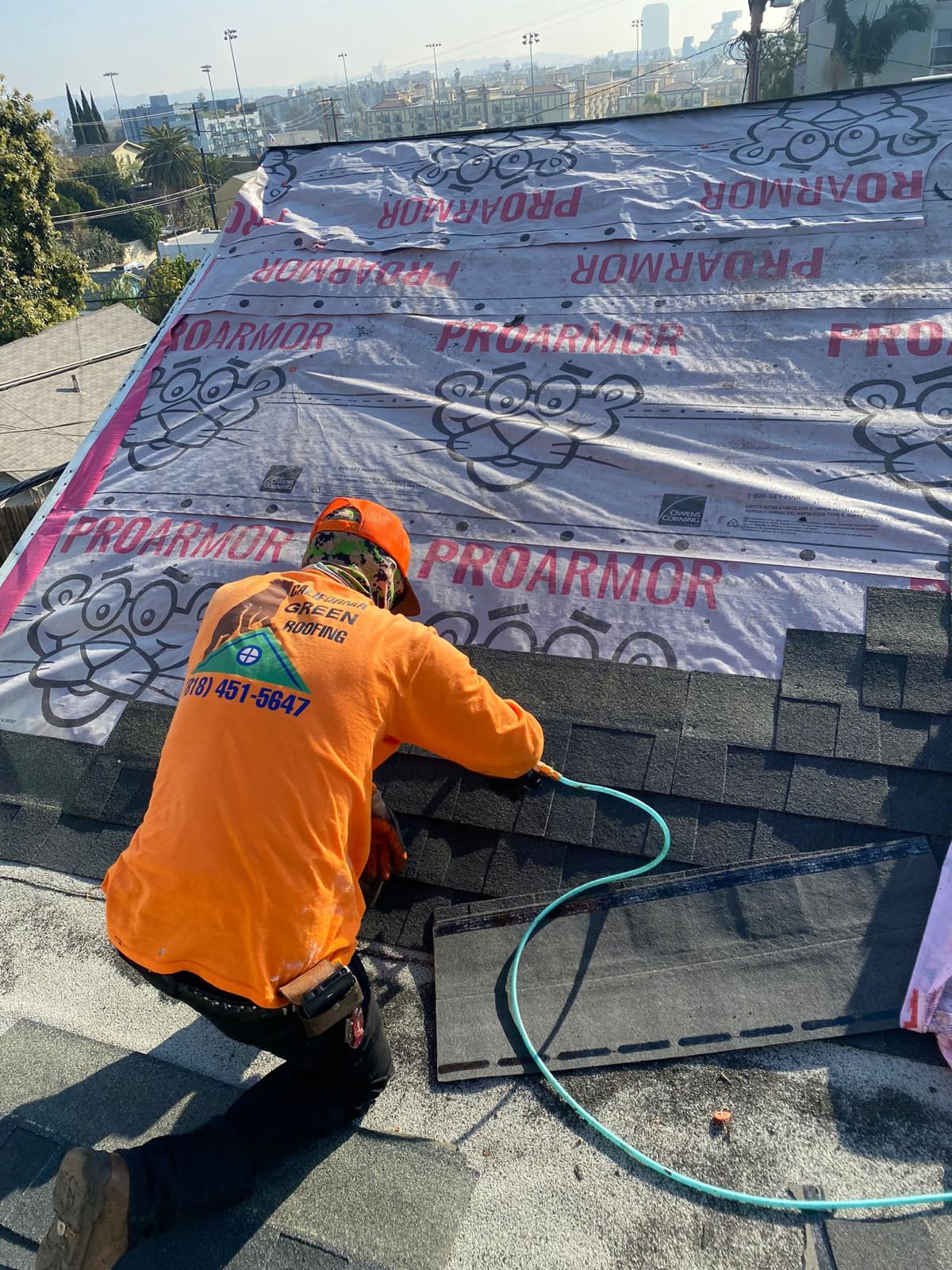
The skylight is mounted on a built-up wooden curb. The flashing kit is specifically designed for that skylight model and is installed in a shingle-like fashion, with each piece overlapping the one below it. The key is that it’s integrated with the roof underlayment (that felt or synthetic paper under your shingles) and the roof covering itself.
Here’s the basic sequence, simplified:
- The roof underlayment is run up the sides of the curb.
- The base flashing is installed over that, sealed at the top of the curb.
- Step flashing or side flashing pieces are woven in as each course of shingles or tiles is laid.
- A head flashing (or top flashing) is installed last, over the top courses, to shed water onto the roof surface, not behind it.
This creates a continuous drainage plane. Any water that gets behind the head flashing hits the step flashing. Any water that gets behind the step flashing hits the base flashing. Any water that gets behind the base flashing hits the underlayment. It’s all directed downward and out.
The Tool and Material Trap
You can buy the “best” peel-and-stick ice and water shield, the most expensive flashing metal, and a tube of $30 sealant. If you don’t understand the system, you’ll still get a leak. The material choices are important, but they support the principle.
- Metal vs. Rubberized Flashing: Many modern kits use a flexible, rubberized composite (like Vycor or similar). These are fantastic because they conform to uneven surfaces and accommodate movement better than rigid aluminum. For tile roofs, which are common in Reseda’s nicer subdivisions, lead-coated copper is often used for its malleability and longevity.
- Sealant is a Gasket, Not Glue: The sealant (like a high-quality polyurethane) should only be used in key locations—typically where the flashing meets the skylight curb. Its job is to create a watertight gasket that can still flex. Never use sealant along the bottom edges of the side flashings. This is the drainage weep path—block it, and you’re done for.
- Underlayment is Key: This is your last line of defense before the roof deck. In a critical area like a skylight, using a self-adhering membrane (ice and water shield) for the first few feet around the curb is cheap insurance. It seals around nails and provides a monolithic water barrier underneath everything.
When a DIY Approach Becomes a Money Pit
We get calls all the time from well-meaning homeowners who tried to stop a skylight leak with caulk. From the outside, it looks fine for a season. But inside, the leak continues or gets worse. Why? Because the water is entering somewhere you can’t see—often at a nail pop higher up the roof, or a cracked tile—traveling down a rafter, and dripping at the skylight opening, which is the path of least resistance.
You should seriously consider calling a professional if:
- The leak is intermittent or appears away from the skylight frame.
- Your roof is tile or another complex material.
- The skylight is old, and the flashing appears to be a custom-bent metal job.
- You’re not comfortable safely working on your roof’s pitch.
- You’ve already applied sealant twice and it’s still leaking.
A pro isn’t just selling labor. They’re selling diagnostic experience. They know to check the roof field above the skylight, the condition of the underlayment, and the integrity of the entire drainage system. What looks like a $200 caulk job can hide a $2,000 reroofing section of the deck. I’ve seen it too many times where a homeowner spent hundreds on sealants and “miracle fixes” only to pay us to completely re-flash it correctly later. The initial professional quote often ends up being cheaper than the cumulative cost of repeated DIY failures.
Cost & Method Comparison: A Real-World Guide
Let’s break down what you’re really looking at, ballpark, for a Reseda home. These aren’t quotes, but realistic ranges based on material and labor intensity.
| Approach | Typical Cost Range (Materials & Labor) | Best For… | The Trade-Off / Risk |
|---|---|---|---|
| DIY Re-Seal (Band-Aid Fix) | $50 – $150 | Minor, confirmed condensation issues (not a leak) or very temporary containment. | High risk of failure. Often traps moisture, worsening rot. Does not address root cause. |
| Professional Re-Flashing | $800 – $2,500 | A leaking skylight with sound roof surrounding it. The most common proper repair we do. | Corrects the system. Cost varies heavily with roof material (tile is 2-3x shingle). |
| Full Skylight & Flashing Replacement | $2,500 – $5,000+ | Old, damaged, or improperly sized units. When the curb or roof deck is rotted. | Highest upfront cost, but resets the clock for 20+ years. Includes new, warranty-backed unit. |
The Local Reality: Reseda’s Roofs and Regulations
Working on homes here, from the post-war tracts to the hillside properties, you see patterns. Many older homes have had multiple roof layers added over time. Flashing a skylight on a roof with two layers of old shingles is a completely different beast than on a clean deck. The thickness changes everything, and often requires custom flashing bends.
While Los Angeles doesn’t have a blanket code for skylight flashing, the Los Angeles Department of Building and Safety (LADBS) enforces the California Building Code, which mandates weather-resistant roofs. More importantly, doing it to code is doing it right—it’s about preventing the massive insurance claim from water damage down the line. A proper permit and inspection for a skylight replacement might seem like a hassle, but it’s a layer of protection for you, the homeowner, ensuring it’s done to a survivable standard.
Final Thoughts: It’s About the System
The takeaway isn’t that skylights are problematic. A properly flashed skylight should last as long as your roof with zero issues. The problem is almost always in the details of how it was tied into the roof’s water management system.
If you’re installing new, invest in a quality skylight with a complete, manufacturer-specific flashing kit, and have it installed by someone who shows you photos of their past work. If you’re fixing a leak, start by looking up the roof from the skylight, not just at it. And respect the thermal movement—that’s the silent killer in our valley heat.
Sometimes, the most cost-effective move is to have a local professional, like us at California Green Roofing, take a look. A seasoned eye can often diagnose in minutes what might take a homeowner weekends of frustration and guesswork. The goal is a dry, bright home, not a lifelong battle with a drip in the living room.
Related Articles
Reseda CA Skylight Installation And Leak Prevention: A Contractor’s Handbook
How Much Should You Really Spend On Roof Repair In Los Angeles?
People Also Ask
The best way to seal a leaking skylight begins with a thorough inspection, as the leak often originates from the flashing, not the glass itself. For a durable repair, use a high-quality, UV-resistant polyurethane or butyl sealant specifically designed for roofing. Clean the area completely, removing old caulk and debris, then apply the sealant generously to the gap between the skylight frame and the roof deck. Do not seal the weepholes, as they are essential for drainage. For a comprehensive approach to finding and fixing hidden leaks, we recommend reading The Los Angeles Homeowner's Guide To Detecting And Repairing Hidden Roof Leaks Before They Spread. At California Green Roofing, we always advise that proper flashing installation is more reliable than sealant alone for long-term protection.
Yes, proper flashing is absolutely essential around a skylight. It is the primary defense against water infiltration, which is the most common cause of leaks and structural damage. Flashing is a system of metal or waterproof membrane components that creates a watertight seal between the skylight frame and the roof surface. It channels water away from the opening and over the surrounding shingles. A professional installation must integrate step flashing along the sides, head flashing at the top, and a sill pan or base flashing at the bottom, all sealed with appropriate roofing cement. Skipping or improperly installing flashing will almost certainly lead to costly interior water damage.
Yes, the bottom of flashing should be sealed to ensure a watertight barrier. This critical step prevents water from seeping behind the flashing and into the vulnerable structural components of the roof and walls. The seal is typically created using a compatible roofing cement or a high-quality, flexible sealant designed for the specific materials involved, such as metal flashing against asphalt shingles or masonry. Proper sealing at the bottom edge, along with correct installation that integrates with the underlayment and allows for proper water drainage, is a fundamental industry standard for long-term leak prevention and roof integrity.
The lifespan of skylight flashing depends heavily on the material and installation quality. Standard aluminum or galvanized steel flashing, when properly installed, can last 20 to 30 years. Premium materials like copper or lead-coated copper can last 50 years or more. The critical factor is the integrity of the sealant and the precision of the initial installation, as improper flashing is a primary cause of roof leaks around skylights. Regular inspections, at least twice a year, are essential to check for cracks, corrosion, or separation from the roof deck. Any compromise in the flashing should be addressed immediately by a qualified professional to prevent water damage to the roof structure and interior.
Installing a self-flashing skylight requires careful planning and precision to ensure a watertight seal. Begin by selecting a location between roof rafters, cutting the roof opening precisely to the manufacturer's specifications. After preparing the interior shaft, place the skylight unit into the opening, ensuring its integrated flashing sits flat against the roof deck. The key is to follow the specific step-by-step instructions provided with your model, as designs vary. Properly integrate the self-flashing with existing roofing materials, using recommended sealants and fasteners. It is often advisable to consult with or hire a professional roofer, as incorrect installation can lead to significant leaks and structural damage, voiding warranties.
Proper skylight flashing tape is a critical component for a watertight and durable installation. This specialized tape, often a high-performance butyl or acrylic-based product, creates a flexible, adhesive seal between the skylight curb or frame and the roofing membrane or shingles. Its primary function is to prevent water intrusion by bridging the gap and accommodating minor movement due to thermal expansion and settling. Correct application is essential: surfaces must be clean, dry, and primed if required by the manufacturer. The tape should be applied in a shingle-lap fashion, with all seams thoroughly sealed and integrated with the primary roof flashing system. Using a tape specifically rated for long-term UV exposure and extreme temperatures is a standard industry best practice for long-term reliability.
A skylight flashing kit is a critical component for ensuring a watertight and durable installation. It typically includes step flashing, head flashing, and sill pan components, often made from corrosion-resistant metals like aluminum or galvanized steel. Proper integration with the roofing underlayment and shingles is essential to prevent leaks. The step flashing must be woven into the shingle courses, with each piece overlapping the one below. For curb-mounted skylights, a continuous base flashing is sealed to the curb and the roof deck. It is highly recommended to use a kit specifically designed for your skylight model and roofing material type to guarantee compatibility and long-term performance.
Self-flashing skylights are a popular choice for many roofing projects due to their integrated design. Unlike traditional models that require separate metal flashing kits, these units come with a built-in, wide flange that is typically made from durable, UV-resistant plastic or composite materials. This flange is designed to be installed directly over the roofing underlayment and beneath the final roofing material, such as asphalt shingles or metal panels, creating a continuous, water-resistant barrier. Proper installation is critical and involves careful integration with the roof deck and underlayment to prevent leaks. For long-term performance, it is essential to follow the manufacturer's specific instructions regarding sealing, fastening, and the use of compatible roofing materials to ensure a weathertight seal.
Skylights most commonly leak at the points where their structure meets the existing roof, specifically around the flashing. This critical metal or rubber component seals the seam between the skylight curb or frame and the roof deck. Leaks also frequently originate from failed sealant on the glazing itself, from condensation buildup due to poor ventilation, or from ice dams in colder climates that force water under the flashing. Proper installation is paramount, which includes integrating step flashing, counter-flashing, and a waterproof membrane correctly with the surrounding shingles. For a detailed contractor-level guide on installation best practices and leak prevention techniques, refer to our resource Reseda CA Skylight Installation And Leak Prevention: A Contractor’s Handbook.
Proper skylight flashing is critical for a watertight and durable roof installation. The industry standard is a step-flashing method integrated with the roof underlayment and shingles. This involves installing metal L-shaped pieces along each side of the skylight curb, weaving them with each course of roofing material to direct water down and away. A continuous head flashing piece is installed at the top, sealed to the curb and integrated under the shingles above. At the bottom, a large apron flashing is installed over the shingles to shed water. All flashing should be sealed with a compatible, high-quality roofing sealant. For complex installations, consulting with a professional roofing contractor ensures the detail meets local building codes and manufacturer specifications for long-term performance.