Roof Inspection Los Angeles
Roof Inspection Los Angeles, Every Zone Graded and Photographed
Most roofs fail quietly. A tile slips, a pipe boot splits, a seam opens, and nothing shows inside until the first real rain of the season. California Green Roofing puts a licensed roofing contractor on the roof, walks it zone by zone, photographs what is actually there and grades it. You finish the visit holding a written roof inspection report and a straight answer about what needs doing now, what can wait, and what needs nothing at all.
Licensed, bonded and insured
Licence CSLB #1100046
Every finding photographed
Condition report // six zones
Roof inspection guide
When to book
When a roof inspection is worth booking
There is no single schedule that fits every roof in this city. There are four moments when looking is clearly worth more than guessing, and every one of them is ordinary here: after weather, before fire season, at the age where the underlayment turns, and before anyone else gets to describe your roof for you.
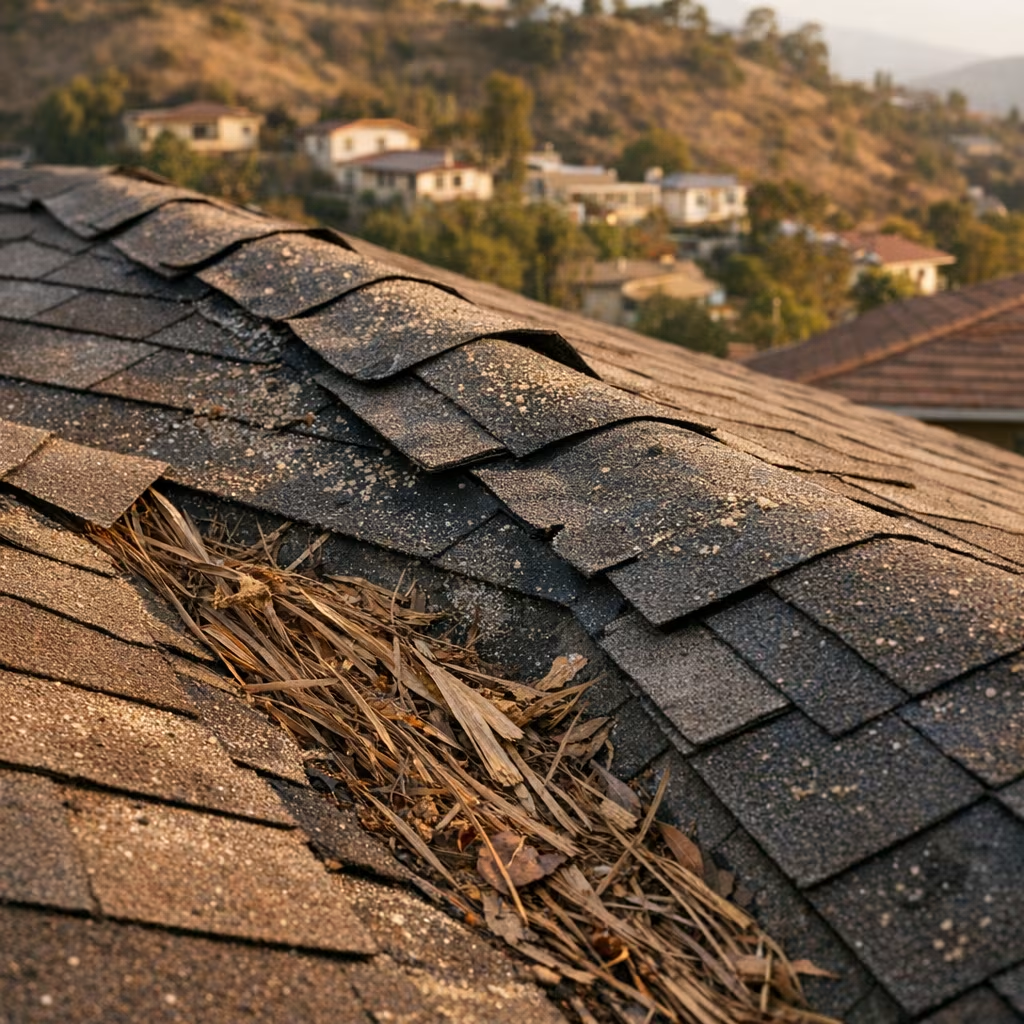
Wind damage // asphalt
01
After wind or heavy rain
Santa Ana gusts lift tabs and slide tile without leaving a mark that is visible from the street, and a single hard night can undo a ridge line that looked perfect in August. Water finds the gap weeks later, usually after dark, usually in a room nobody was watching. A roof inspection within a few days of the weather is the smallest thing you can do and the one that pays back most often.
02
Before fire season
Ember entry happens at the edges rather than in the middle of a slope: open eave vents, gaps under the ridge, split boots, and the dry debris that packs itself into a valley over a long summer. One roof inspection covers all of it, and all of it is fixable before the wind picks up rather than during it.
03
A roof past twelve years
Asphalt ages faster under Los Angeles sun than the warranty language suggests, and the covering is rarely what gives up first. Around year twelve it is the underlayment that sets your timeline, and the only way to read it is a roof inspection that gets to the places where it is exposed.
04
Before you list or renew
Buyers, agents and carriers all ask the same question about the roof, at the worst possible moment. A dated roof inspection report puts you in that conversation with evidence instead of opinion, rather than letting somebody else write the first description of your roof.
The method
How we inspect your roof, and why we say which way first
Most pages selling a roof inspection never tell you how the roof is going to be looked at. It matters, because the method decides what can honestly be found, and because a tile owner has a fair reason to want the answer before anyone puts a ladder up.
01
We walk it
On any roof that is safe to walk and built to be walked, a roofer walks it. Nothing else puts a hand on a loose ridge cap or shows how much give there is underfoot. Photographs from the air record a surface. A walked roof inspection tells you what that surface is sitting on.
02
Tile gets a route, not a ramble
Clay and concrete crack when somebody stands in the wrong third of the tile. Our crews walk the head laps and the battens, where tile is engineered to carry weight, and on a brittle or hand-made field we work from planks, the ladder and the edges. If a roof cannot be walked without damage, we say so before climbing.
03
Height and pitch decide the rest
A steep or three storey roof gets pole and camera work at the details that matter, plus close inspection from the eave line, so nothing is claimed that was not actually seen. Where a finding needs a second angle, we take it.
04
Then the inside, where there is access
The underside of the deck is the one surface that tells you how long a problem has been running. Where there is safe attic access the roof inspection goes inside too, looking for staining, daylight at the penetrations and damp insulation under the valleys. That is the difference between a repair and a rebuild.
You are told which of these applies to your roof when the visit is booked, not after the fact. It prevents the most common complaint about roof inspections Los Angeles homeowners pay for, which is a report written about a roof nobody got close to.
The pass
What a roof inspection covers, ridge to eave
An inspection is not a glance from the top of a ladder. It is a route across the roof with a stop at every place a roof is known to let water in, and a photograph taken at each one. Six zones, every time, in the same order, so that nothing gets skipped because the weather turned or the light went.
Elevation // ridge to eave, six stations
01
Ridge and hip
Ridge caps, the mortar or closure sitting under them, and how the whole line is fastened. This is where wind gets its first grip on a roof and where it lets go first, so it is the first stop on every pass.
02
The field
The covering itself, slope by slope: cracked or slipped tile, curled and lifting tabs, granule loss showing in the runoff path, and any previous patch work with an honest note about how well it was done.
03
Valleys
Where two slopes meet and all the water arrives at once. Metal condition, debris load, and whether the valley was built open or closed, because that single detail changes how it fails and how it gets fixed.
04
Penetrations
Every pipe boot, vent, skylight and chimney. Split rubber boots are the most common entry point we find on Los Angeles roofs, they are quick to put right once somebody has seen them, and they are completely invisible from the ground.
05
Flashing and walls
Step flashing, counter flashing, and every line where the roof meets a wall or a parapet. Sealant smeared over a gap is not flashing, it is a countdown, and the report says which one you have.
06
Eave, gutter and edge
Drip edge, fascia, gutter fall and the underside of the overhang. A slow leak almost always shows itself here first, weeks or months before anything appears on a ceiling inside the house.
That route is the whole roof inspection checklist, and it does not change with the season or with how the roof looks from the driveway. What changes is how long each zone takes, which is decided by what we find when we get there.
The overlap
Roof inspection vs home inspection, and why the roof gets its own visit
This is the question we are asked more than any other, usually by someone holding a home inspection report that mentions the roof in two lines and recommends a specialist for the rest.
A general home inspection looks at the whole house
It has to cover foundations, plumbing, electrical, appliances and the roof in a single visit, which leaves the roof a paragraph and often a look from the ground or the top of a ladder. That is a reasonable scope. It is not a reading of the roof.
A roofing contractor is looking at one thing
Six zones, an hour or more on the covering itself, and a photograph at every finding. The difference shows up in the specifics: a real roof evaluation names which boot, which valley and which run of flashing, and says what happens next if it is left.
In California, the licence is the line
Roofing work is C-39 work, and a licensed roofing contractor is the trade that can both assess the roof and carry out what it needs. When a general home inspection report says further evaluation by a roofing contractor is recommended, this is the visit it is recommending.
The deliverable
The roof inspection report you actually receive
A roof inspection is only worth what you are left holding afterwards. Ours is a written roof condition report you can keep, hand to a carrier or an agent, or put in front of another roofing contractor for a second opinion. It is a roof assessment in plain words, not a sales document.
Photographs
Every finding shot in place, with enough of the surroundings in the frame that you can find it again yourself or show it to somebody else.
Condition grade
Each zone marked sound, monitor or act, in those words, rather than a rating out of ten that means nothing to anyone reading it later.
Service life
An honest read on the years left in the covering as it stands today, and the specific things that would shorten that number.
Priority
What needs doing now, what can wait a season, and what is fine and should be left alone, which is more of the list than most people expect.
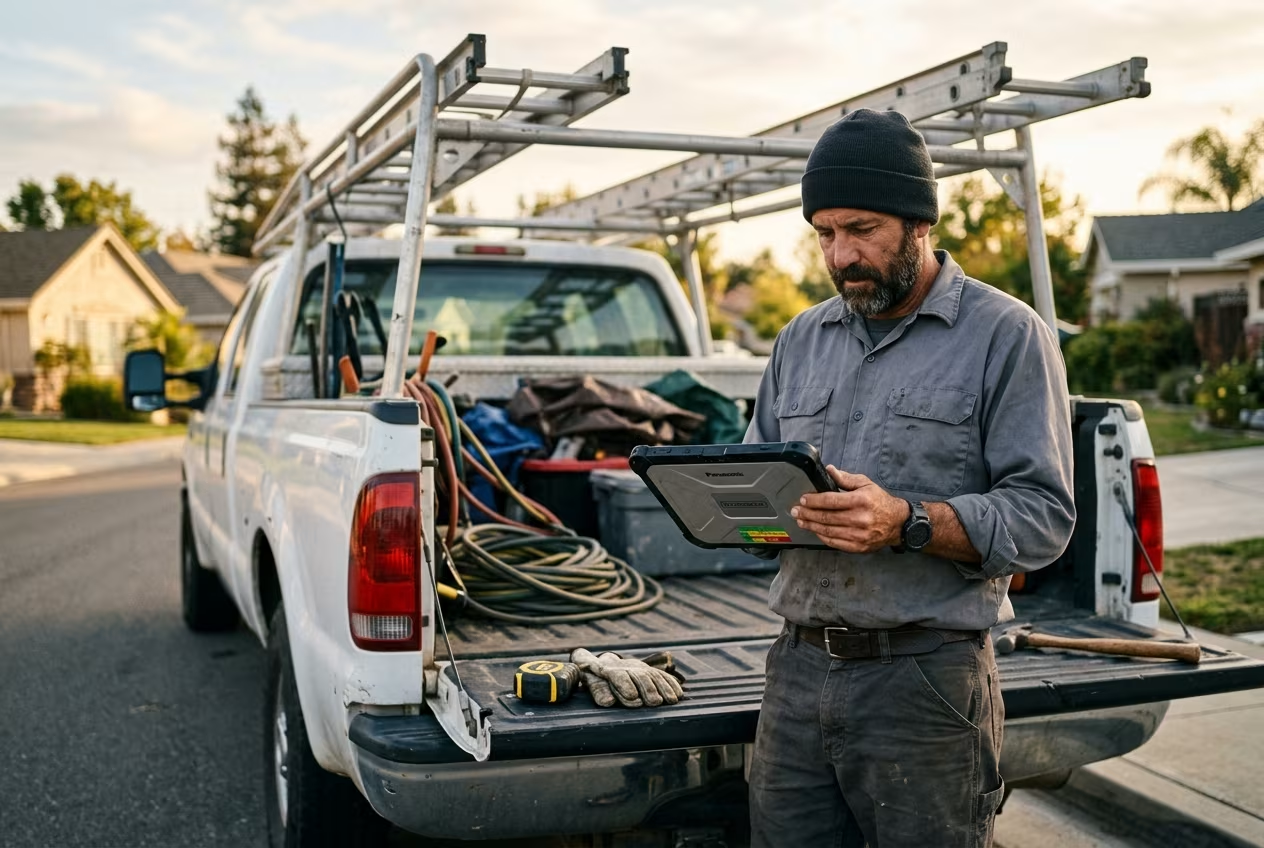
Condition report // in the field
What the report does not cover
A roof inspection is a visual assessment of what can be seen and safely reached on the day. It is not a structural engineering report, it does not cover framing, interior ceiling damage, insulation or anything hidden behind a finished surface, and it cannot see a defect buried under a covering that is still fully in place. Where something needs the roof opened up to be answered properly, the report says that plainly instead of guessing, and that recommendation is made in writing rather than on the phone.
If you are selling and a buyer or an escrow officer has asked for a signed document with a term on it, that is a different product: see roof certification in Los Angeles. An inspection tells you the condition. A certification puts a name and a period behind it.
By roof type
Roof inspection by roof type in Los Angeles
The route is the same on every roof. What we expect to find on it is not, because the covering decides where the attention goes and Los Angeles has more roof types per street than almost anywhere else in the country.
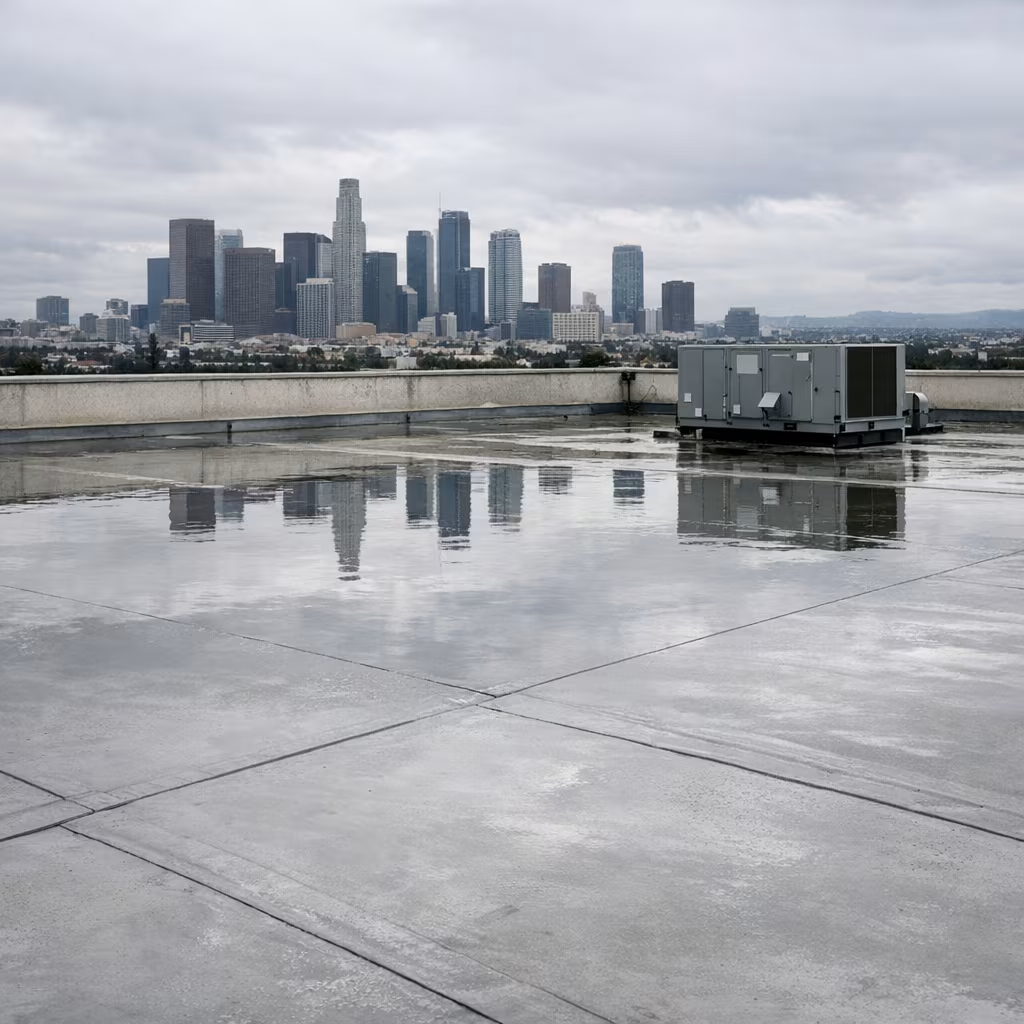
Ponding // low slope
Clay and concrete tile
The tile usually outlives the roof. What fails underneath is the underlayment, along with slipped and cracked pieces where somebody walked the field without knowing where a tile carries weight. On the Spanish and Mediterranean stock all over this city, the tile you can see is rarely the part that matters.
Asphalt shingle
Curling, granule loss and lifted tabs along the windward slopes first, then nail pops and brittleness once the mat has dried out under years of direct sun. A residential roof inspection on asphalt is mostly a reading of how far through that sequence the roof has already travelled.
Flat and low slope
Ponding that never drains, blistering, seam separation, and the flashing where the field meets a parapet wall. Standing water is a clock rather than a defect on its own, and a flat roof inspection is largely about how fast that clock is running.
Metal and standing seam
Fastener backout, seam movement and sealant failure at the penetrations. The panels are rarely the problem. What holds them down, and what seals whatever passes through them, almost always is.
Wood shake and shingle
Splitting, cupping, missing keyways and the debris that collects between courses. In the hillside fire zones this is an ember question as much as a water question, and the inspection treats it as both.
Anything with a skylight
Skylights are their own category whatever the covering is: curb height, the flashing kit, the seal, and whether the unit was ever installed to the manufacturer’s detail.
Carriers and claims
Roof inspection for insurance, renewal and storm documentation
Non renewal letters and roof age cut-offs have turned a routine inspection into paperwork a lot of people in this city suddenly need.
Carriers have spent the last few years re-underwriting California roofs, and plenty of homeowners have opened a letter giving them a fixed number of days to do something about a roof that has never leaked. A roof inspection for insurance purposes is how you answer that letter with something other than a phone call.
What a carrier or an adjuster responds to is dated evidence: photographs of the actual condition, a zone by zone grade, and a licensed roofing contractor’s written read on the service life left in the covering. Where the roof is sound, the roof inspection report is the document that says so. Where it is not, you find out on your own schedule rather than on somebody else’s deadline.
We are roofing contractors, not adjusters, so we will not interpret your policy or predict what a carrier accepts. We document the roof accurately enough that the conversation stays about the roof.
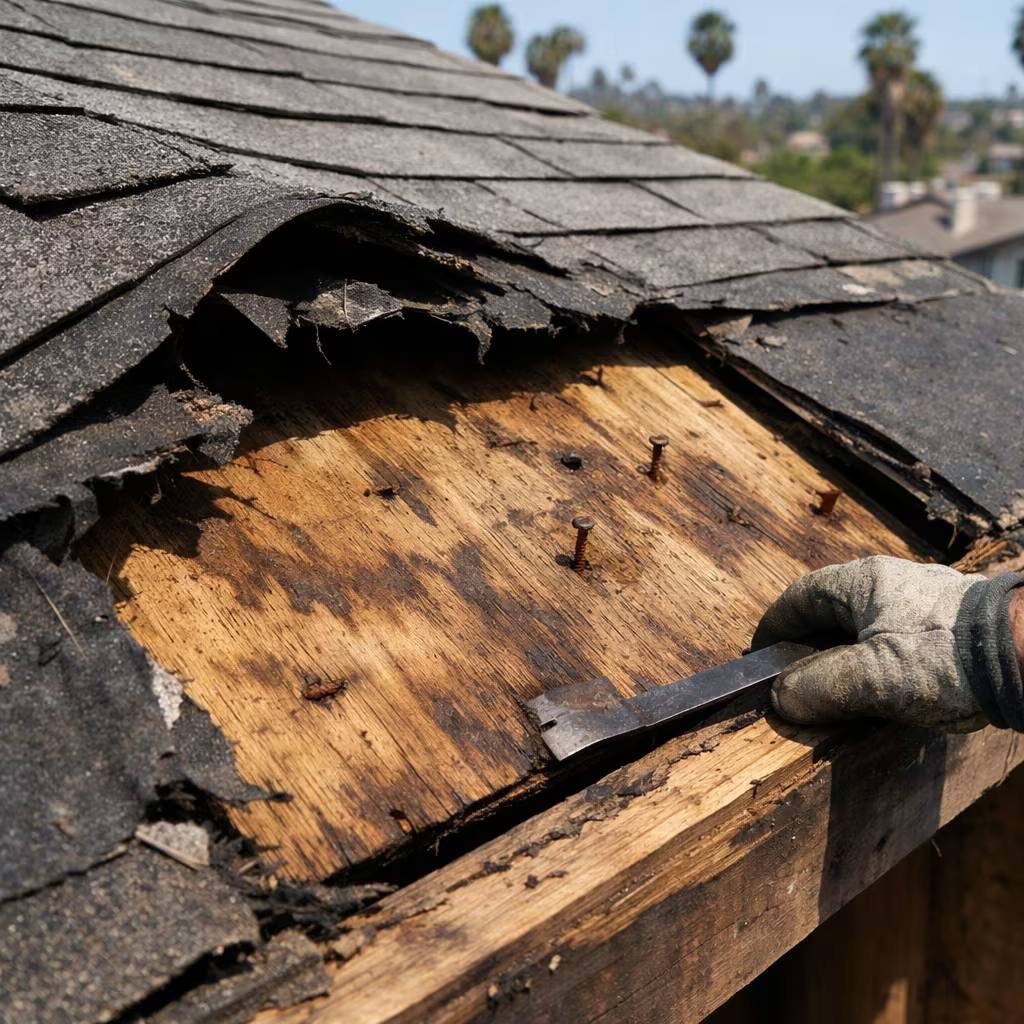
Under the covering // decking
After the pass
What happens after the inspection
There are only three honest outcomes, and the first one is the most common. A roofing contractor who never returns the first answer is not inspecting anything, he is selling, and you can usually tell which by how the visit ends.
01
Nothing needed
The most common result on a roof under ten years old, and the one nobody warns you about. You get the report, the photographs and a sensible date to look again. No work is proposed, because none is warranted, and that is a finished job as far as we are concerned.
02
A targeted repair
One boot, one run of flashing, a section of valley. You see the photograph first and you decide in your own time. Roof repair in Los Angeles is booked separately, and anything actively running goes to roof leak repair instead, because a live leak is a different job with a different clock.
03
Plan a replacement
When the underlayment is spent, patching buys months and the same work has to be done over again anyway. We say so plainly, with the photographs that show why, and roof replacement becomes a project you plan in spring instead of an emergency in January.
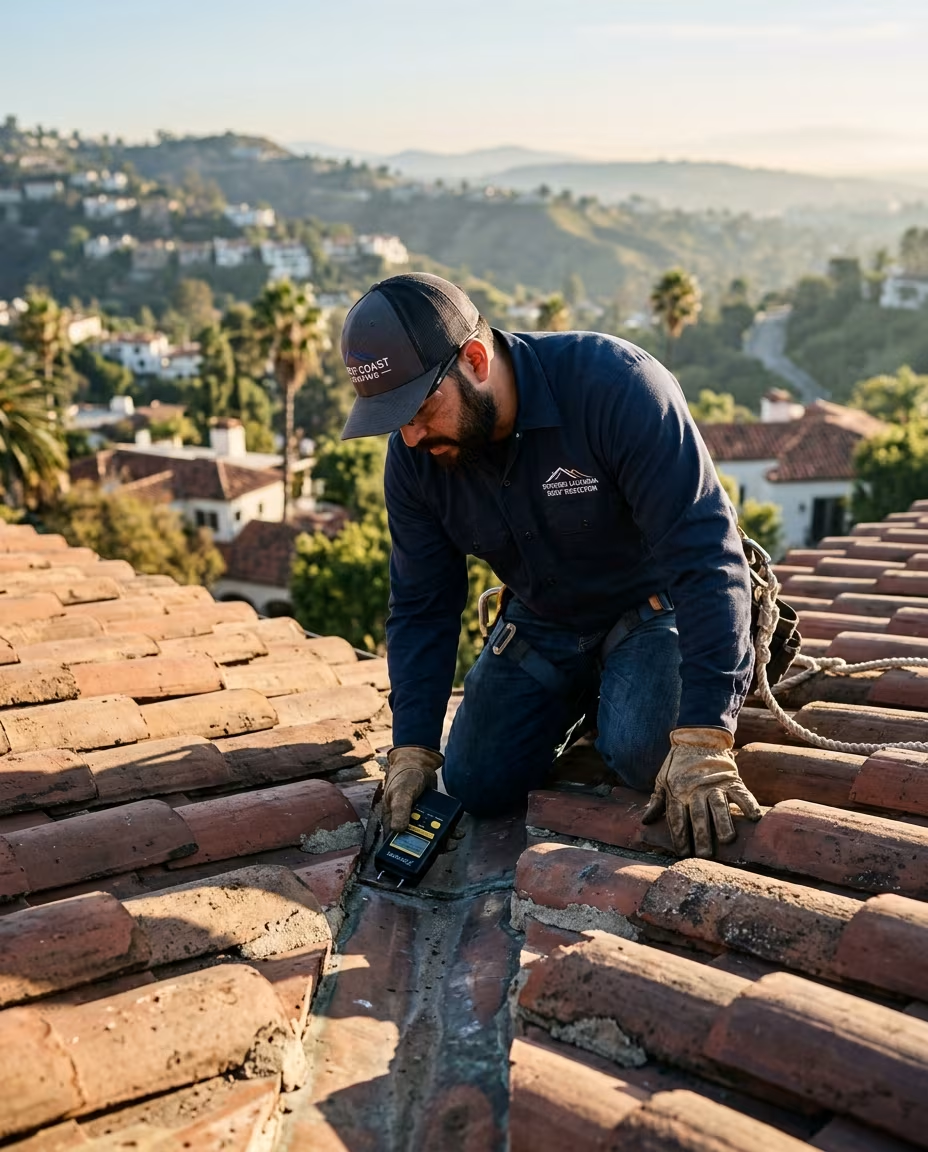
First pass // tile valley
Who is on your roof
A licensed Los Angeles roofing contractor, not a lead generator
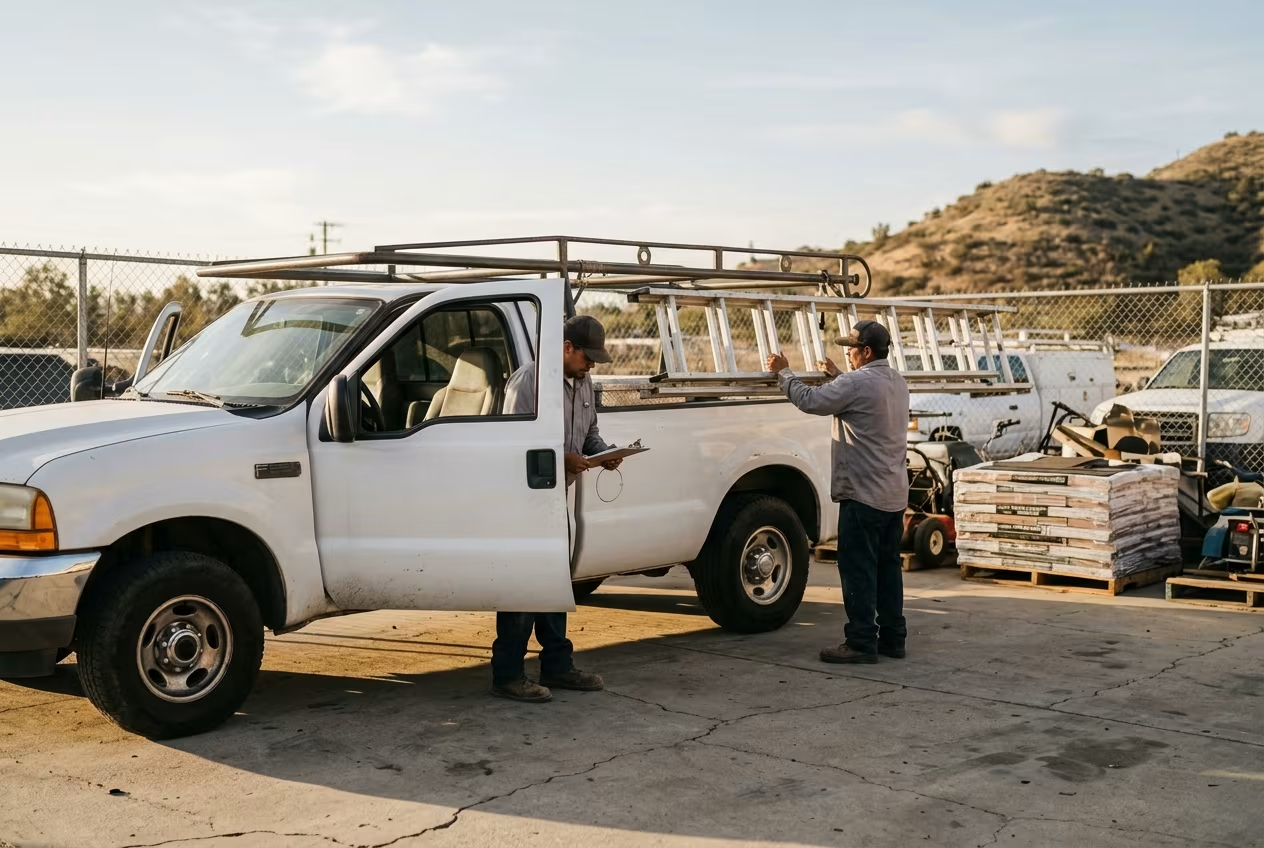
Yard call // 6:40 AM
Who does roof inspections here is not something we leave vague. The person on your roof is a licensed roofing contractor from our own crew, working out of our yard in Reseda. You can look the licence up before we arrive and you can drive to the gate afterwards. That matters more on an inspection than on any other job we do, because an inspection is a judgement, and a judgement is only ever worth the name standing behind it.
We are not a lead generator, we do not sell your address on, and we do not sub the work out to whoever happens to be available that morning. The crew that walks the roof is the crew that would carry out whatever the roof turns out to need, which is exactly why the report has to be accurate rather than alarming. Selling a roof nobody needs loses us the next twenty years of work on that street.
20 YR
Written workmanship warranty on work we carry out
Questions
Roof inspection Los Angeles questions, answered
The twelve we are asked most, answered the way we would answer them on the phone.
What does a roof inspection include?
Six zones, walked in the same order every time: ridge and hip, the field, valleys, every penetration, flashing and wall lines, then the eave and gutter edge. Each finding is photographed in place and graded sound, monitor or act. Where there is safe attic access, the deck is checked from underneath as well.
How often should a roof be inspected?
Once a year is the sensible baseline for most homes in Los Angeles, best timed before the rains rather than during them. Add a look after any hard wind event, and move to twice a year once a roof is past fifteen years or sits under heavy tree cover.
Is a home inspection enough?
For buying a house it covers the whole property, which is its job. It usually gives the roof a paragraph and a look from a ladder. If that report recommends further evaluation by a roofing contractor, a dedicated roof inspection is what it is asking for.
Do you walk the roof or fly a drone?
We walk anything safe and built to be walked, because nothing else tells you what the surface is sitting on. Height, pitch and a brittle covering can change that, and you are told which method applies to your roof when the visit is booked, not afterwards.
Will you crack my tile roof?
Not if it is walked properly. Tile carries weight at the head laps and over the battens, and that is where our crews step. On a brittle or hand-made field we work from planks, the ladder and the edges instead, and if a roof genuinely cannot be walked without damage we say so before climbing.
How long does an inspection take?
Most single storey homes take about an hour on the roof, longer on tile or on anything cut up with multiple slopes and skylights. We would rather run over than skip a zone of the roof inspection to make a schedule work.
When do I get the report?
The photographs are taken as we go and the written roof inspection report follows the visit, usually the same day or the next working day. If you are working to a deadline, say so when you book and we will confirm it before the visit is scheduled.
Who can sign the report?
In California, roofing is C-39 work, and a licensed roofing contractor is the trade that can both assess a roof and carry out what it needs. Ours is CSLB #1100046, bonded and insured, and you can look it up before anyone puts a ladder against your house.
Do you inspect the attic too?
Where there is safe access, yes, and it is often the most useful ten minutes of the visit. Staining on the deck, daylight at a penetration and damp insulation under a valley tell you how long something has been running, which is the difference between a repair and a rebuild.
Will this help with my insurer?
It gives you dated photographs, a zone by zone grade and a written read on the service life left in the covering, which is the evidence a carrier or an adjuster works from. We are roofing contractors rather than adjusters, so we document the roof and leave the policy to your carrier.
What does it not cover?
It is a visual assessment of what can be seen and safely reached on the day. It is not a structural engineering report, and it does not cover framing, interior ceiling damage, insulation or anything hidden behind a finished surface. Where the roof has to be opened up to answer something properly, the report says so.
Do I need one after a storm?
After any wind event hard enough to move a branch, yes, while the evidence is still where the weather left it. The same applies after a fire or an ash fall, where the roof inspection looks at ember entry along the edges and the load in the valleys.
Book it
Book a roof inspection in Los Angeles
Plenty of people land here after typing roof inspection near me and finding a directory instead of a roofer. Tell us the address, the roof type if you know it, and what made you look up. We confirm the visit before anything is scheduled.
Roof inspection services Los Angeles homeowners can book seven days a week
Inspection request // Los Angeles
Call
Service area
Los Angeles, California
License
CSLB #1100046, bonded and insured
Hours
Open 7:00 to 22:00, seven days a week