Licensed roofers in Glendale
Roofing Glendale, CA
repairs, tile work and reroofs
Roofing Glendale houses mostly means working on older roofs: about seven in ten homes in the city were built before 1980 (Census Bureau, 2024). We find where the water gets in, repair what still has life in it, and rebuild one slope or the whole roof when the deck needs it, every job scoped in writing and covered by a 20-year workmanship warranty.
CSLB license #1100046
Family-run, bonded, insured
A 20-year workmanship warranty
Roofing Glendale in eight parts
01 / Roof repair, Glendale
Roof repair Glendale, CA: the three faults we look for first
The signs you need a new roof in Glendale are rarely dramatic: a slipped tile, a ceiling corner that stains after the first winter storm, granules piling up in a gutter. About one home in five here was built before 1940 and the median home dates from 1966 (Census Bureau, 2024), which means roofing Glendale houses often starts on roofs that may already have been patched more than once. Much of that trouble traces back to one of three conditions.
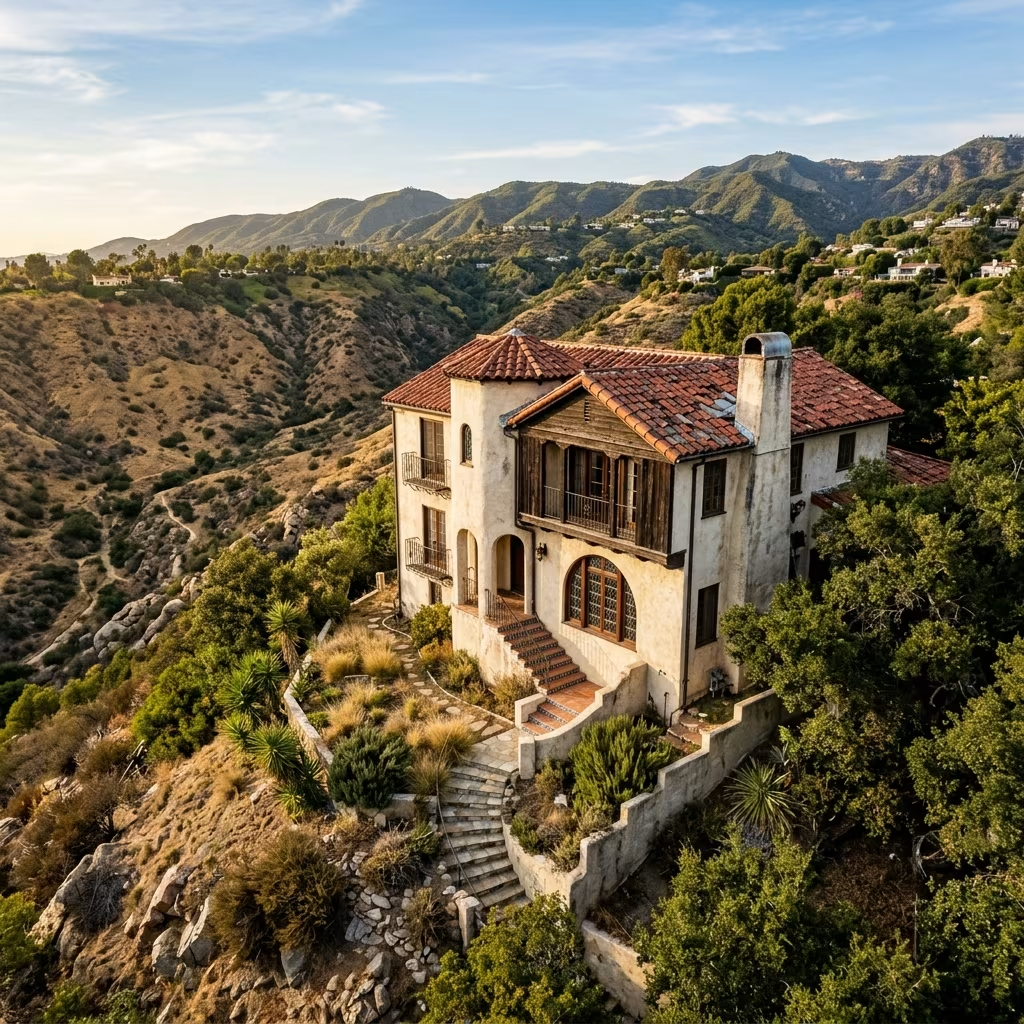
Worn clay tile on a hillside
01
Felt worn out under the tile
Clay tile can last for generations, but the felt beneath it usually gives out decades sooner. Rain that slips past a sound tile then runs down to the deck and shows up as a stain far from where it got in. Tile roof repair in Glendale often comes down to lifting the tile, laying new felt and setting the same tile back.
02
Old tar hiding the real leak
Many older roofs here carry decades of repairs, each one tarred over the last. Each coat of tar holds water against the wood and buries the real entry point a little deeper. Proper roof repair Glendale homeowners can rely on takes the old patch off, finds where the water really gets in and closes it with matching material.
03
Slopes facing the afternoon sun
South and west slopes take the strongest sun, so their shingles shed granules and curl first. On a lot of roofs one or two of those slopes are worn while the others are sound, which is why a repair or a partial reroof can be the right answer long before a whole new roof. Shaded slopes on the same roof can look almost new by comparison.
If the trouble is one flashing or a handful of broken tiles, the survey will say so, and the job stays a roof repair. Glendale homeowners get that answer before any larger work is discussed.
02 / Roofing Glendale by the slope
When a partial roof replacement is enough, and when it is not
A partial reroof saves the slopes that still work, and it comes with a real trade-off: new tile or shingle never quite matches slopes that have weathered for decades, and the seam where new work meets old is the one place a partial job can fail. A full roof replacement in Glendale avoids both, but it also disturbs slopes that may still have years left in them. The plan below helps you see which way your own roof leans.
Choose the slopes in trouble
2 of 6 slopes chosen
Our read
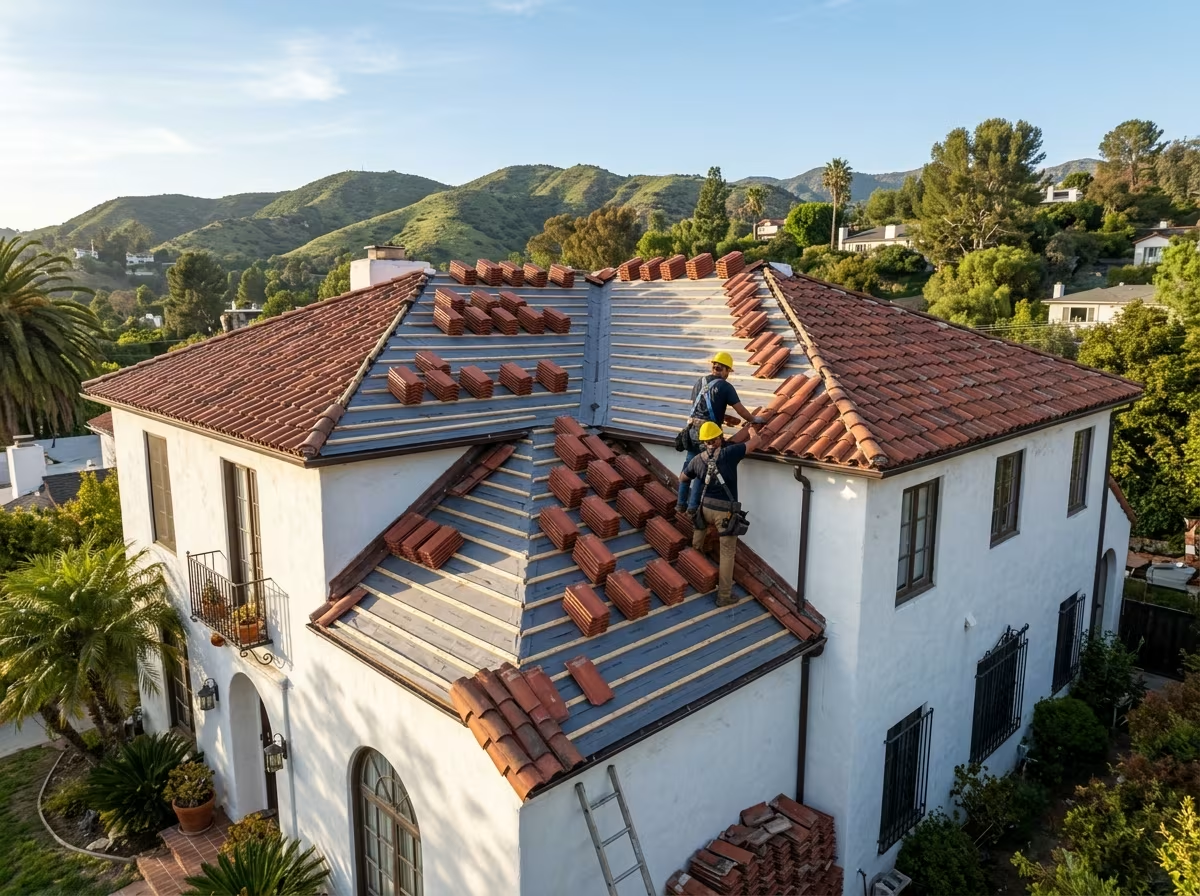
Rebuild only those slopes
If only one or two slopes are chosen and the rest still hold up, a partial job usually makes sense: the failing slopes are rebuilt and the others keep their remaining years. Expect the new slopes to look brighter than the old ones for a few seasons, and expect the seam between them to get the closest look on the final walk.
Our read
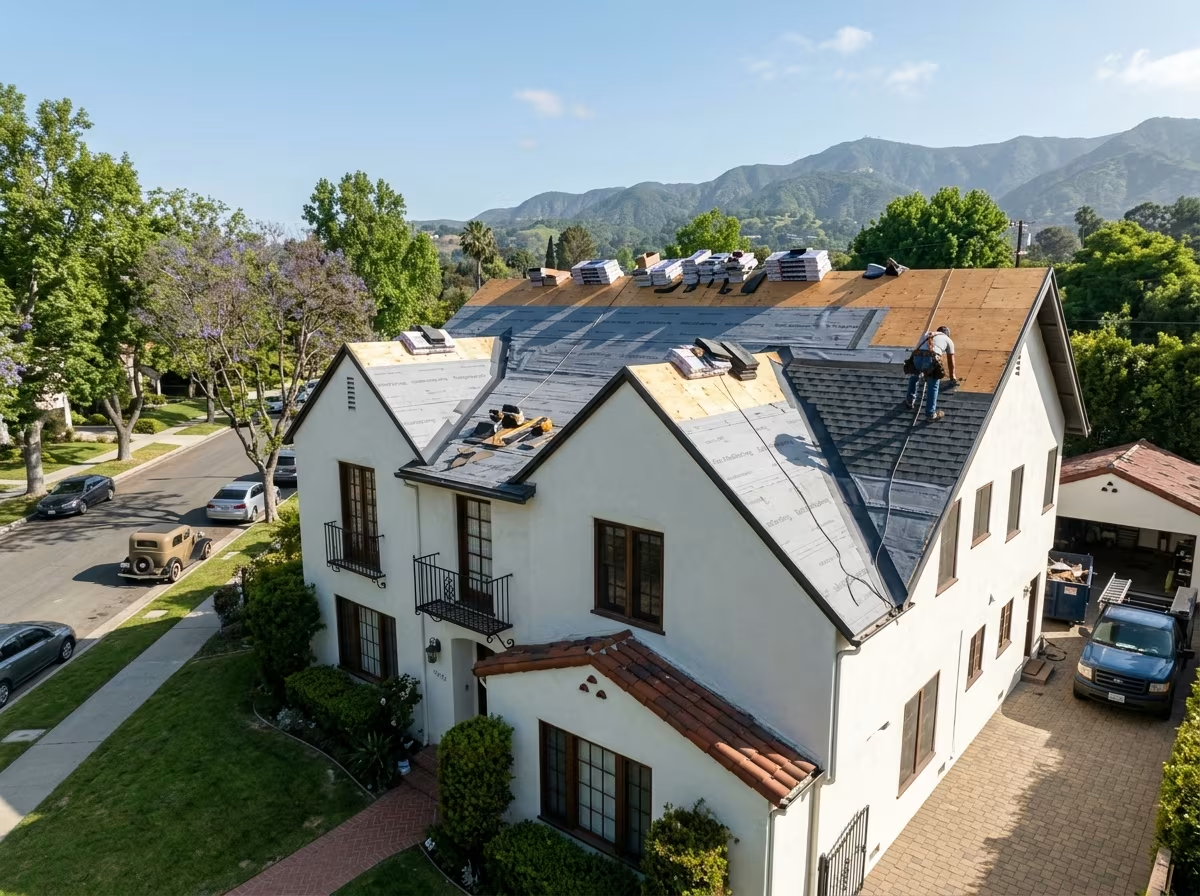
Replace the whole roof
Three or more chosen slopes change the picture: the rest of the roof is the same age, and one tear-off avoids leaving several seams between old and new work, each one a place where a leak could start later. For what a full tear-off involves, see the roof replacement page.
03 / Tile on old homes
Tile, gables and hips on Glendale revival-era houses
Roofing Glendale revival houses is partly design work: from the street, the roof is half of what people see. A clay tile roof in Glendale that sits inside one of the historic districts is part of what the district is known for, so whatever goes on next has to read the same from the curb, and planning review by the city may apply.
Tudor, French, Colonial Revival, Spanish Colonial
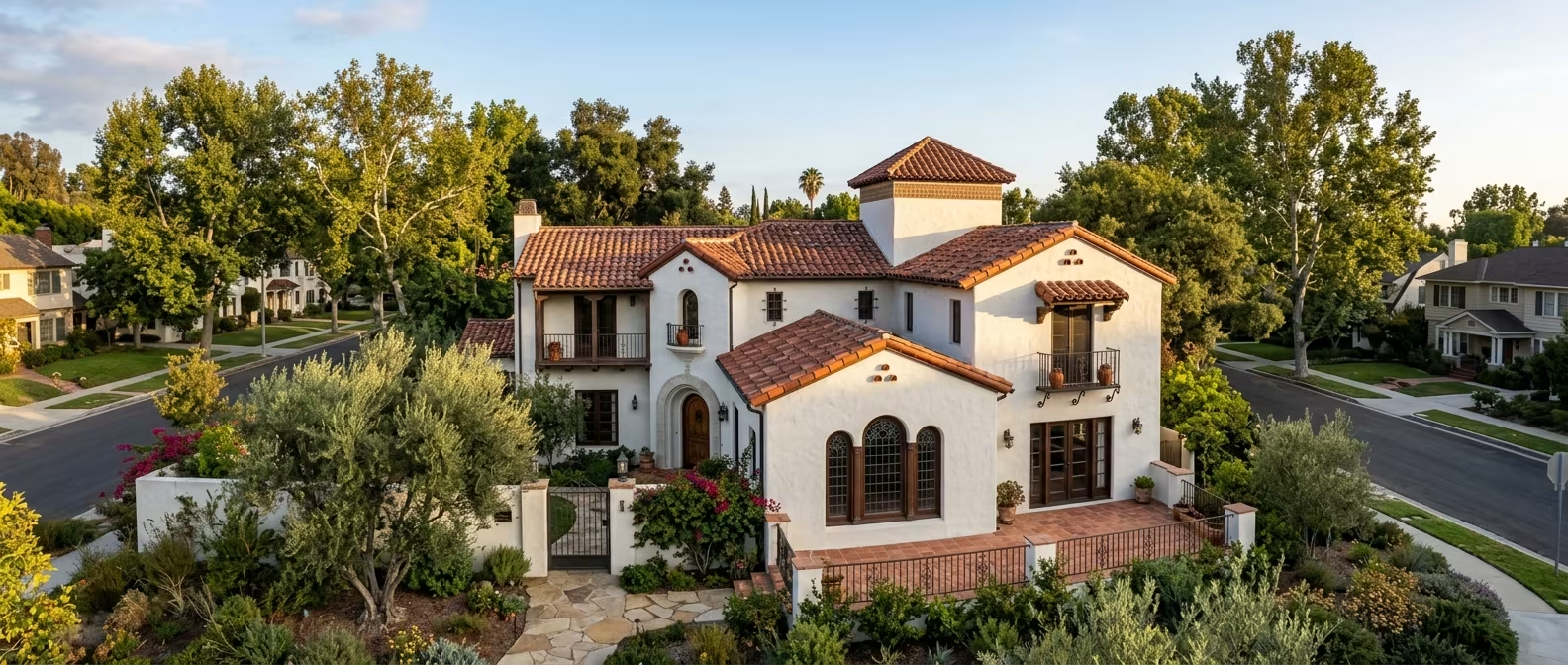
Barrel tile on a revival house
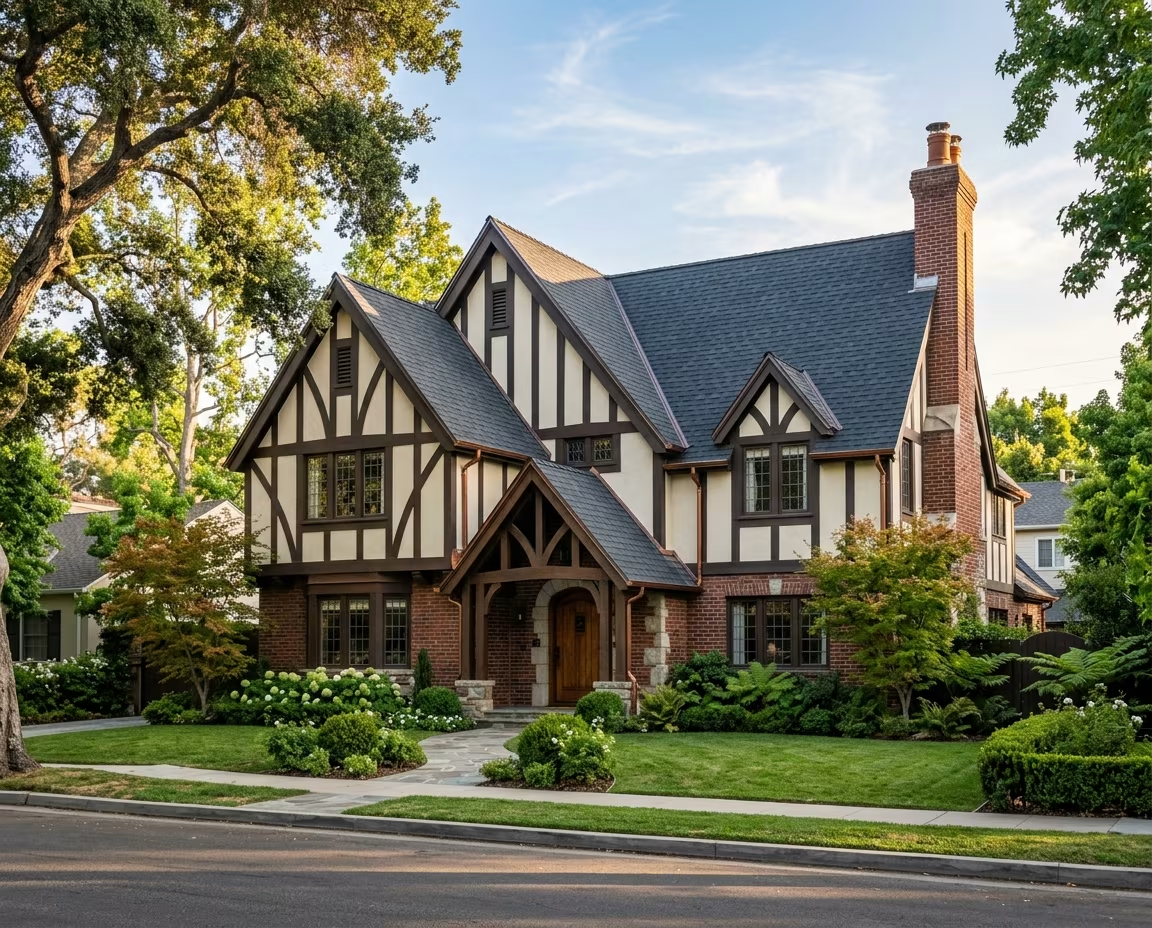
Steep gables and a chimney
A
Spanish Colonial tile
Barrel tile on a shallow pitch sheds rain well until one tile cracks or slides, and then water reaches the felt at once. Broken pieces are replaced with tile of the same curve and color, so the patched area blends into the rest of the slope.
B
Tudor gables and valleys
Steep slopes shed water fast, but every gable that meets another forms a valley, and a Tudor house has many. A worn valley shows up as a stain under the meeting point long before the shingles around it look tired.
C
Colonial Revival eaves
Simple side gables and a centered front make these the easiest revival roofs to work on. The usual trouble sits at the joins: a porch roof tied into the main slope, a dormer added later, or a second layer laid over the first.
D
French-inspired hips
Tall hipped roofs with flared eaves give these houses their height. Every hip line is a seam of its own, so the hip caps and the joints around each dormer are what keep the water out.
04 / Roofing Glendale step by step
From the Glendale roof permit to the final walk
Do you need a permit for a roof in Glendale? For a roof replacement, Glendale requires one, issued by the city Building and Safety division. As a licensed roofing contractor in Glendale, we file it ourselves. What matters more to you is what you get to see along the way, so the six stages below are written from your side of the job, with the one thing to check at each.
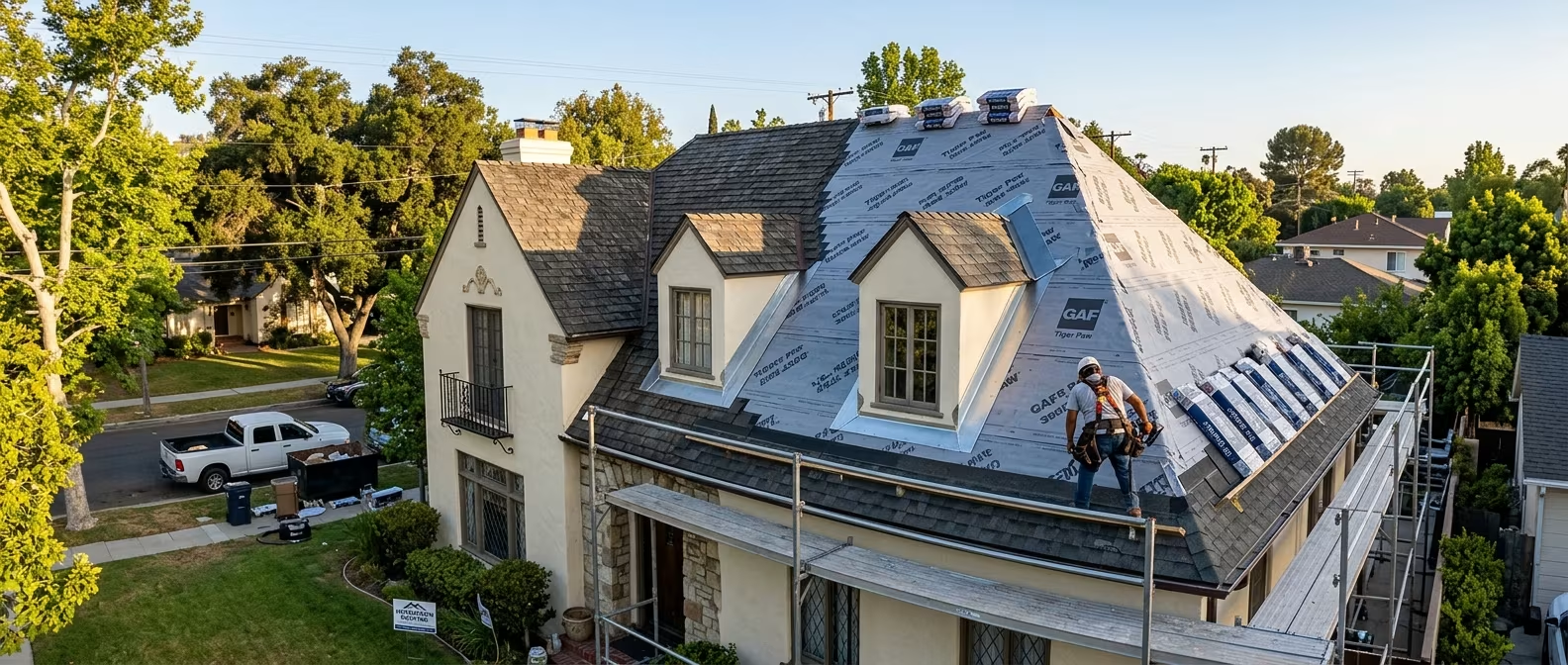
New felt on a steep slope
01
The survey visit
Photos of every slope from the survey show you the trouble without a ladder. For a full written report, see our roof inspection page.
02
The scope you sign
Read the written scope for what it leaves out as much as for what it includes, because anything missing from it is not part of the job.
03
Your permit number
Before the old roof comes off, ask for the permit number. If it is not in hand by then, the work should wait.
04
Photos of the deck
Soft or split boards are the usual surprise of a reroof, and you see each one in a photo before anything covers it.
05
Layers you can name
Ask which underlayment and which covering are going on, by name. A crew that knows its products answers in one sentence, and the names should match the scope.
06
The walk at the end
Open slopes are sealed each evening and a magnet sweeps the yard for nails. On the last day you walk the job with us and receive the written warranty.
05 / Roofing contractor, Glendale
Roofing contractor Glendale, CA: four checks before you sign
Search for roofers near Glendale and much of what comes up is regional. Many roofing companies in Glendale work from outside the city, ours included. Where a crew drives in from matters less than four things you can check before you sign, and roofers in Glendale differ on every one of them. A good one also tells you plainly when a repair is enough.
01
A license you can check
The Contractors State License Board lists every California license online. Look up the number, confirm that it is active and covers the work, and check that the name matches the company on the scope. Ours is CSLB #1100046.
02
Insurance on paper, too
Before anyone climbs a ladder at your house, ask for a certificate of liability insurance, and ask how the crew is covered if someone is hurt on the job. Any roofing contractor, Glendale-based or not, should answer both in writing.
03
The permit in its name
The contractor, not the homeowner, should file the reroof permit in the company name. A permit pulled under a different name is a reason to stop and ask why.
04
A warranty on the work
Materials carry a warranty from their maker, but a workmanship warranty covers the way they were put on, which is where many roof problems begin. Get it in writing, with its length. Ours runs 20 years.
We take on residential roofing Glendale-wide, from prewar houses to apartment buildings, and our commercial roofing crews handle shops and offices. Either way, the four checks above apply to us as much as to anyone.
06 / Roofing Glendale by ZIP
What the roofs look like in each Glendale ZIP code
Nine ZIP codes with Glendale as their postal city hold homes: 91201 to 91208, and 91210 in the central blocks. The housing changes sharply from one to the next (Census Bureau survey, 2024). In 91207 and 91208 about six homes in ten are detached houses, while in 91204 more than nine in ten homes are rented, most of them in buildings of five units or more, so roofing Glendale apartment blocks in 91204 and hillside houses in 91208 are two different jobs. About a third of homes in 91201 and 91207 date from before 1940, the highest shares of the nine. Each row below names the area, what its roofs face and the roof work its housing points to.
ZIP
Area
Exposure
Typical work
91201
The west side
Older houses on flat streets
Reroofs on older houses
91202
North of the center
Flats rising to the foothills
Pitched and low-slope roof work
91203
The city center
Tall, flat-roofed new blocks
Membrane work on new towers
91204
The south side
Dense rentals, flat roofs
Flat roof repair for landlords
91205
The southeast
Dense older walk-ups
Low-slope reroofs, older blocks
91206
The east side
Canyon lots near brush
Hillside and flatland reroofs
91207
The northeast hills
Foothill lots, older wood
Reroofs on older foothill homes
91208
The north hills
Steep lots near dry brush
Pitched reroofs on owned homes
91210
The central blocks
2000s mid-rise blocks
Membrane roofs on mid-rises
07 / Ten questions
Roofing Glendale: ten questions worth asking
Each answer starts with the short version and then gives the reason behind it. Several come back to the three local facts behind roofing Glendale homes: the age of the housing, the fire hazard zones and the city permit.
How long does a roof last in Glendale?
As long as its weakest layer. Shingles here give out within a few decades and clay tile can last for generations, so the covering is rarely the whole answer. With so many houses in the city past their first roof, the useful question is how long the current layers have left, and only a look at the deck answers it. A survey dates a roof by what it finds, not by the year on the deed.
Why does a sound tile roof leak?
Because tile on its own was never the waterproof layer. On many older homes the tile roof underlayment in Glendale was laid decades ago, and once that felt cracks, rain that slips between the tiles runs straight to the deck. The fix is to lift the tile, lay new underlayment and set the sound tile back. That is roof repair, Glendale style: the tile stays, and the felt under it is new.
Is a Class A roof required here?
In a Very High Fire Hazard Severity Zone, yes. California requires a Class A roof covering there, so roofing Glendale hillside homes inside one leaves no room for a lower rating. Check the address on the fire hazard severity zone map before choosing a material. Most common roofing materials come in Class A assemblies, so the rule narrows the product list more than the look, and a Class A roof in Glendale can still be clay tile.
Can you replace part of a roof?
Yes, when the damage stays on one or two slopes and the rest of the roof is sound. A partial roof replacement in Glendale strips only the worn slopes to the decking and laps the new underlayment over the old where the two meet, upslope over downslope. When most slopes are worn, or the felt is brittle everywhere, a full reroof holds up better.
Does a historic home limit my roof?
It can. Before roofing Glendale homes in one of the historic districts, ask the city whether planning review applies, ideally before any tile is ordered. Bring photos of the current roof and the product you have in mind, because the closer the new roof stays to the original profile and color, the simpler that conversation tends to be.
What are the signs of a worn roof?
Granules in the gutters, curled or cracked shingles, slipped tiles, stains that grow after each rain and a deck that feels soft underfoot. One sign alone usually calls for a roof repair. Glendale roofs that show several at once, on more than one slope, need new underlayment at the least, and often a full reroof. A soft deck is the one sign that should never wait for the next storm.
Who pulls the permit for a reroof?
We do. A reroof needs a permit from the city Building and Safety division, and we file it as the roofing contractor. Glendale homeowners should be wary of any crew that asks them to pull the permit themselves, because the permit holder answers for the work.
What should a roofer show you first?
A license number, proof of insurance and a scope in writing, all before any work is booked. A licensed roofing contractor in Glendale should hand over all three without being asked twice. Our own license is CSLB #1100046, with bonding and insurance to match. If a contractor hesitates on any of the three, keep looking.
What does your warranty cover?
Our workmanship warranty runs 20 years and covers how the roof was put on. It comes in writing with the finished job, and the scope names it before the work starts, so the coverage is settled from the first day.
Do you roof apartment buildings?
Yes. Close to two thirds of homes in the city are rented (Census Bureau, 2024), and in several ZIP codes most homes sit in buildings of five units or more. In those ZIP codes, roofing Glendale apartment buildings is mostly low-slope work, covered with a membrane rather than tile or shingle, and the owner or manager is our client.
08 / Book your survey
Have a licensed roofer in Glendale walk every slope
A survey is the first step in roofing Glendale homes of every age, from a single cracked tile to a full reroof. Use the form below, and we will set a time to walk the roof with you and look at every slope together. Behind every survey is California Green Roofing, a family-run roofing company. Glendale jobs carry the same written scope and 20-year workmanship warranty as every other job, under license CSLB #1100046.
Roofing Glendale survey
Phone
Serving
Glendale, California
License
CSLB #1100046, bonded and insured
Open daily
7:00 AM to 10:00 PM