Roofers for the salt air
Roofing Santa Monica, CA
roof repair, coastal reroofs
Roofing Santa Monica homes and apartment buildings means working with the sea air. Salt and morning damp eat at the flashings and vents while the tile around them still looks sound, so the roof repair Santa Monica owners end up needing usually starts with the metal. Whether the answer is a repair, one new slope or a full reroof, it is set out in a written scope and backed by a 20-year workmanship warranty, also in writing.
State license CSLB #1100046
Insured and bonded, family-run
Our work warranted for 20 years
Roofing Santa Monica guide
01 / Sea air
Roofing Santa Monica: four kinds of coastal wear
Four conditions wear on every roof in the city, and each one goes after a different part of it. Near the beach the salt is strongest, and roofing Santa Monica homes by the water has to answer all four at once.
Corrosion
Salt eats the metal
The zinc coat on galvanized steel is what keeps it from rusting, and sea air wears that coat thin long before inland air would. Look for pitting along the gutter joints and thin, flaking step flashing at the walls. A rusted flashing is often the first roof repair Santa Monica homes by the beach need.
Morning damp
Moss on shaded slopes
The marine layer often leaves a roof wet until late in the morning. Slopes in shade stay wet longest and grow moss and algae, and wood at the roof edge that never fully dries begins to rot.
Sun and UV
Brittle under the UV
Ultraviolet light and heat age the top layer first. Asphalt shingles lose their granules and crack, and a flat roof coating chalks and thins until the membrane shows. A cool roof in Santa Monica, light in color, reflects much of that sun instead of soaking it up.
Winter rain
Most rain in four months
A normal year brings 12.17 inches of rain, and about 82% of it falls from December to March (NOAA normals, 1991 to 2020). One wind-driven night in those months can push water past a loose ridge cap, a split valley or a nail that has backed out.
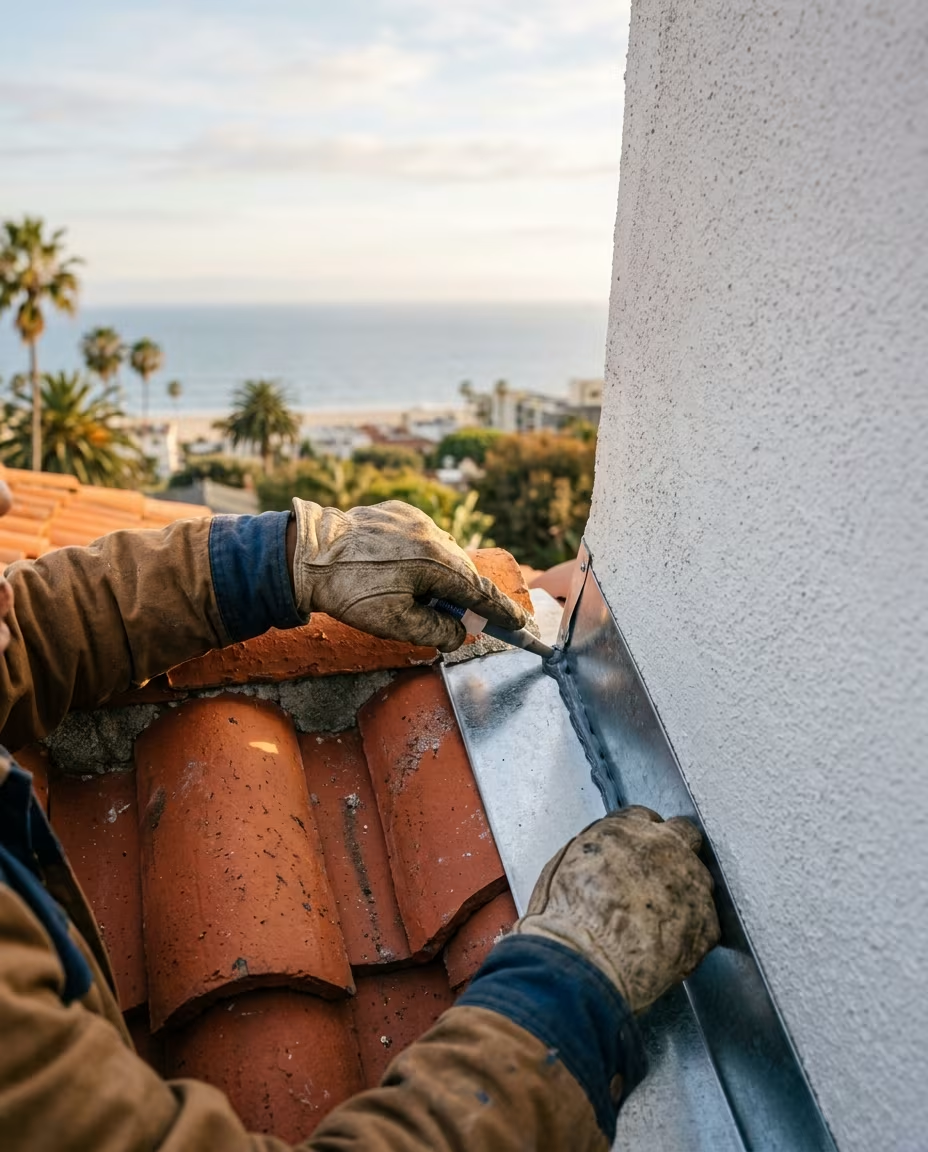
Flashing in salt air
02 / Repairs
Roof repair Santa Monica: where leaks begin
What are the signs of a leaking roof in Santa Monica, before the ceiling gives it away? Paint lifting under the eaves, a musty smell upstairs, dark rings on the underside of the roof deck or a drip in the attic that appears only when the wind blows off the sea. How serious is a roof leak in Santa Monica once water is getting in? More serious than the first stain suggests, because water runs along the rafters and the deck before it shows indoors. Most roof repair Santa Monica houses need begins at one of these six points.
Flashing
Rusted step flashing
Salt air pits the bent metal along a wall or a chimney until it splits. The repair cuts out the rusted runs, fits new flashing in a metal suited to salt air and laps the counterflashing back over it.
Vents
Vent caps and pipe boots
Rubber pipe boots crack in the sun, and steel vent caps rust at their seams. Both are small parts on an otherwise sound roof, and either can let water in for months before a stain appears.
Tile
One cracked barrel tile
On a Spanish-style roof one cracked barrel lets rain reach the felt, and the opening grows with every storm. Tile roof repair means finding a piece that matches the old profile, checking the felt below and relaying the course around it.
Edges
Soft fascia and eaves
Damp mornings and blocked gutters rot the boards along the roof edge. The repair replaces the soft fascia and eave boards, then resets the drip edge and gutter so water leaves the roof cleanly.
Flat roofs
Ponding and split seams
On a low-slope roof, water that stands for days finds every seam. Flat roof repair starts at the drains and scuppers, then moves to the blisters and split seams the standing water has opened.
Storm leaks
A drip after a storm
What to do after a roof leak: contain the water, lift rugs and boxes clear, photograph the stain and call us. We answer every day from 7 AM to 10 PM for emergency roof repair.
For a leak that is active right now, our roof leak repair page is the place to start. The flashing, vent, tile, edge and flat roof work above goes to our roof repair crews, each job set out in a written scope.
03 / Roof types
How each style of roof here wears out
Four roof types repeat across the older streets: clay tile over Spanish Colonial Revival courts, low gables on Craftsman bungalows, steep hips on Victorian cottages and flat roofs on apartment buildings. Apartment buildings lead, with about two thirds of the homes in the city in buildings of five or more units (Census, 2024). The method for roofing Santa Monica houses depends on which of the four is overhead, so each panel below starts from the style.
01
Clay tile courts
Tile against stucco walls
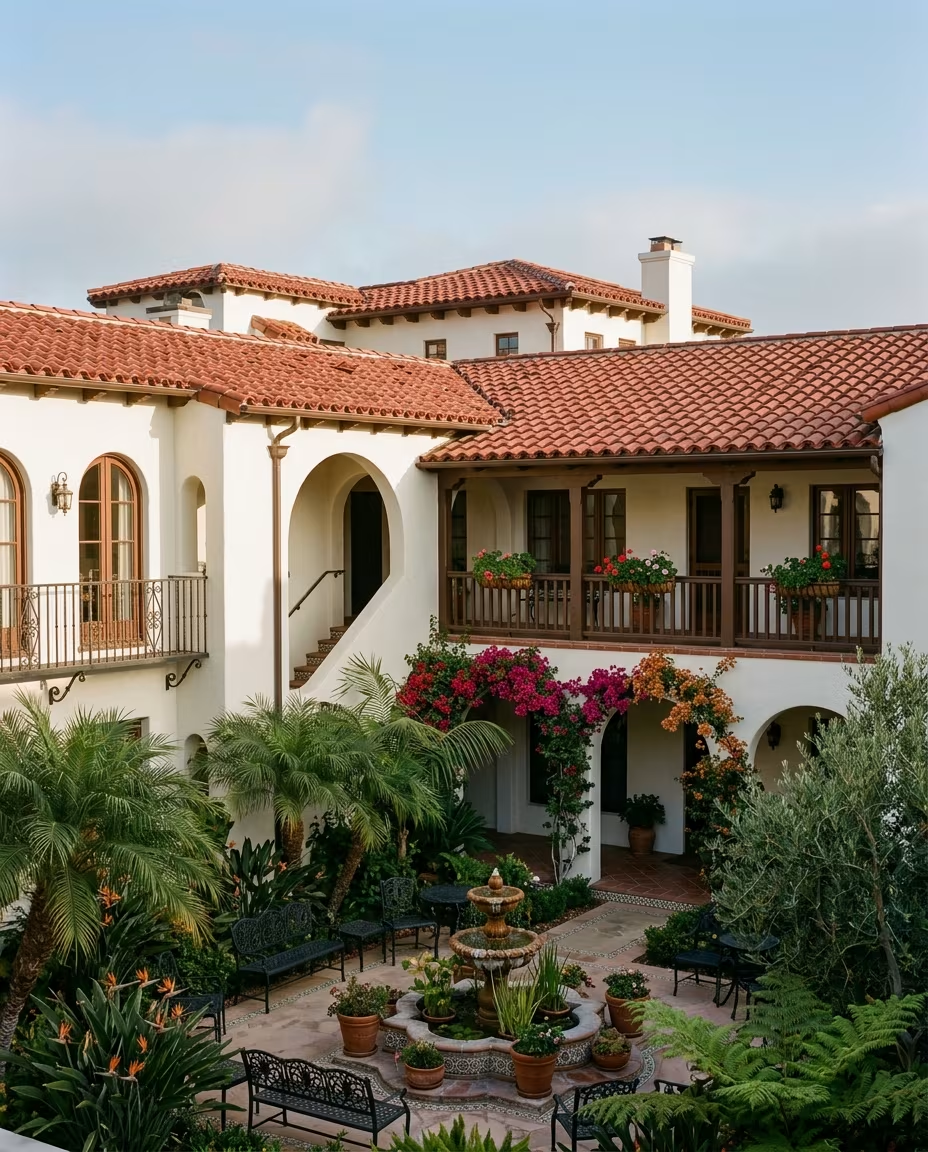
On a courtyard building the tile meets stucco walls at every turn, and water gets in at those joints. A clay tile roof in Santa Monica is usually relaid, not replaced: the tile is lifted and saved, new underlayment and wall flashing go in, and the sound tile returns.
02
Craftsman gables
Rafter tails in view
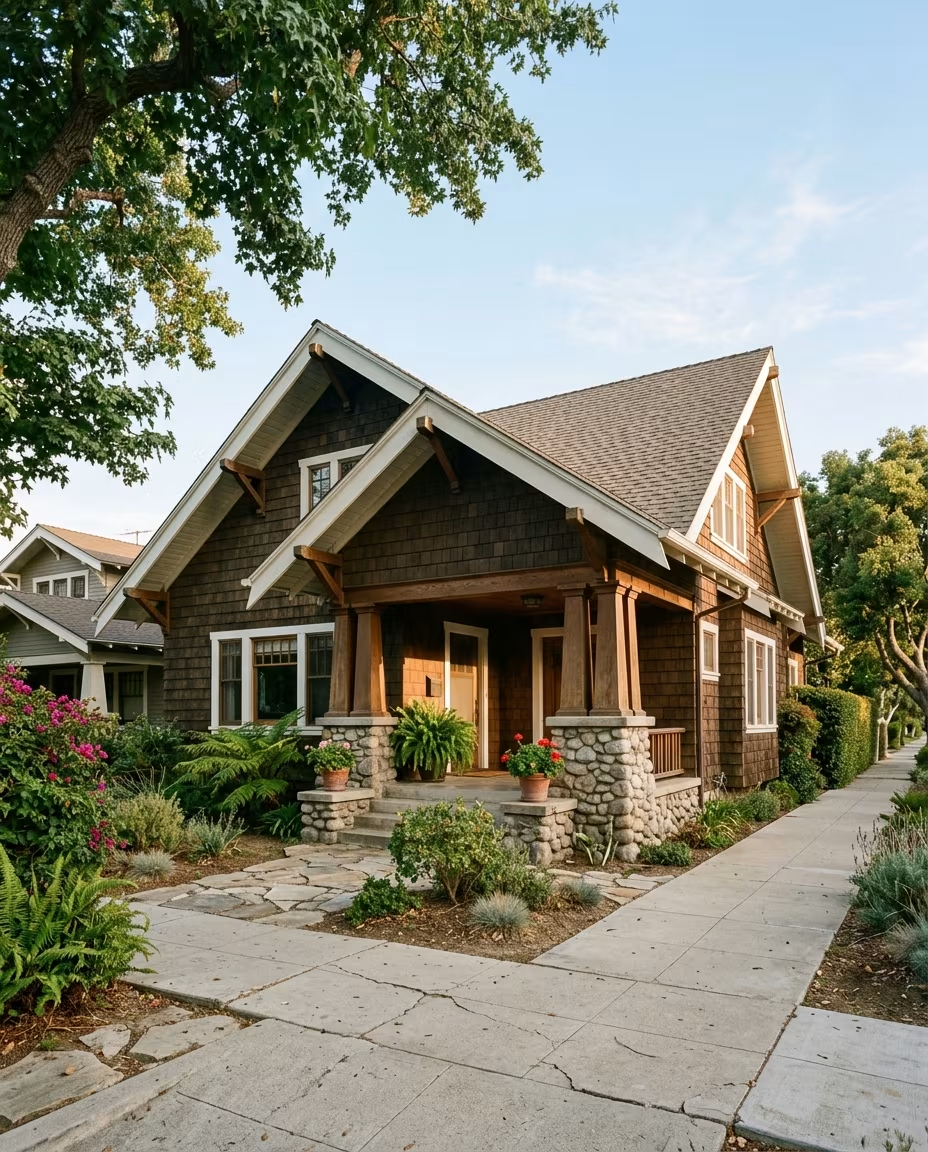
The look of a Craftsman bungalow lives at its edges: wide eaves, open rafter tails and barge boards that take every storm. Rot hides in the tail ends, so a soft tail is spliced to its old profile and the eave line looks the same once the new roof is on.
03
Victorian hip roofs
Two roofs on one frame
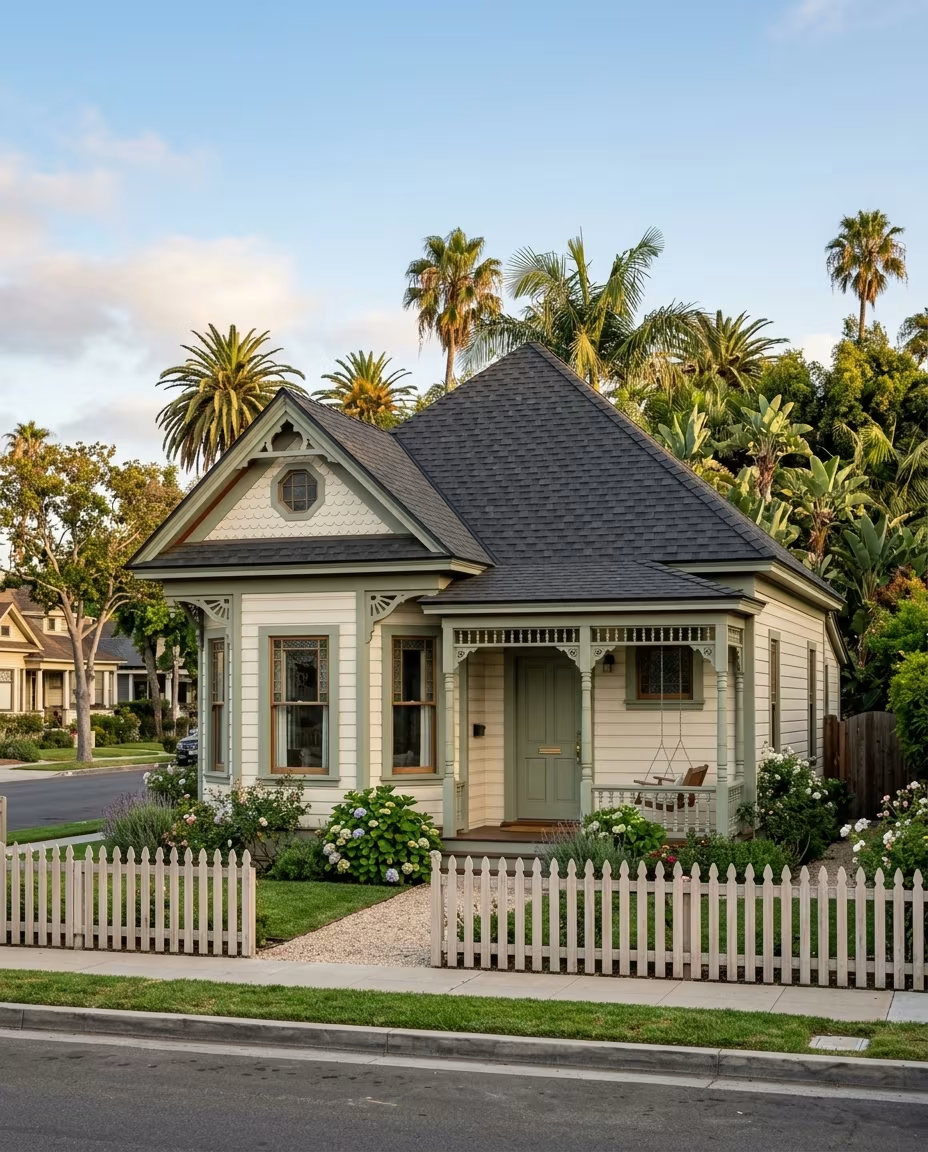
Steep hips shed rain quickly, yet roofing Santa Monica cottages of this age can uncover two roofs on one frame, the older one holding damp against the boards. A tear-off shows the real sheathing, and on a landmark the new covering is reviewed before it is ordered.
04
Parapet flat roofs
Single-ply, welded seams
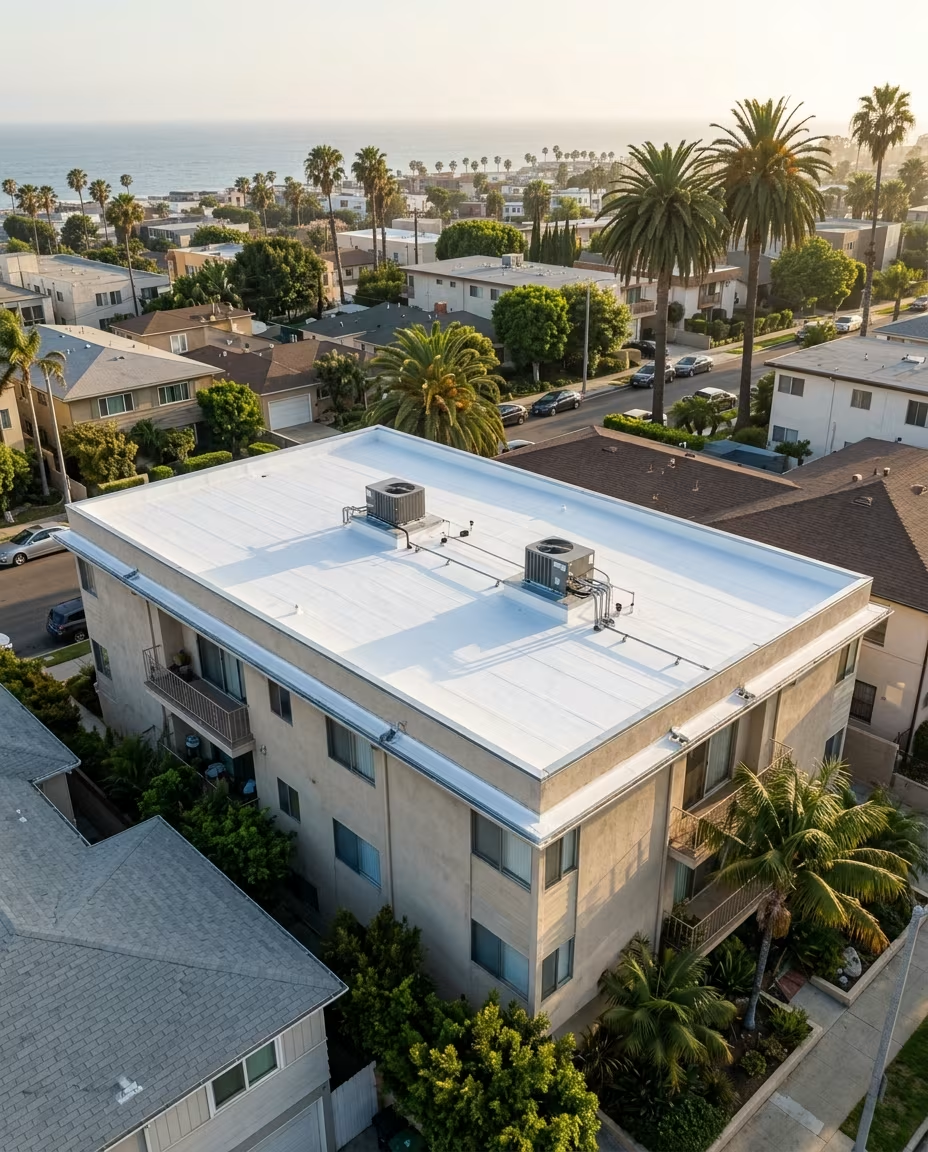
One blocked scupper can leave a parapet roof standing in water. TPO roofing in Santa Monica suits these roofs: a white single-ply sheet with heat-welded seams. Our flat roofing crews replace them section by section, and the same work carries over to commercial roofing.
04 / Reroofing
Roof replacement Santa Monica: working around tenants
Seven in ten homes in the city are rented, and tenants rarely move out for a reroof. That shapes the order of the work more than the roof does.
Some slopes
A slope at a time
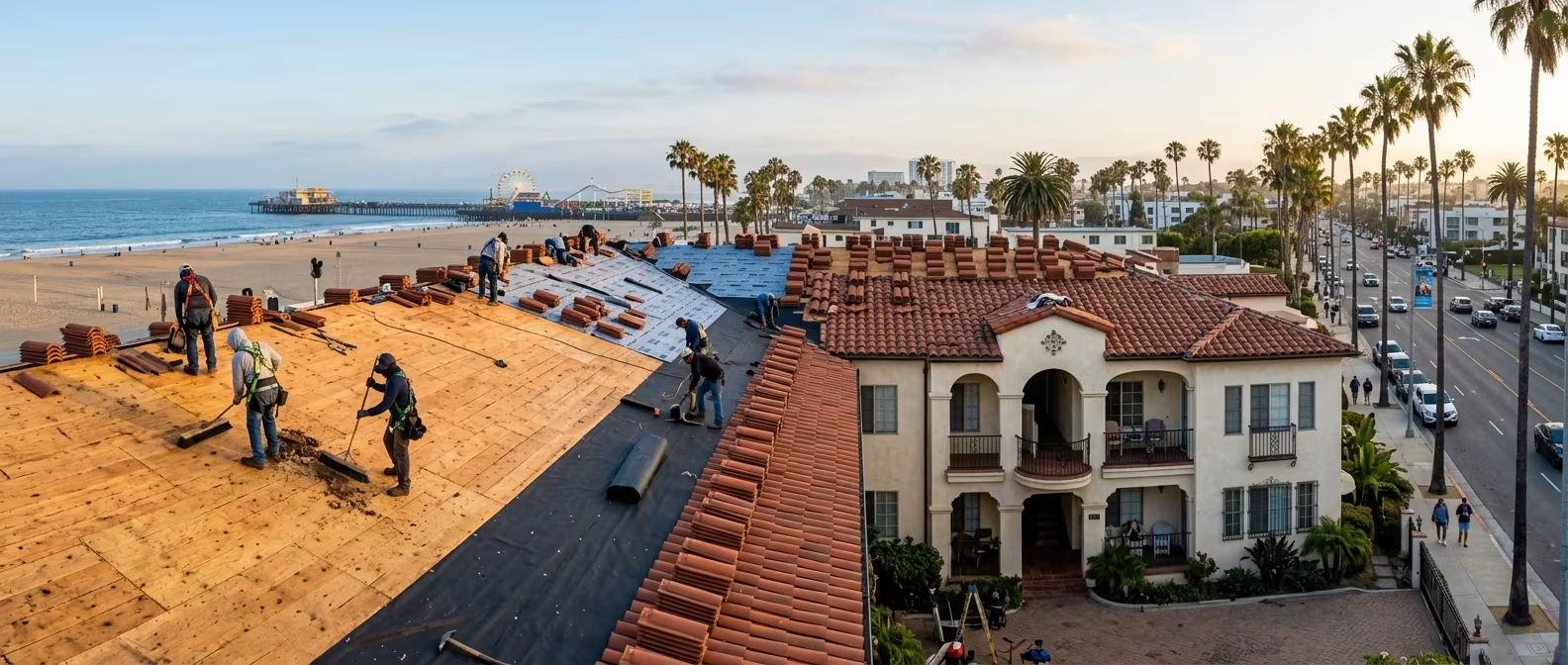
A partial reroof makes sense when the trouble is confined to the slopes that face the weather. At the seam the new felt is woven into the old, upper course over lower, so water crossing from new work to old always runs over a lap, never into a joint.
Every slope
Tear-off in one pass
Brittle felt across most slopes, or a deck that flexes underfoot in more than one place, leaves nothing sound to tie a repair into. A full tear-off and a new roof in one pass is then the job that lasts.
Lived-in
Tenants told in time
Roofing Santa Monica apartment buildings with tenants at home takes a plan for each phase: which slopes, which days and where the bins and ladders will stand, so tenants hear about it before the first tile comes off.
Daily close
Sealed and swept nightly
Each evening the open slopes are sealed and the yard is swept with a magnet for stray nails. You see the bare deck in photos before it is covered, and the job ends with a walk around the finished roof together.
Our roof replacement page sets out what a full job includes, step by step.
05 / City rules
Rules every roofing contractor in Santa Monica works under
A reroof here needs a city building permit. A designated historic building can need a review before that, and the city sets the hours when a crew may work. Those three set the calendar, and the hours apply to any roofing company Santa Monica owners hire.
City permit
Santa Monica roofing work falls under the city single-trade building permit. Reroofs are reviewed at the counter the same day, the paperwork runs online, and the finished work is inspected under that permit.
Landmark review
Before the roof permit, a Certificate of Appropriateness or an exemption is required for a city landmark, a Structure of Merit or any building in a historic district. The Landmarks Commission has approved a certificate that included new roofing, so a reroof planned around this step can pass it.
Work hours
Crews may work from 8 AM to 6 PM on weekdays and from 9 AM to 5 PM on Saturdays, never on Sundays or the public holidays the city code lists.
Five numbers behind roofing Santa Monica homes
12.2
Inches of rain in a normal year
82%
Falls between December and March
72%
Of homes in the city are rented
8 AM
Earliest weekday start for a crew
Sun
No roofing work allowed on Sundays
06 / ZIP codes
Roofing Santa Monica homes, ZIP code by ZIP code
From 90401 by the ocean to 90405 on the south side, each of the five ZIP codes for street addresses in the city holds a different mix of buildings (Census Bureau survey, 2024). Roofing in 90403 is mostly apartment work, with over half its homes in buildings of five to nineteen units. In 90404 those buildings hold 44% of homes and duplexes to fourplexes another 18%, so a roof repair in 90404 usually means a small apartment building or a duplex. On the north side, 28% of homes date from before 1940. The permit and the work hours do not change from one code to the next, and roofing Santa Monica, CA follows the same city rules on every street.
ZIP
Area
Exposure
Typical work
90401
The center by the ocean
Salt air right by the beach
Flat roofs on large apartments
90402
The north side
Prewar wood in coastal damp
Reroofs on single-family homes
90403
North of center
Marine damp, 60s and 70s roofs
Mid-size apartment reroofs
90404
The east side
Inland sun on flat roofs
Duplex and walk-up roofs
90405
The south side
Sea air on its west blocks
Postwar houses and cottages
07 / Questions
Roofing Santa Monica FAQ: leaks, permits, insurance
Landmark review, fixed work hours and a city where most homes are rented shape many questions about roofing Santa Monica properties. The answers below cover those, along with leaks, insurance and emergencies.
How serious is a small roof leak?
Serious enough to act on within days. A small stain is only the part you can see, since the water has usually been soaking the felt or the deck for a while, and in winter the next storm is rarely far off. Put a bucket under the drip, clear the room below and book a survey. After a first leak, the roof repair Santa Monica owners need is often just a flashing, a pipe boot or a few tiles, and it stays that small when it is caught early.
Do I need a permit to reroof?
Yes. A reroof needs a city building permit, which Santa Monica reviews at the counter the same day, and the finished work is inspected under it. For roofing Santa Monica landmarks and buildings in a historic district, the landmarks review comes before that permit. With the application online, the signed-off permit is easy to find later if a buyer or an insurer asks for it.
Is my house under landmark review?
Only if it is a designated landmark, a Structure of Merit or a building inside a historic district. Those addresses need a Certificate of Appropriateness or an exemption under the landmarks rules before the city issues the roof permit. Before the scope is written, the roofing company Santa Monica owners bring in should look up the status of the address, so the step is planned from the start.
Should I keep my clay tile roof?
Usually, yes. Sound clay tile is worth saving, and on a Spanish Colonial Revival court it carries much of the look. A relay keeps the roof and renews what fails beneath it: new underlayment and flashing go down, and cracked pieces are matched to the old profile and color. New tile makes sense when many pieces are broken or the profile is no longer made.
Are flat roofs a problem near the sea?
Not when they drain, though salt air is hard on the metal outlets and edge flashing. A low-slope roof fails where water stands: at blocked scuppers, low spots and split seams. Most commercial roofing Santa Monica owners need is low-slope work like this, over shops, offices and mixed-use buildings, and for nonresidential roofs the state energy code sets values for how much sun the surface reflects. A white single-ply membrane, welded at the seams, is the usual choice for them.
Will insurance pay for a new roof?
Usually only when a sudden event, such as a storm or a fallen tree, caused the damage. A roof replacement covered by home insurance is the exception, because wear from age, salt and sun counts as upkeep. For roofing Santa Monica rentals, the claim goes through the landlord policy, since renters insurance does not cover the building itself. Read your policy and call your insurer before work starts, so an adjuster can see the damage first.
Do you handle emergency leaks?
Yes, within our hours: we answer every day from 7 AM to 10 PM for any emergency roof repair Santa Monica residents need. We are not a 24-hour service, so after 10 PM catch the water, switch off power near the leak if it is safe to do so, and call us at 7.
What sets how long a reroof takes?
The roof itself sets most of the pace: its size, its covering and its pitch, with a tile relay running longer than a shingle roof. A landmark adds the certificate review first, city hours rule out Sundays, and about four fifths of the yearly rain falls from December to March, so roofing Santa Monica homes in the drier months keeps the schedule shortest.
How do I check a roofing company?
Ask for three things in writing: the license number, proof of insurance and a scope of work. Roofing companies in Santa Monica need a state contractor license for this work, and anyone can look a license up online with the state board. Then ask how the job fits the city: whether the address needs a landmark review, and how the schedule keeps to weekday and Saturday hours. Any roofing company Santa Monica homeowners consider should answer both questions clearly, and so should all roofers Santa Monica owners call, us included. California Green Roofing holds license CSLB #1100046, is bonded and insured, and gives a written 20-year workmanship warranty.
How thorough is a roof inspection?
Thorough enough to name the job in writing. It covers every slope, the flashings, vents and gutters and the roof edge, with each metal part checked for salt damage, and the written scope that follows says whether the roof needs a repair, a partial reroof or a full replacement. Roofing Santa Monica houses well starts with that look, because the right fix depends on what the roof shows, not on its age.
08 / The survey
A roofing company Santa Monica can reach seven days a week
Send the address and one line on the trouble, and say whether the building is a landmark or in a historic district if you know. A roof inspection of every slope comes first, then a written scope for a repair, a partial reroof or a new roof, with any permit or landmark step named in it. California Green Roofing is family-run and insured, and works as a roofing contractor in Santa Monica under license CSLB #1100046.
Roofing Santa Monica survey
Phone
Serving
Santa Monica, California
License
Bonded and insured, CSLB #1100046
Open daily
7:00 AM to 10:00 PM