Commercial roofing contractor
Commercial roofing Los Angeles businesses can plan around
Commercial roofing happens while people are still working underneath it, so the plan matters every bit as much as the membrane. California Green Roofing is a licensed crew with its own yard in Reseda, and we handle commercial roofing for shops, offices, warehouses, restaurants and apartment buildings: leaks traced to the real entry point, tired roofs restored, worn out roofs replaced one zone at a time, closed in every night, with the doors below still open for business.
Licensed, bonded and insured
License CSLB #1100046
Crew based in Reseda
Look-ahead // example re-roof by day
Commercial roofing guide
Buildings
Commercial roofing Los Angeles: the buildings we cover
The membrane barely changes from one building to the next. What changes is who is underneath it and what they cannot afford to stop doing while the work runs. That single difference is what separates commercial roofing from work on a house, and it is where every plan we write begins.
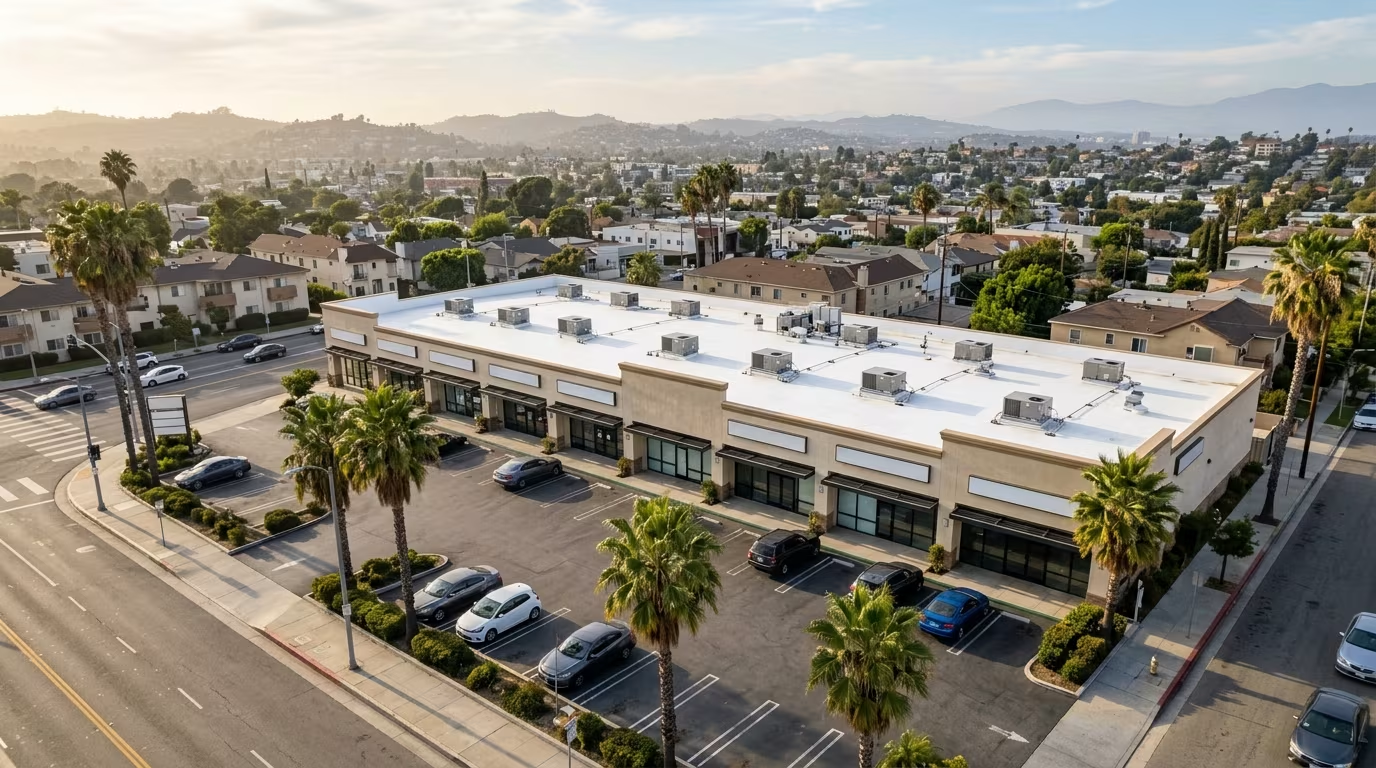
Street side // doors open
01
Shops and storefronts
Strip centers and street retail, with customers parking under the work. Entries stay covered, material lands before the first shift, and the loud hours are booked for early morning.
02
Restaurants and kitchens
Grease from a kitchen exhaust fan breaks down most membranes around the curbs it lands on. We switch to a grease resistant PVC sheet in those bays and work around service hours.
03
Mixed use buildings
Shops at the sidewalk, apartments above, two sets of neighbors on opposite hours. One plan covers both: early deliveries over the storefronts, later starts over the bedrooms.
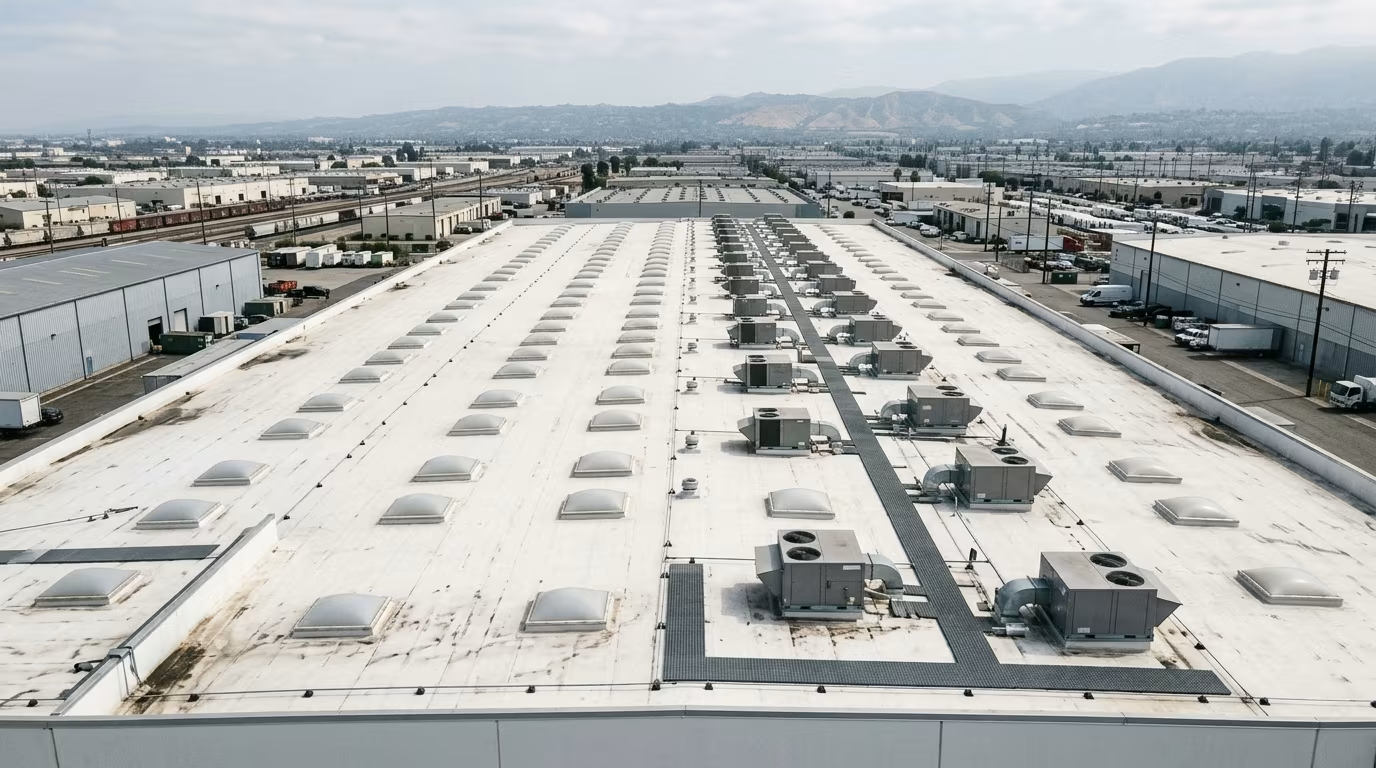
Yard side // work carries on
04
Warehouses and depots
Wide decks, long drain runs and rows of skylights, usually with an older roof buried under the current one. A core cut says how many layers the deck carries before a re-cover is planned.
05
Offices and clinics
Roofs crowded with equipment, where every unit, pipe and curb is a flashing detail rather than a clean run of membrane. Quiet hours are agreed first, and nothing is lifted over an entrance.
06
Apartments and HOA boards
Tenants stay home through the job, so notices go up well ahead, walkways stay open, and boards get photographs and a written scope they can vote on.
Occupied buildings
Commercial roof replacement while your doors stay open
Commercial roofing is loud, heavy work carried out directly above people doing their own. We plan it the way a builder plans a look-ahead: the roof is divided into zones, each zone is opened and closed in turn, and the business underneath keeps its hours. Commercial roof replacement Los Angeles owners actually agree to is the version that never asks them to shut for a week.
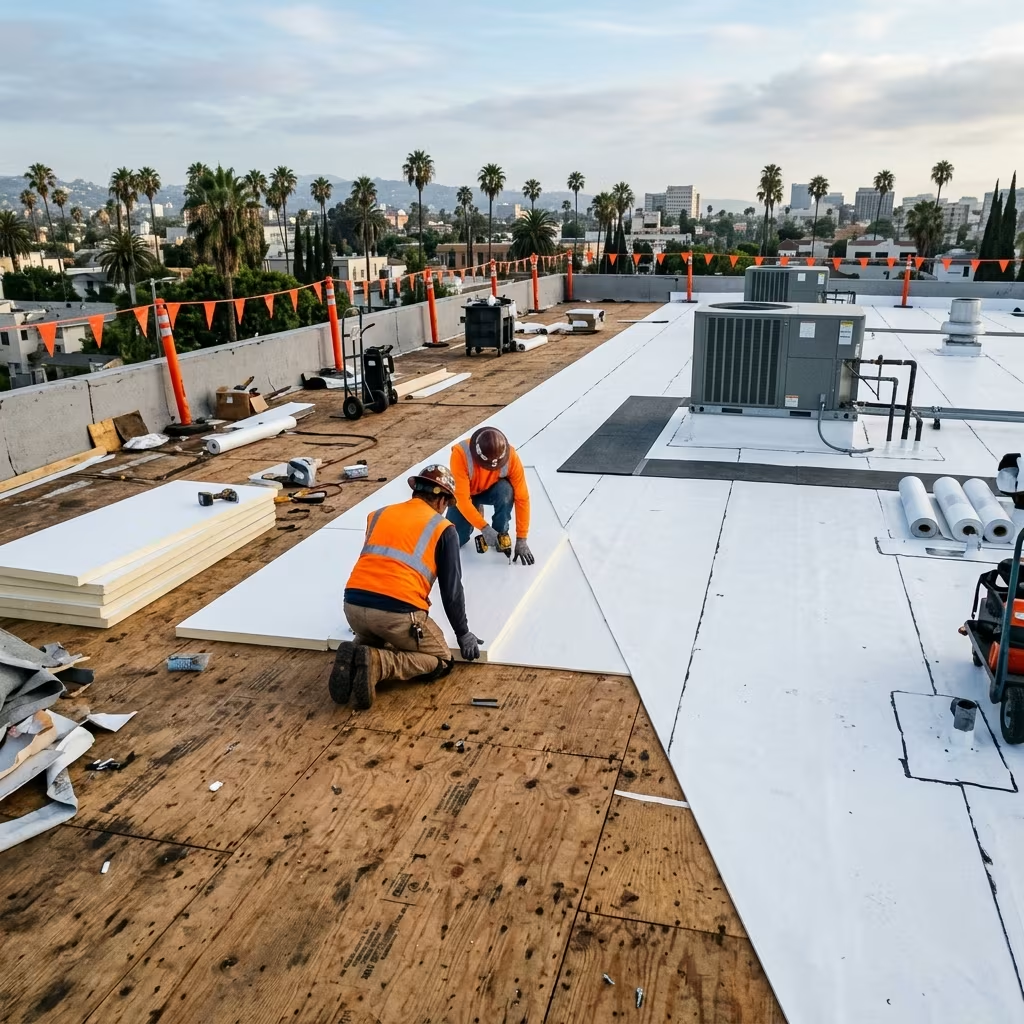
Zone two open // zone one shut
01
Open one zone only
We open only what the commercial roofing crew can finish and seal the same day. The rest of the roof stays as it was, so no open deck ever waits overnight for weather.
02
Watertight by dark
Every open edge is tied back into the old roof and sealed before the crew leaves. An overnight shower finds a watertight building, which is why commercial roofing runs in zones.
03
Loads before you open
Material loads and any crane lift are booked for early morning, staged away from entries and customer parking, and spotted from the ground while they run.
04
Entries kept covered
Doors, walkways and loading bays under the work are covered or rerouted, and the ground below an active edge is flagged off. Nothing travels over an occupied doorway.
05
Daily end of day call
You deal with one person, not a rotating crew. At the end of each day that person tells you what was opened, what was closed in, and what happens tomorrow.
The honest part is the noise. Tear off is the loud phase, not the membrane work that follows, and on a typical zone it runs one to two days. We book those mornings first, and on a restaurant or a clinic we push them outside trading hours entirely, because our commercial roofing crews work seven days a week from seven in the morning until ten at night. A bigger roof can also be split across two phases in two budget years: the tie-in seam between them is detailed as a permanent edge, photographed and recorded, so the manufacturer warranty can cover both halves when phase two closes.
Systems
Commercial roofing systems we install in Los Angeles
Low slope commercial roofing in this city comes down to a handful of proven systems, and the choice is not really about brand. We pick by what the roof has to survive: what lands on it, who crosses it to service equipment, and what is going on underneath.
Wide open decks
Warehouses, big box retail and offices with long clear runs take TPO: a white single ply membrane, hot air welded into one sheet. It reflects hard summer sun, which is why so much low slope commercial roofing here is white.
TPO roofing // welded
Kitchens underneath
Wherever an exhaust fan drops grease onto the roof we switch to a PVC membrane around it. It welds like TPO and shrugs off oils that soften other sheets within a few seasons.
PVC membrane // kitchens
Constant foot traffic
Roofs every trade crosses to reach equipment do better under modified bitumen: two or more reinforced plies that take boots and dropped tools, with walkway pads on the real routes.
Modified bitumen // two ply
Dry but worn out
A dry roof near the end of its surface life can take a silicone coating instead of a new membrane. That is the restoration path above, and silicone handles standing water better than most sheets.
Silicone coating // restore
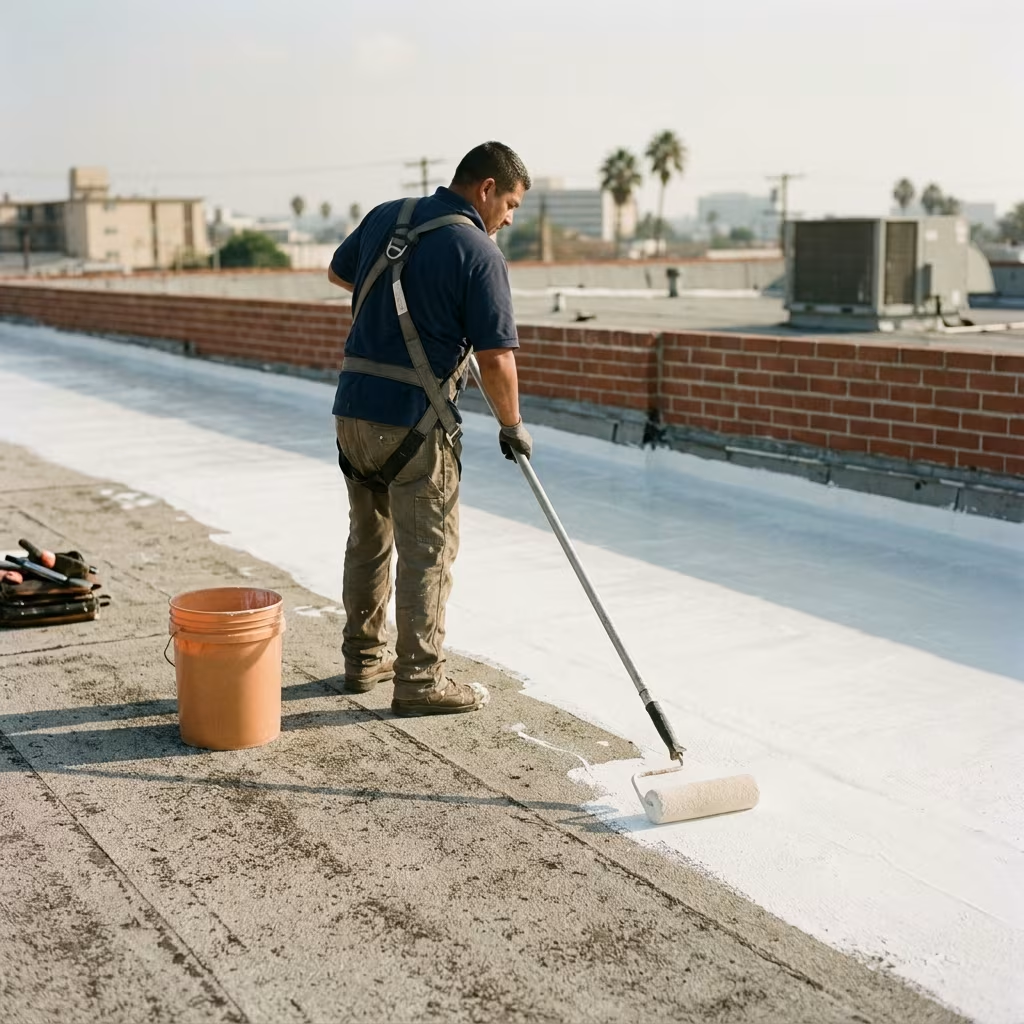
Coating pass // dry deck
Two sibling pages go deeper than a summary can. Metal roofing covers the sloped parts of a commercial building, such as mansards, canopies and entry roofs, and flat roofing Los Angeles covers how the layers under every membrane work, from the deck and tapered insulation up to the cover board and the flashed edges. Our commercial roofing services cover all of them with the same crew rather than subcontracting the awkward half.
Maintenance
Commercial roof maintenance on a Los Angeles calendar
Commercial roofing that gets walked twice a year rarely surprises the person who owns it. The roofs we are called in to replace early are the ones nobody set foot on between the day they went down and the day they leaked.
Maintenance calendar // the year on one dial
Two visits a year, timed to the rain
Owners ask how often should a commercial roof be inspected, and because nearly all the rain this city sees falls between November and March, the calendar answers it. One visit in the fall, before the first storm: drains and scuppers cleared, seams probed by hand, flashings and pitch pans checked. One in the spring, after the last storm: whatever the season found is logged, photographed and listed for repair while the weather is dry enough to do it properly.
Ahead of rain
Drains and seams
After the rain
Leak log and fixes
After a trade
New work checked
Every visit
Dated photo report
The third trigger is other trades. A surprising share of punctures arrive with somebody servicing a rooftop unit, running a cable or bolting down a sign. A short visit after that work catches the damage while it is still one patch.
Every visit ends in a dated photo report, and that file is what a lender, an insurer or a buyer asks for. Commercial roof maintenance Los Angeles owners keep up with is the quietest commercial roofing there is. If your roof has never had a report written on it, start with a roof inspection in Los Angeles.
Paperwork
Permits, Title 24 and the paperwork you keep
Two questions come up before any scope gets signed: does commercial roof repair require a permit in Los Angeles, and what the energy code will ask for once the old roof comes off. Both are settled before commercial roofing work starts, never discovered halfway through. A project ends with a file, and the next person to ask for it will be a lender, an insurer or a buyer, so the answer should take one email and nothing more.
Permits and city inspections
A re-roof in Los Angeles needs a permit, and pulling it is our job. We post it on site, meet the inspector, and close it out with the city’s re-roofing certificate of compliance at final. A small repair may not need one, so we check with the department rather than guess.
Title 24 and cool roof rules
The state energy code sets what a replacement roof has to reflect. Under the 2025 code, in force since January 2026, a low slope alteration on a commercial building needs a minimum aged solar reflectance of 0.63 and a thermal emittance of 0.75, or an SRI of 75, in the climate zones covering Los Angeles. The product must carry a Cool Roof Rating Council rating to count, so we settle the code path before the permit goes in.
License, cover and warranty
We are a licensed commercial roofing contractor, CSLB #1100046, bonded and insured, with our own crew on the roof rather than a broker’s. A certificate of insurance naming you is available before we start. Workmanship is covered for twenty years in writing.
Closeout package
Issued at the final walk
01
Permit and final sign off
Included
02
Photo log by zone
Included
03
CRRC product data
Included
04
Warranty paperwork
Included
05
Roof plan and drains
Included
06
Maintenance schedule
Included
Kept on file for the next owner, lender or insurer
Warranties are worth reading rather than counting. A manufacturer NDL warranty covers the membrane system with no cap on the payout, and it is issued only after the manufacturer’s own inspector signs off the finished roof. Our workmanship warranty covers how the commercial roofing was installed. The two fail differently and are voided differently: most manufacturer warranties expect documented maintenance and treat an undocumented roof as an unmaintained one, which is why the photo report above is part of the job rather than an extra.
Process
How a commercial roofing project runs, step by step
A commercial roofing job runs in six steps, the same on a storefront as on a warehouse. The first two are free and need nothing from you but roof access. A pitched tile or shingle roof follows our separate roof replacement process instead, because the sequence and the trades are genuinely different.
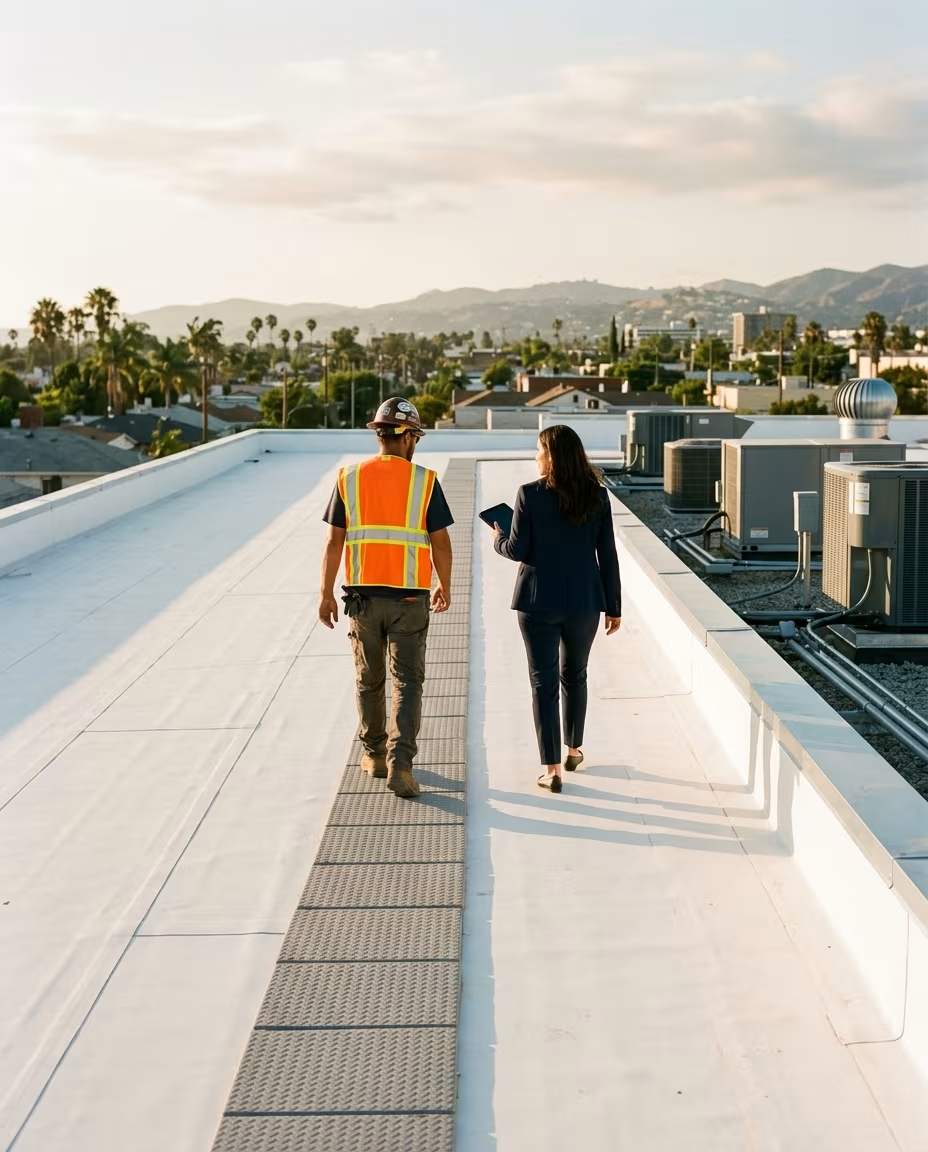
Final walk // roof signed off
01
The roof survey
We walk the roof, photograph it zone by zone and, with your consent, cut a core where the reading matters.
You and us // on the roof
02
Scope in writing
Photographs and options with the reason behind each one: repair, coating restoration, re-cover or replacement. The estimate is free.
Us // in writing
03
The phasing plan
Zones, load days, quiet hours and tenant notices, all agreed before a single date is set.
You and us // agreed
04
Permit and code
We pull the commercial roofing permit and confirm the energy code path.
Us // with the city
05
The zone work
Tear off, deck repair, insulation and membrane, with every zone sealed the same day it opens.
Crew // daily update
06
The final walk
City final, a walk of the finished roof with you, and the closeout package handed over.
You, us and the city
Questions
Commercial roofing questions we are asked most
Straight answers to what owners, property managers and HOA boards ask us before they commit to a scope.
How long does a commercial roof last?
Drainage and upkeep decide it far more than the sheet does. A welded TPO or PVC membrane commonly serves twenty to thirty years in this climate, modified bitumen a similar span, and a silicone coating buys another ten to fifteen on a roof that was dry when it went on. What shortens every commercial roofing system is one list: water that never drains, flashings nobody checks, and damage from other trades that goes unreported.
How often should a roof be checked?
Twice a year on a low slope roof here, and the timing matters more than the count. One walk in the fall before the first storm, one in the spring so the season’s damage is logged while the weather is still dry enough to fix it, plus a short visit after any trade has worked up there. Most manufacturer warranties expect documented inspections, so a commercial roofing report earns its keep twice over.
Does a roof repair need a permit?
A re-roof does, and we pull it. A genuinely small commercial roofing repair often does not, but the department draws that line rather than us, so we check before quoting instead of after. The permit is posted on site, the inspector is met on the roof, and the certificate of compliance closes out at final, handed over with the rest of the commercial roofing file.
Can you work while we stay open?
Yes, and that is how most commercial roofing jobs here run. The roof is split into zones, only what can be sealed the same day is ever opened, and every open edge is tied back into the old roof before the crew leaves. Loads land before you open, entries under the work are covered, and a seven day working window pushes the loud phase outside your trading hours.
Should we coat it or replace it?
Take a core sample before anyone answers that. If the insulation under the membrane is dry, the deck is sound and water drains away, a coating restoration is the honest commercial roofing call. If the core comes up wet, or the deck already carries more roofs than code allows, coating only seals the problem in. We tell you plainly which one you are looking at, including when the answer is to do nothing yet.
Does ponding water really matter?
A great deal, yes. Ponding water is rain still sitting up there long after the storm passed. Water that clears within a day or two usually points at a blocked or undersized drain, which is a straightforward fix. Water still there a week later means the fall was never built into the deck, and commercial roofing corrects that with tapered insulation during a replacement, never with a coating brushed over the top.
What does an NDL warranty cover?
An NDL warranty is issued by the membrane manufacturer rather than the roofer, and it covers the membrane system plus the labor to repair it with no cap on the payout. It is only offered once their own inspector signs off the finished roof, which is why it turns up on properly detailed commercial roofing and nowhere else. It sits alongside our twenty year written workmanship warranty, and both expect documented maintenance.
Do you do commercial leak repair?
Constantly, and it is usually how owners meet us. We trace commercial roof leak repair back to the real entry point rather than patching the wet spot on the ceiling below, because water runs along the underside of a deck before it ever shows up inside. The leak gets a temporary dry-in the same visit where weather demands it, then a permanent commercial roofing repair.
Book it
Book a roof survey for your Los Angeles building
Tell us where the building is, what kind it is, and what the roof is actually doing: water over a tenant, a drain that backs up every storm, or a surface at the end of its life. We walk it, open it up where that has been agreed, and come back with a written scope, a phasing plan and photographs. Ask for a free estimate and the survey costs you nothing but roof access. Among the commercial roofing contractors Los Angeles owners can call, we are the one that will tell you when a repair is all you need. As a commercial roofing company Los Angeles property managers come back to, most of our work arrives from managers who have already used us once.
Commercial roofing Los Angeles // roof survey
Call
Service area
Los Angeles, California
License
CSLB #1100046, bonded and insured
Hours
Open daily, 7:00 AM to 10:00 PM