Licensed roofing contractor
Roofing Santa Clarita, CA
repairs and reroofs to code
Roofing Santa Clarita homes starts with the City’s own rulebook. How much of the roof you replace decides the permit, the fire zone decides the roof class, and the summer sun decides the surface. California Green Roofing works to all three, from a single cracked slope to a complete new roof, and backs its work with a written 20-year workmanship warranty.
CSLB #1100046, bonded and insured
20-year written workmanship warranty
Open daily, 7:00 AM to 10:00 PM
Roofing Santa Clarita guide
Weather and wear
The roof repair Santa Clarita’s weather calls for
The weather here takes turns with a roof. Read the year from June and the order is plain: long summer heat, then fire weather and Santa Ana wind, then winter rain. The calm spring months in between are the easiest window for roofing Santa Clarita homes on a schedule: the roofs are dry and the next rain is months away.
Jun
Jul
Aug
Sep
Oct
Nov
Dec
Jan
Feb
Mar
Apr
May
Jun to Sep // heat
Heat and the cool roof rule
Heat is the first test in roofing. Santa Clarita’s July and August afternoons run from the mid-90s toward 100 degrees, and a dark roof gets far hotter than the air around it. Asphalt shingles dry out and shed granules, sealant strips let go, and the felt under concrete tile ages faster than the tile itself. In climate zone 9, a steep-slope reroof also needs a cool roof surface unless an exception applies.
Sep to Nov // fire weather
Embers and the Class A rule
Late summer into fall is when the brush is driest. The state’s 2025 fire hazard maps, adopted by the City in July 2025, grew Santa Clarita’s very high hazard zones by more than 13,000 acres, so more addresses now fall under the City’s Class A rule for roofs in its fire zone. Wind-blown embers find open vents and the gaps under tile.
Oct to Mar // Santa Ana
Wind and tile roof repair
Santa Ana wind comes off the desert from fall into winter, and Weather Service advisories for this area have warned of gusts of 40 to 60 miles an hour. It lifts shingle tabs the heat has already unsealed, cracks ridge tiles and slides loose tile out of its course. One bad night can leave a slope open, and the roof repair Santa Clarita homeowners book then is best finished before the first storm.
Dec to Mar // rain
Rain and roof leak repair
Most of the year’s rain falls between December and March, and very little falls from spring through summer. Whatever the dry months loosened shows up as a ceiling stain after the first real storm. That is why a roof inspection before the rain is worth more than any repair a storm forces on you later.
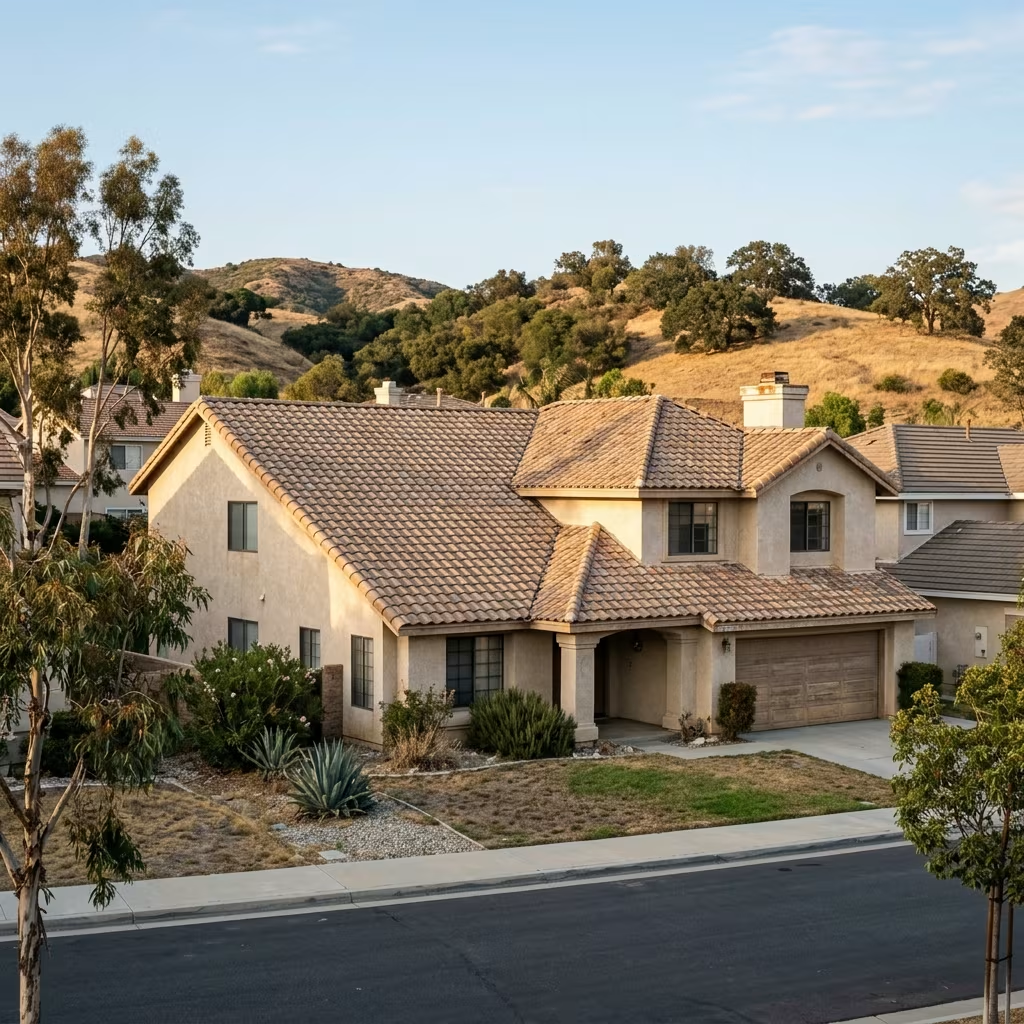
Concrete tile // July sun
Permit thresholds
When roof replacement in Santa Clarita needs a permit
The City draws two lines through every roof replacement Santa Clarita permits: the first at a tenth of the roof or 200 square feet, whichever is smaller, and the second at half. Its Building and Safety guidance asks for more at each line.
Roof plan // how much is replaced
Under a tenth or 200 sq ft
Roof repair without a permit
Damage over less than a tenth of the roof, or 200 square feet if that is smaller, can be repaired to its original condition with no permit. A few wind-cracked tiles or a lifted ridge cap can need nothing more than roof repair. Santa Clarita’s guidance calls that a repair in kind.
A tenth up to half
Partial reroof with a permit
Past the first line, a tenth or 200 square feet, the work needs a permit, and the new section has to meet current code while the rest stays as it is. One worn slope on an otherwise sound roof can be handled this way.
More than half
Complete roof replacement
Once the work covers more than half of the roof, the entire roof has to meet current code, not only the part being replaced. At that point a complete replacement deserves a look before any patching.
Six City rules for roofing Santa Clarita houses
Fire zone
A Class A fire-rated roof in Santa Clarita is the minimum inside the City’s fire zone, and Class B everywhere else, for every new covering.
Wood shake
Wood shakes and wood shingles are not allowed anywhere in the City, fire treated or untreated.
Old layers
Tile, slate, wood, a soaked deck or two layers already in place: every old layer comes off before the new roof goes on.
Decking
Exposed spaced board decking gets new structural panel sheathing before tile or shingles go down.
Weight
A covering over 7 pounds per square foot, or heavier than the one it replaces, can call for an engineer’s calculations.
Solar
Homes with rooftop panels follow the City’s separate solar reroof policy, with a clearance form and two roof inspections.
Census count
Roofing Santa Clarita homes from five building eras
Santa Clarita has 76,758 homes, and the median one was built in 1988, according to the Census Bureau’s 2024 survey. Build year matters here because the City’s tear-off rules follow the materials each era used: spaced board decks, wood shake, a second layer of shingle.
12,542
Built before 1970
Full reroof down to the deck
The most involved work: roofing Santa Clarita’s oldest streets can mean going back to the deck. Where spaced boards sit under a second layer of shingle, the City calls for a full tear-off and new sheathing.
9,869
Built in the 1970s
Shake the City now bans
Homes of this decade may still carry wood shake under later layers, and the City no longer allows it, treated or not. Where shake hides under shingle, everything comes off to the deck before the new roof goes on.
20,654
Built in the 1980s
Tile underlayment wears first
The biggest single decade for Santa Clarita housing. Where these homes carry concrete tile on battens, the felt beneath can fail long before the tile does, and tile roof repair then happens under the tile, not on top of it.
10,101
Built in the 1990s
Valleys and flashing at 30
Where these roofs carry tile or composition shingle, they are now around thirty years old. Valleys, flashing and the original underlayment are the parts to watch at this age.
23,592
Built since 2000
Young roofs, storm repairs
The youngest roofs in town, built to newer codes. Until their first replacement, what wind and winter storms leave behind is roof repair. Santa Clarita’s newer tracts face the cool roof and Class A questions only when that replacement comes.
Our services
Roof repair Santa Clarita homeowners count on
Wind, heat and age break roofs here in different ways, so the work splits into four kinds. Each links to its full method page; the Santa Clarita part is the City’s permit and inspections, which any of the roofing companies in Santa Clarita should handle for you.
01
Full and partial reroofs
Complete tear-offs to the deck, or one worn slope at a time, with new panel sheathing wherever the City asks for it.
02
Storm and wind repairs
Cracked or slipped tile, a broken ridge, lifted shingles or failed flashing: the roof repair Santa Clarita homes call for after a windstorm, done in matching material.
03
Leak tracing and repair
A ceiling stain can sit well away from the leak above it, so the water is followed back to its entry point before anything is replaced.
04
Roof inspection reports
Every slope photographed and written up, so you know what the roof needs before deciding anything.
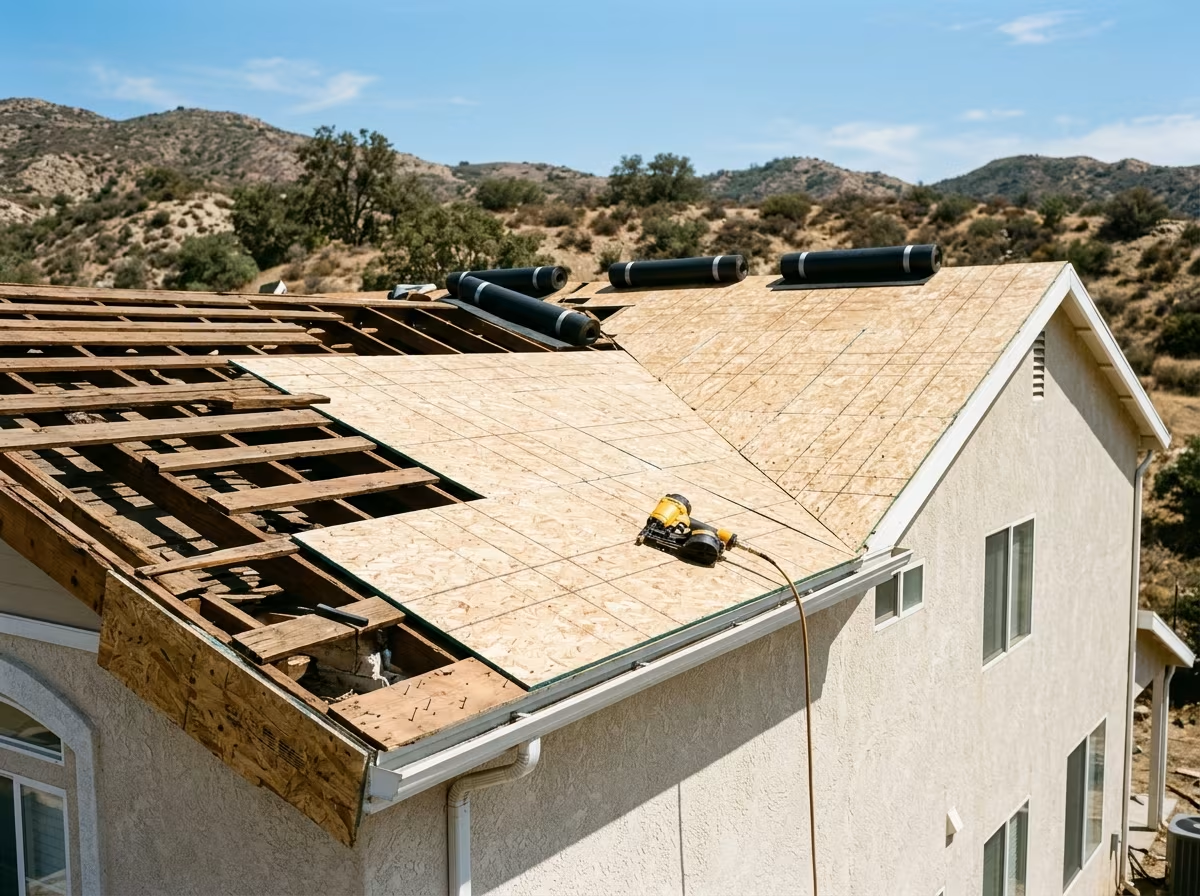
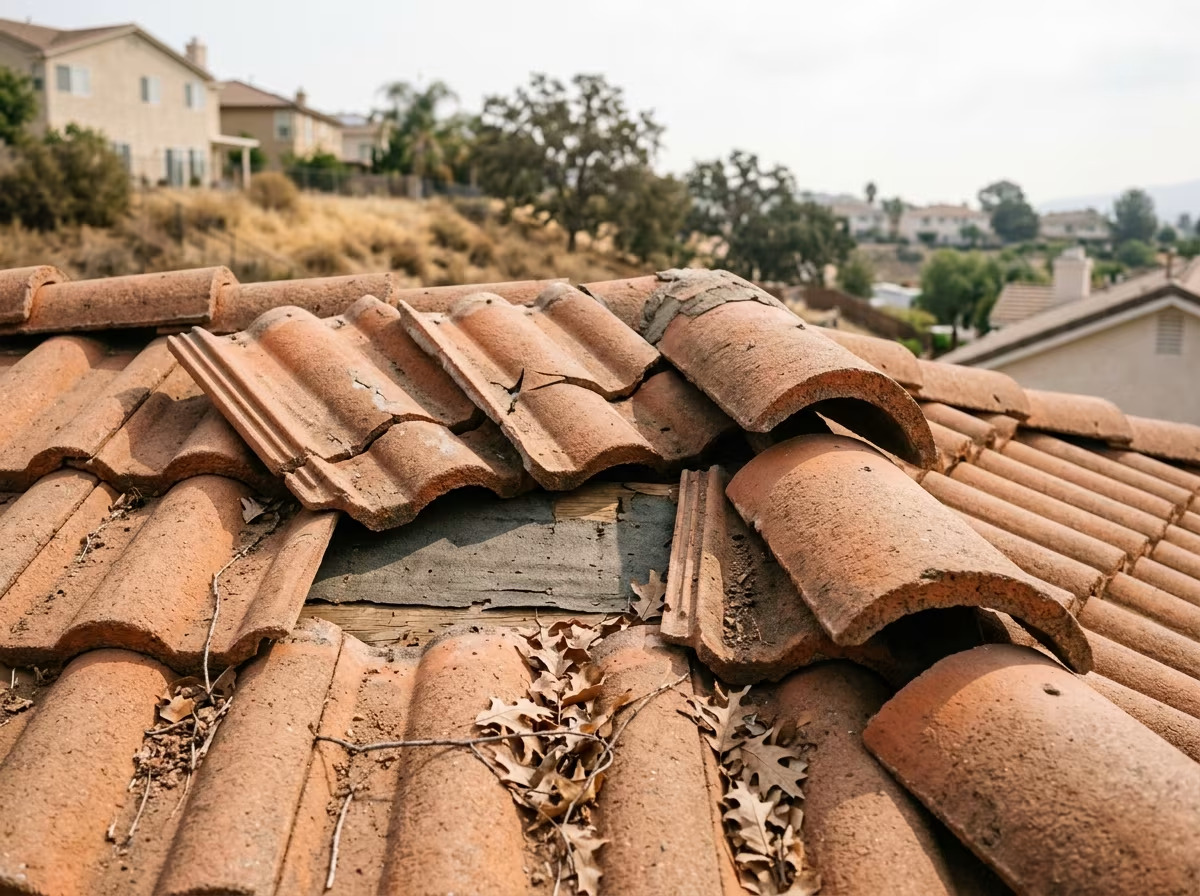
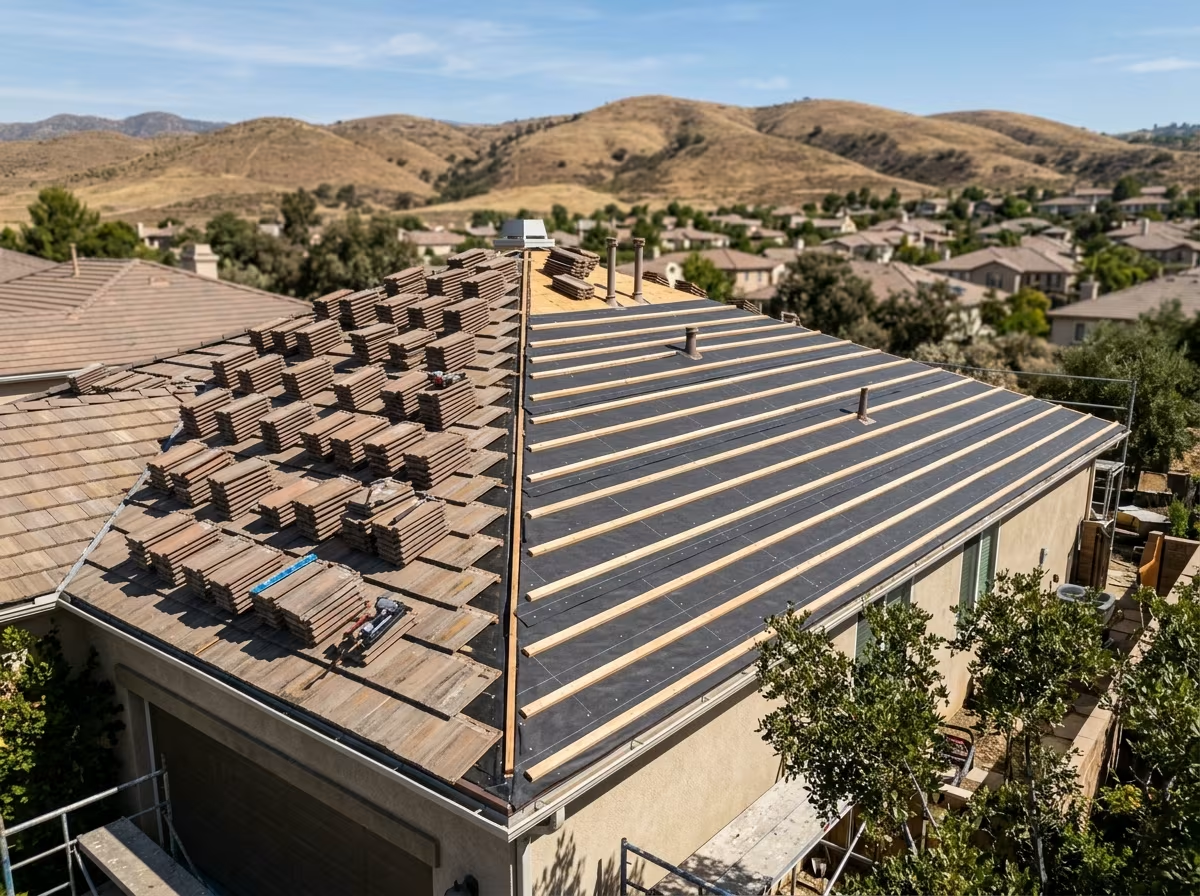
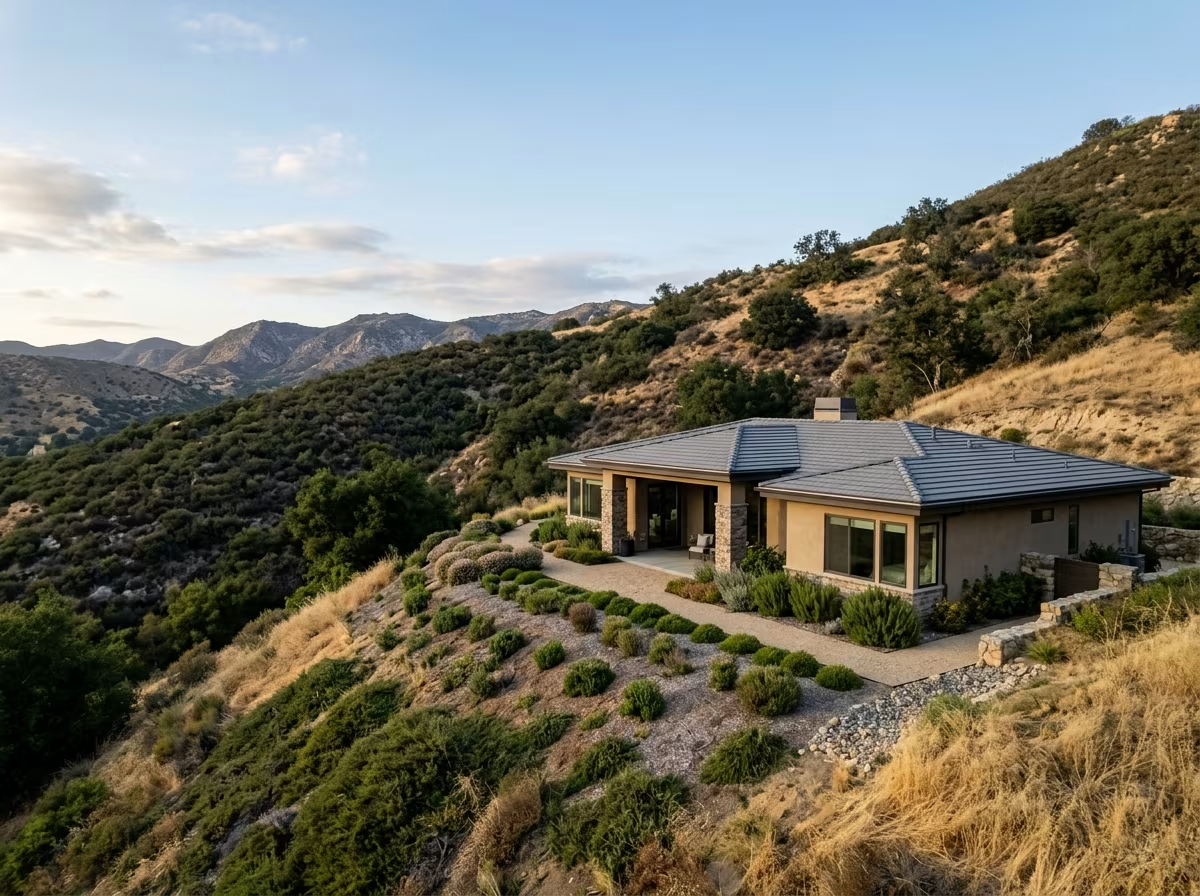
Permit to final
Six reroof steps, from roof inspection to City sign-off
The permit comes first when roofing Santa Clarita houses: the City wants it issued before any old layer comes off, and its job card posted where the street can see it. A reroof here then runs through up to three City inspections, and we plan every day of the job around those visits.
01
Walk the roof
Every slope walked, the attic checked from below and every finding photographed.
On the roof
02
Scope on paper
Each item sits next to the photo behind it, whether the answer is a repair, one slope or all of it.
In writing
03
Permit filed
The reroof permit goes in through the City’s online portal, and any association approval on tile or color joins the schedule.
Filed
04
Strip to deck
Old layers come off and damaged decking is replaced, then the City’s inspector checks the structure before anything new goes on.
Preinspection
05
New sheathing
Where spaced boards are exposed, new panel sheathing goes down and its nailing is inspected before it is covered.
Nail inspection
06
Final sign-off
Underlayment, flashing and the new covering go on, the final checks flashing and laps, and the written warranty is yours.
City final
Before you sign
What to ask roofing companies in Santa Clarita
Every one of the roofing companies in Santa Clarita works through the same City permit and inspections, so compare them on what they put in writing before the first inspector arrives. The best roofers in Santa Clarita will show you a license you can look up, a scope with photographs, a permit in the City’s system and a warranty on paper. Any roofing contractor Santa Clarita homeowners are considering should be able to show the same four things, us included.
20
Years
Our workmanship warranty, in writing, handed over with the City’s final.
7
Days a week
Phones answered from 7:00 AM to 10:00 PM, weekends too.
CSLB #1100046 // bonded and insured
Look the number up on the Contractors State License Board website before you sign with anyone. Our yard is in Reseda, over the pass, and every crew roofing Santa Clarita houses for us works under one licensed roofing contractor and one written warranty.
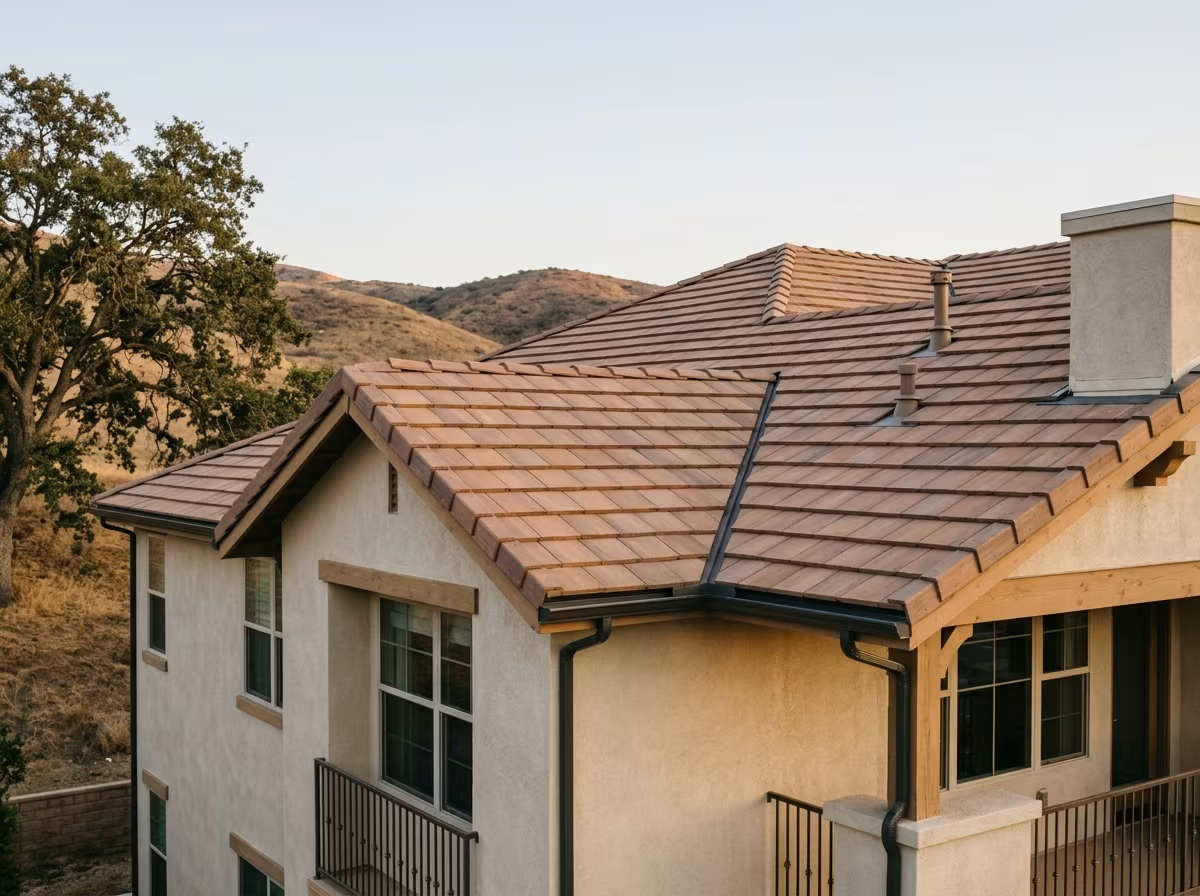
Roofing Santa Clarita // new tile roof
ZIP codes
Roofing Santa Clarita, one ZIP code at a time
Santa Clarita grew by annexation, and its seven residential ZIP codes show it: the median home in 91321 was built in 1978, the median in 91354 in 2000. One of them, 91390, even sits in a different energy code climate zone, which changes the cool roof rule. Where 91354 and 91390 cross into unincorporated land, roofing companies in Santa Clarita pull the permit from Los Angeles County instead of the City.
ZIP
Area
Exposure
Typical work
91321
Newhall
Zone 9, median home 1978
Tear-offs to old board decks
91350
Saugus
Zone 9, median home 1989
Tile relays on new underlayment
91351
West Canyon Country
Zone 9, median home 1982
Full reroofs and tile resets
91354
Northeast Valencia
Zone 9, median home 2000
First repairs, flashing and vents
91355
Southwest Valencia
Zone 9, median home 1984
Underlayment under sound tile
91387
East Canyon Country
Zone 9, median home 1990
Tile and shingle reroofs
91390
North Saugus
Zone 16, median home 1987
Reroofs to zone 16 energy rules
Your questions
Straight answers on roofing Santa Clarita
Eight questions on the permit, the fire and energy codes, insurance and leaks, each answered from the City’s or the state’s own rules wherever one applies.
Do I need a Santa Clarita roof permit?
Only past a small threshold. A Santa Clarita roof permit is required once the work covers a tenth of the roof or 200 square feet, whichever is less; smaller repairs made in kind need none. A permitted reroof starts with an on-site preinspection, and the City’s inspectors see the bare deck before anything new goes on.
What is a complete roof replacement?
A new roof over the whole house: the old covering comes off, usually down to the deck, and the roof is built back up to current code. The City requires the whole roof to meet current code once a job covers more than half of it, so a large partial project is treated as a full one. For roofing Santa Clarita’s pre-1970 houses, a complete replacement can also mean new sheathing over old spaced boards.
Can one slope be replaced by itself?
Yes, when that slope is the problem and the work stays under half of the roof. The new section meets current code, the other slopes stay as they are, and the two tie in where they meet. Below a tenth of the roof, or 200 square feet if that is less, the City treats it as a repair in kind with no permit.
Does my home need a Class A roof?
Only inside the City’s fire zone, where every new covering must be Class A; elsewhere in the City, Class B is the minimum. The zone map changed in 2025, so we check your address before writing a scope. In the zone, profiled tile such as S-tile also needs a fire-rated underlayment or a heavy cap sheet, plus bird stops at the eaves.
Do I need a Title 24 cool roof?
Most likely, if your home sits in climate zone 9, which covers most of the City. A Title 24 cool roof in Santa Clarita is a covering rated for the sun it reflects and the heat it gives off, required on a steep-slope reroof unless an exception applies, such as a heavy roof or certain insulation setups. ZIP code 91390 is listed in zone 16, where the rule does not apply, so we confirm the zone by address.
Why does tile leak when it looks fine?
Because the tile and the layer under it age at different speeds. Tile underlayment in Santa Clarita bakes under the tile every summer and wears out long before the concrete does. Once it cracks, water runs under sound tile and shows up indoors. Tile roof repair then means lifting the tile, laying new underlayment and setting the sound tile back, which the City allows.
Is roof repair covered by insurance?
It depends on the cause and the policy wording. Sudden damage, such as tiles torn loose in a windstorm, is treated differently from slow wear. On any roof repair Santa Clarita homeowners hope to claim, photographs taken soon after the storm give the adjuster a clearer picture, so we photograph every finding and hand you a written report. The coverage decision always rests with the insurer.
Who do I call for a leaky roof?
A licensed roofer first, and your insurer as well if a storm caused it. If you are unsure who to call for a leaky roof, ask the roofing companies in Santa Clarita you contact whether they trace the water before replacing anything, since a stain can sit well away from the leak. For roof leak repair, Santa Clarita homeowners can start with a photo of the stain and a note on when it appeared.
Get started
Book a roof inspection with a licensed roofing contractor
Send us the address and a line about what you are seeing, with a photo if you have one. One of our roofers walks the roof, checks the attic and leaves a written scope, whether the answer is roof repair, Santa Clarita permit work on one slope or a whole new roof. If you are comparing roofing companies in Santa Clarita, set that scope beside theirs. Our phones are open every day from 7:00 AM to 10:00 PM.
Roofing Santa Clarita // survey
Call
Service area
Santa Clarita and Los Angeles, CA
License
CSLB #1100046, bonded and insured
Hours
Open daily, 7:00 AM to 10:00 PM