Roof repair and re-roofing
Roofing Huntington Beach
from a leak to a full re-roof
Roofing Huntington Beach homes starts from one fact: most were built between 1960 and 1979 and have weathered decades of salt air, morning damp and long afternoon sun. Every job begins with survey photographs of what is failing, a re-roof comes with a City permit we file, and the workmanship carries a written 20-year warranty.
CSLB license #1100046
Bonded, insured, family run
Workmanship backed 20 years
Roofing Huntington Beach index
01 / What the coast does
Huntington Beach roofing against salt, fog, sun and wind
Salt air in Huntington Beach is one of four forces at work on a roof, alongside the marine layer, clear afternoon sun and dry offshore wind. Distance from the water has much to do with which one leads at your address, so roofing Huntington Beach houses properly begins with a full roof inspection that checks for all four.
01 / Sea salt
Year round
Metal gives out first
Start with the metal, not the tile. A salt film from the onshore breeze keeps nail heads, vent caps, valleys and the drip edge wet long after sunrise, so they pit and thin while the covering still looks sound, and a careful Huntington Beach roofing contractor checks them first.
02 / Marine layer
Foggy days
Wet felt, soft boards
On mornings under the Huntington Beach marine layer, a roof can stay damp until the cloud burns off. Any gap in the covering, from a cracked tile to a curled shingle tab, lets that moisture soak the felt, and wet felt keeps the boards it should protect damp until they rot.
03 / Clear sun
Clear days
Asphalt dries and cracks
Asphalt shingles go stiff after years of hard afternoon sun. Then they curl at the corners, shed their mineral granules into the gutters and crack, and with the granules gone the sun works on bare asphalt. Granules in a downspout are the sign to call for a look.
04 / Offshore wind
Windy days
Edges peel back
Dry offshore gusts pull at anything already loose. Unsealed shingle tabs, ridge caps and cracked rake tiles go first, and one raised edge lets the next rain blow in under the rows above it. Resetting that edge is the roof repair Huntington Beach owners should book before the next storm.
02 / A re-roof, part by part
Re-roof in Huntington Beach: the eight parts we rebuild
In the drawing, a tile roof worn by the coast is opened up from its peak down to the gutters. Keep reading and fresh layers cover it, starting at the peak and running down both slopes together. That sequence is how roofing Huntington Beach tile homes meets the City reroofing rules, one part at a time.
Worn
Rebuilt to City rules
01
Roof nails
Watch for: rust streaks under nail heads and nails lifting at the ridge.
We fit: fasteners made to resist corrosion, each long enough to sink 3/4 inch into the deck or poke through the underside of thinner boards.
02
Tile courses
Watch for: cracked noses and tiles that have slid down, opening gaps to blown rain.
We fit: your sound tile back in its rows, broken pieces swapped. Tile heavier than the old roof and over 6 pounds per square foot needs structural calculations and a framing plan first.
03
Felt layer
Watch for: brittle felt that tears at the overlaps when lifted.
We fit: 30-pound felt or an approved equal, doubled on low slopes.
04
Batten strips
Watch for: soft, dark strips where water sits against the wood.
We fit: battens cut from new 1×2 lumber and laid over the felt, with an open joint at every end for drainage.
05
Vents and flashing
Watch for: rust-stained vent caps and valley or wall metal eaten through by salt.
We fit: corrosion-resistant metal at every valley, wall joint and vent, valleys 0.016 inch or thicker, wall flashing 0.019 inch or thicker, and fresh caps where the old ones have rusted.
06
Roof deck
Watch for: spaced boards that flex, stain or crumble under a screwdriver tip.
We fit: new boards wherever the old ones have rotted, then leave the deck open until the inspector has seen it and its nailing.
07
Eave closures
Watch for: nests and daylight in the open tile ends at the eaves.
We fit: bird stops across the full eave line, a City requirement on tile roofs.
08
Drip edge
Watch for: a rust line along the fascia where the edge metal has given out.
We fit: new drip edge in metal suited to salt air wherever the old edge has rusted, since the City wants rusted edge metal replaced.
03 / Tile, shingle, waterfront
Concrete tile, shingle or a flat roof in Huntington Beach
Most of the city went up in the 1960s and 1970s, and roofing Huntington Beach tract homes of that age means knowing two coverings well: concrete tile and asphalt shingle. Homes on the water make a third case, with salt reaching the roof from more than one side. Shops and offices are a different job, covered by our commercial roofing team.
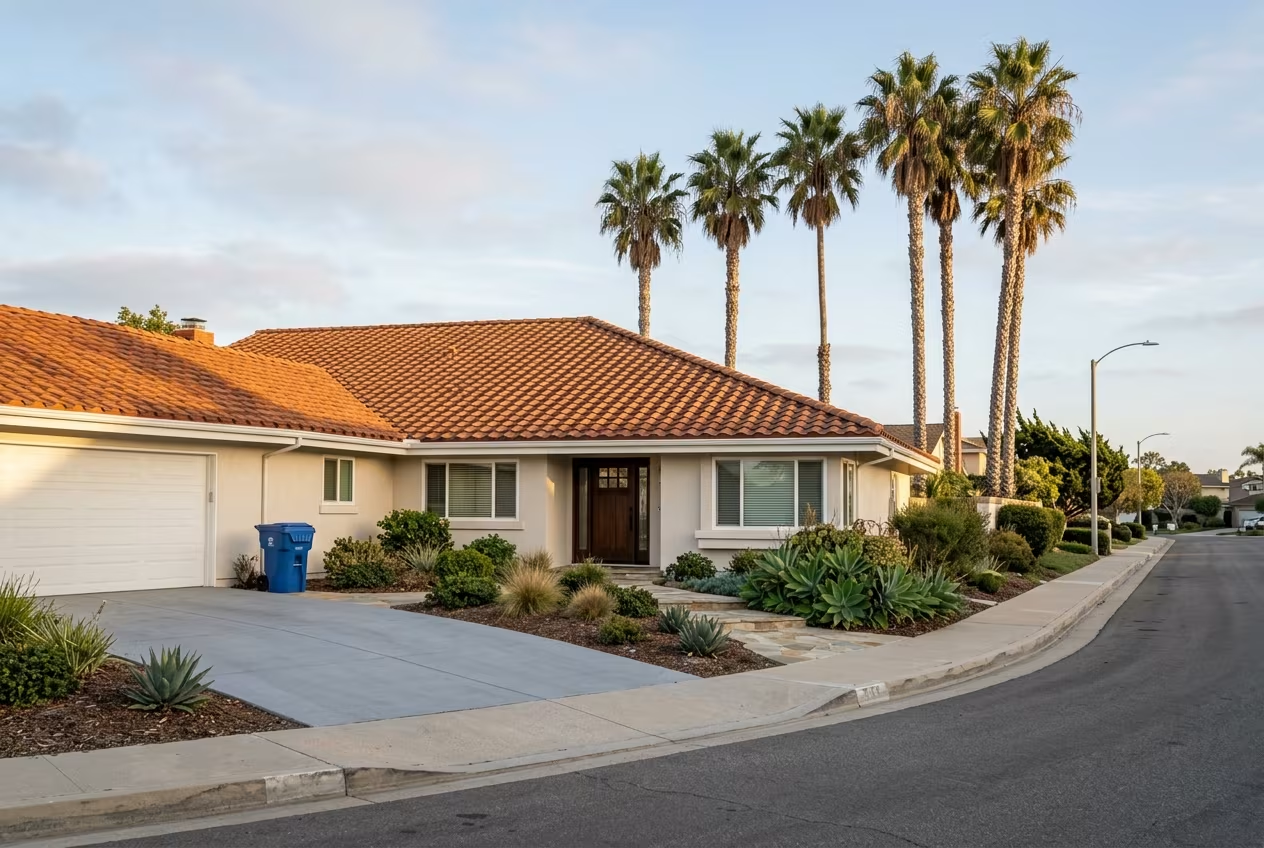
S-tile tract home
01 / Concrete tile
Tile outlives its felt
Owners often ask whether their tile can go back on, and sound tile can. Concrete tile outlasts the felt under it, so tile roof repair in Huntington Beach is mostly felt work: the tile comes up, the felt and battens are renewed and every sound piece goes back. Past 100 square feet in total, it needs a City permit.
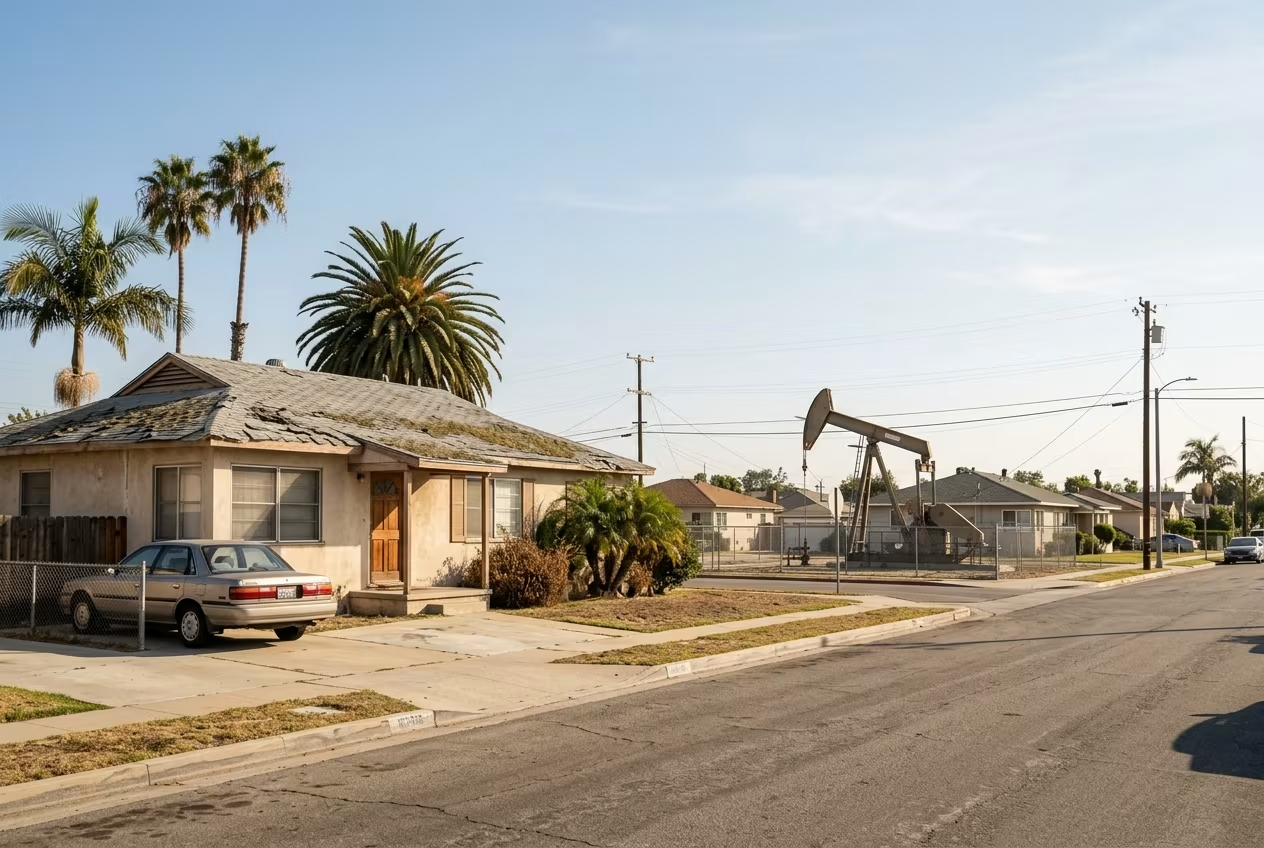
Shingle in the sun
02 / Asphalt shingle
Two layers is the limit
Under the City rules a sound single layer of shingles can take one overlay, but a roof with two layers, or roofing that is water-soaked or worn out, has to be stripped, and stripping it gives the City inspector a clear view of the boards.
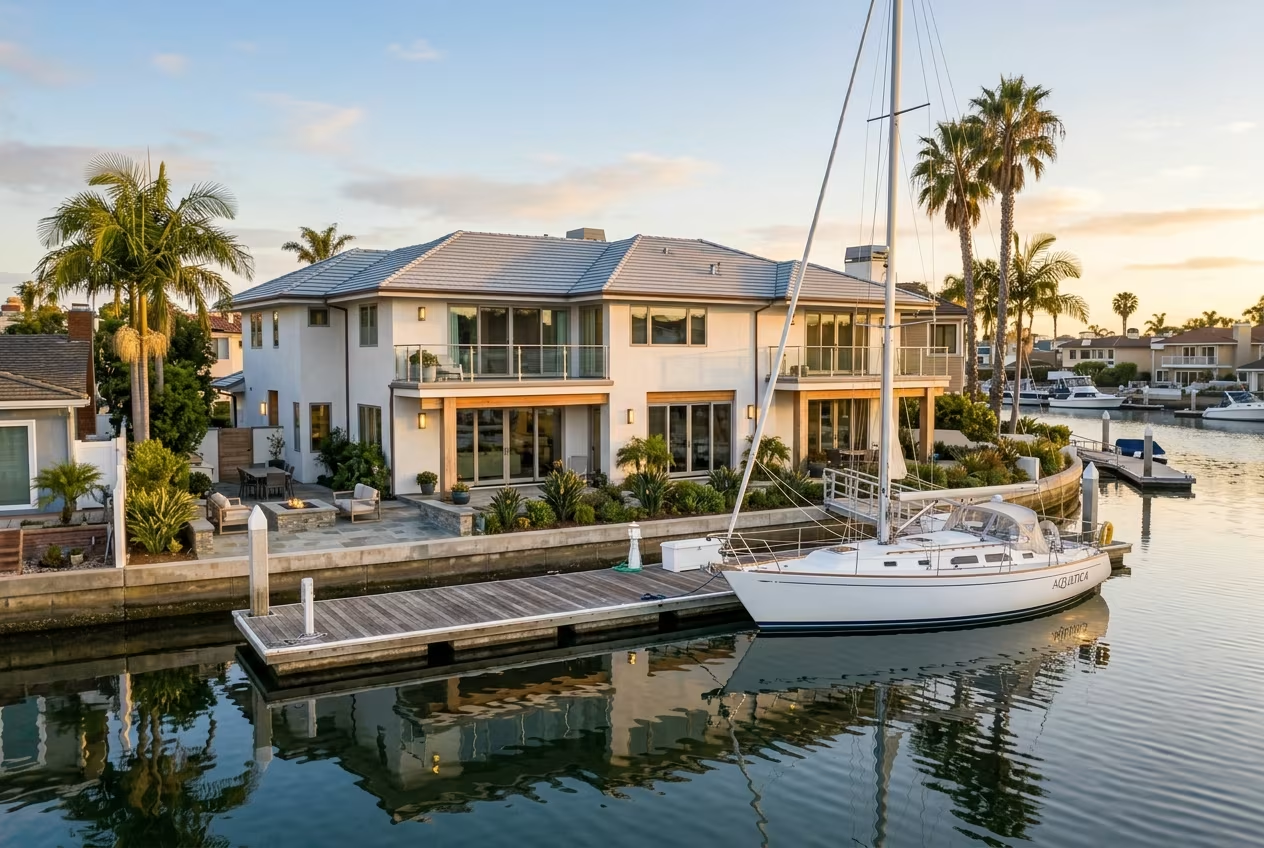
Home on the water
03 / Waterfront homes
Wind off open water
A house on the water can take salt from more than one side, so roofing Huntington Beach waterfront homes means corrosion-resistant metal at every vent, flashing and edge. A deck or garage roof gets checked for ponding, and our flat and low-slope roofing work starts with the drainage fix.
04 / Fix or rebuild
Roof repair Huntington Beach, CA: one spot, one side or the whole roof
We trace every leak on the roof itself, not from the ceiling below, photograph what we find and put the call in writing with its reasons, so you can see why a repair will hold or why it will not. Ask any Huntington Beach roofing contractor for the same. When the answer is a roof replacement, Huntington Beach permits and inspections set the order of the work, and our full roof replacement process walks through it step by step.
01 / Repair
Small, local damage
Trouble in one spot on an otherwise sound roof: a few loose tiles, a ridge cap, one flashing. Then a spot fix is the roof repair Huntington Beach homes need, and repairs under 100 square feet in total need no City permit.
02 / One side
A single failed side
A whole side gives out while the others keep water out. Rebuilding it counts as reroofing, so it needs the permit and the City inspections, with the new work joined to the old at the flashing.
03 / Full re-roof
The whole roof goes
Felt tearing at the laps on every side, plus soft deck in several spots, means the roof comes off to the wood. The deck is repaired and inspected bare, so the new roof goes onto boards the City has seen, as the reroofing rules ask when roofing Huntington Beach houses of any age.
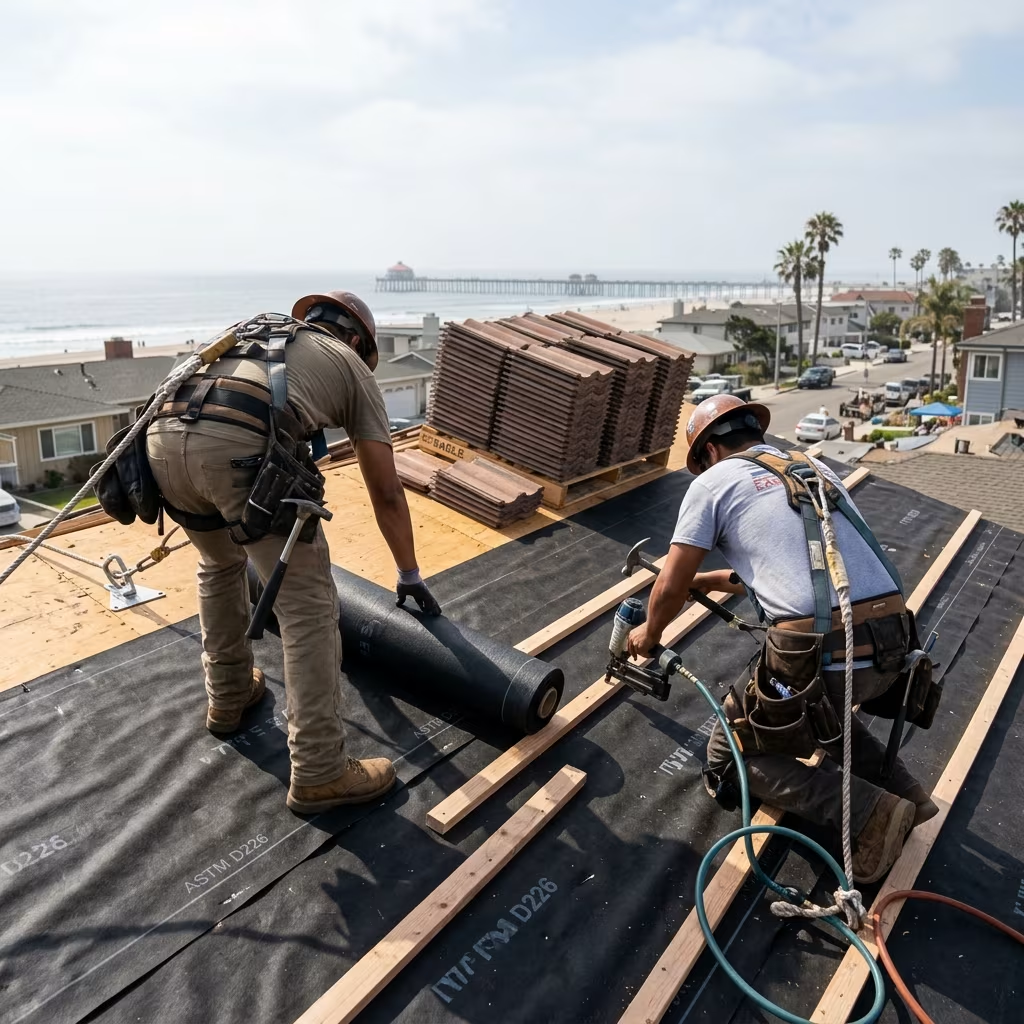
Felt, then battens
05 / Before you sign
Hiring a Huntington Beach roofing contractor: four checks
Hiring a roofing contractor in Huntington Beach comes down to four checks you can run before anyone climbs a ladder, and they apply to everyone roofing Huntington Beach homes, us included. The roofers Huntington Beach owners should trust pass all four without being asked.
01 / License
Check the license
Ask any licensed roofer in Huntington Beach for the state license number before anything is signed. Search it on the Contractors State License Board site and confirm it is active and bonded. Ours is CSLB #1100046.
02 / Insurance
Check the insurance
Any roofing company Huntington Beach homeowners let onto a roof should carry liability insurance and, with a crew on site, workers compensation. Ask to see both certificates before the work starts, not after something goes wrong.
03 / Permit
Check who files
Roofing contractors in Huntington Beach can file the reroofing permit and book the inspections, so ask who will. If a roofer suggests skipping the permit, ask why: the City inspects the roof before the new covering goes on, and that visit protects you.
04 / Paperwork
Check the paperwork
A written scope should name the underlayment, the flashing metal and what happens to your tile. Ask the Huntington Beach roofing contractor you choose to put the workmanship cover in writing as well. Ours runs 20 years, handed over at the final walk.
06 / The City visits
Huntington Beach roof permit: what the City inspects, and when
Only small repairs, under 100 square feet in total, escape the City’s paperwork, so plan on a permit to replace a roof in Huntington Beach. The Huntington Beach reroof requirements sheet lists the visits below. Your Huntington Beach roofing contractor files the permit and books each visit, and on our jobs that is us.
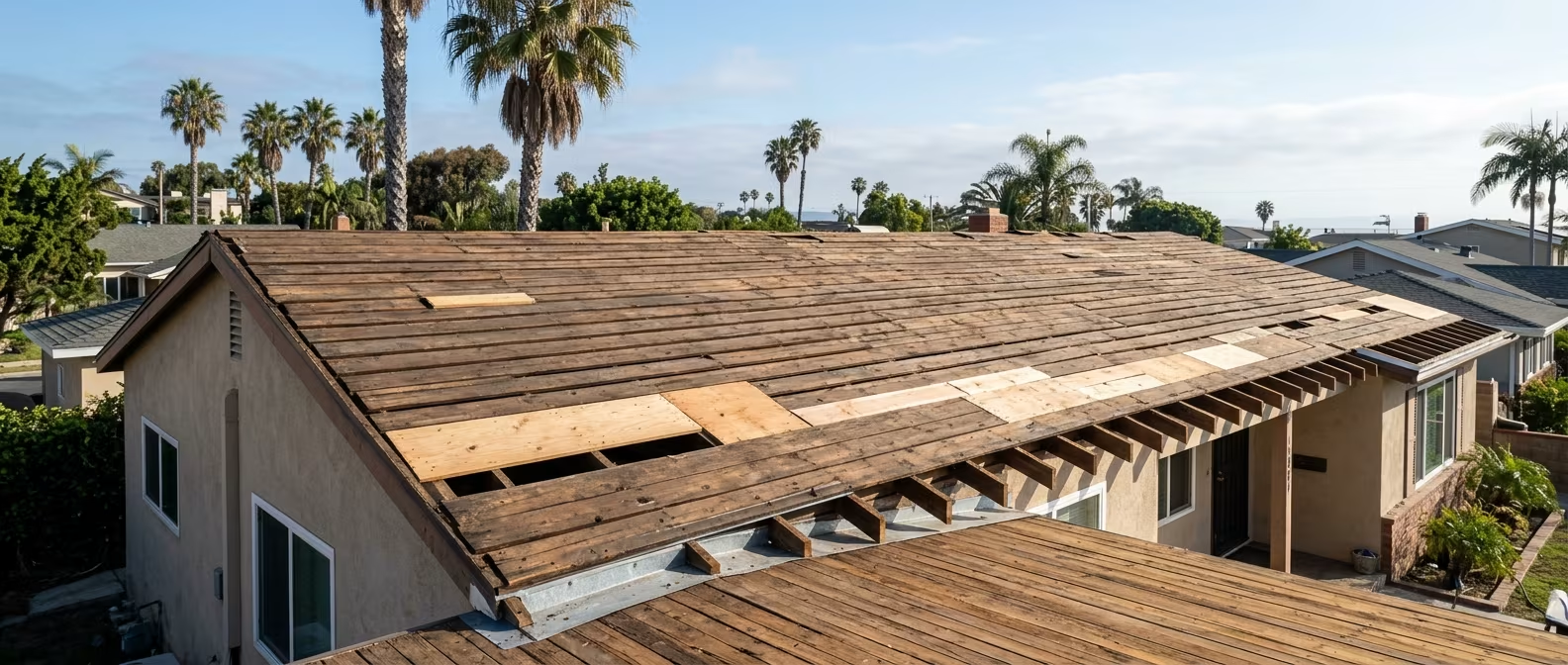
Bare deck for the City
Visit 1
Pre-roof
This visit looks at the surface the new roof will sit on. On a tear-off that means bare sheathing, every rotten board already replaced, with the boards and their nailing in view. Nothing new goes on before this sign-off.
Visit 2
Framing
Possible only when new tile weighs over 6 pounds per square foot. If the City calls for it, the inspector looks at the rafters and framing that will carry the added weight, once the calculations are approved.
Visit 3
Final
The last visit, booked when the roof is done. After it passes we go over the finished roof together and you receive the 20-year workmanship warranty in writing.
Gated streets
In a gated community the gate attendant has to know about the inspection before the inspector arrives, or an access code has to be ready. Tell us which applies to your street and we will handle the gate for each visit.
Yards and dogs
Keep dogs indoors on inspection days, because inspectors stay out of any yard with one in it. If the inspector has to cross a private yard, leave a signed note on the front door giving permission.
07 / ZIP codes
Four ZIP codes, four kinds of roof
Four ZIP codes cover the city’s homes, and roofing Huntington Beach houses changes from one to the next. Census Bureau survey figures for 2020 to 2024 show how differently they were built: in 92646 nearly four homes in five date from 1960 to 1979, while 92648 holds about as many homes from the 1980s and 1990s as from those two decades. Each row pairs the area with what its roofs face and the kind of work its housing points to.
ZIP code
Area
Exposure
Typical work
92646
The southeast tracts
Sea breeze, afternoon sun
Re-roofs on 1960s, 70s homes
92647
North-central streets
Inland sun, lighter salt
Rental and tract re-roofs
92648
Downtown and the shore
Salt spray, morning fog
Flashing, vents, newer roofs
92649
The northwest corner
Salt strongest by the water
Corrosion-resistant metal work
08 / Questions owners ask
Questions on roofing Huntington Beach homes
The answers follow a re-roof in order: the permit and its inspections, the cool roof rule, your tile, salt air, upkeep, checking a roofer and flat roofs.
Does every re-roof need a City permit?
Yes, whether the work covers one side or the whole roof. Any reroofing needs one, and the City exempts only repairs that add up to under 100 square feet. Ask your Huntington Beach roofing contractor who files it. On our jobs roofing Huntington Beach homes, we file it and book every inspection ourselves.
When can roof repair skip the permit?
When it stays small. Repairs that total less than 100 square feet of roof need no City permit, which covers a few broken tiles, a ridge cap or one rusted flashing. For roof repair, Huntington Beach rules draw the line at that size, and anything larger counts as reroofing with the permit and inspections.
What inspections does a re-roof get?
A pre-roof inspection and a final one, plus a framing inspection for heavy tile. On a tear-off the pre-roof visit means bare sheathing so its boards and nailing can be checked, and the final comes when the work is done. The framing visit may be added when new tile weighs over 6 pounds per square foot, because the framing has to carry the extra load, and your Huntington Beach roofing contractor can tell you before the permit is filed whether that applies.
Does a new roof have to be a cool roof?
Only on a low-slope roof, for a house. Huntington Beach lies in Climate Zone 6 of the California Energy Code, where replacing a steep-slope roof on a house carries no cool roof rule. Replacing a low-slope roof does: the 2025 code asks for an aged solar reflectance of at least 0.63 with a thermal emittance of at least 0.75, or a Solar Reflectance Index of 75, or added insulation at the roof deck instead. So a cool roof in Huntington Beach is mainly a flat roof question.
Can my concrete tile be laid back down?
If the tile is sound, yes. The City does not allow new roofing over concrete tile, so it comes off either way, and relaying the same tile adds no weight, which keeps the job clear of the plan check that heavier tile triggers. Broken pieces are replaced, and spare tiles from the original roof help the color match when roofing Huntington Beach tract homes.
What does salt air do to a roof?
It corrodes the metal before the tile or shingle shows much wear. Salt air in Huntington Beach leaves a film that holds moisture on flashing, vent caps, drip edges and nail heads, and rust streaks below them are the first sign. The City asks for corrosion-resistant flashing and fasteners, so any roof repair Huntington Beach owners book for rust should name that metal in writing.
How often should a roof be inspected?
Once a year, plus a look after strong wind or heavy rain. How often a Huntington Beach roof should be inspected also depends on its distance from the water, and near the shore each visit should start at the flashing, vent caps and drip edge. Rust caught there keeps the roof repair Huntington Beach homes need down to one part instead of a whole side.
What should I ask a roofing contractor?
Ask the ones that show how the job will run. The questions to ask a roofing contractor in Huntington Beach go past the license: whether your sound tile goes back on, who books the City inspections, what happens if rotten boards turn up at the tear-off and when the workmanship warranty is handed over. A Huntington Beach roofing contractor who answers each one in the written scope has planned the job.
How do I check if a roofer is licensed?
Search the license number on the Contractors State License Board website. The lookup shows whether the license is active and the bond and workers compensation on file. A Huntington Beach roofing contractor should give you the number without being asked, and ours is CSLB #1100046.
How is a flat roof re-roofed?
Drainage comes first. Whether a flat roof in Huntington Beach covers a garage, a patio or an addition, the City reroofing sheet treats ponding as excessive, as a rule of thumb, when standing water is deeper than 1/4 inch or covers more than 100 square feet. We build up the low spots or add drains, then lay the new low-slope roof to the cool roof rule.
09 / Book a survey
Book a survey with a Huntington Beach roofing contractor
Our work roofing Huntington Beach homes begins with a survey: we walk the roof, photograph every problem and hand you a written scope of what it needs, whether that is a roof repair Huntington Beach rules allow without a permit or a full re-roof with one. Use the form below or call, tell us what the roof is doing, and someone from our family business, California Green Roofing, will offer a time that suits you.
Roofing Huntington Beach visit
Phone
Serving
Huntington Beach, California
License
CSLB #1100046, bonded and insured
Open daily
7:00 AM to 10:00 PM