Licensed roofers // Open 7 days
Emergency Roof Repair Los Angeles:
from first call to a dry roof
Rain through the ceiling, tile blown off a slope, a limb across the ridge: that calls for urgent roof repair, not a visit penciled in for next week. Phone us and an active leak moves to the front of the queue, the opening is covered the same day when the roof is safe to climb, and the lasting repair follows on a dry day of your choosing.
Answering calls 7 days a week
Water coming in? You go first
Licensed: CSLB #1100046
Emergency roof repair guide
Read the roof // Now or later
Roof leak emergency, or a repair that can wait?
Two questions decide it: is water getting in right now, and will the next rain make the opening bigger? A yes to either is a roof leak emergency, and each of the four signs here is a yes. When you see one, call and ask for emergency roof repair: a form waits in an inbox, while a phone rings right away.
Not urgent?
If nothing is wet inside and the forecast is dry, the damage can wait for a booked roof check, and we put what we find in writing.
01 // Ceiling leak
Drips are reaching a living space
A ceiling leak in a storm means water has already crossed the roof deck, the attic and the insulation. If it reaches a light fixture or an outlet, switch that circuit off at the panel, set a bucket under the drip and call. Drywall that stays soaked for days begins to sag and can grow mold.
02 // Wind damage
Bare patches after a gust
From the street you may see bare patches where tile used to be, tabs of shingle standing up, or metal trim hanging loose. Wind damage like this can stay dry for a day or two, and then the next band of rain runs straight onto the wood.
03 // Fallen limb
A fallen limb is resting up top
A falling limb can crack tile, punch through shingles and split the sheathing underneath while the surface still looks whole from the yard. Treat that area as open, keep everyone out of the rooms below and let an emergency roofer check the framing before anyone climbs up.
04 // Ponding
A drain sealed by leaves
One storm can strip enough leaves from nearby trees to seal a roof drain. The water that cannot leave keeps rising toward the flashing at the walls and the seams of the membrane, and the longer it stands, the better its chance of finding a way in.
Tarp first // Repair second
Two trips: emergency roof tarping, then a lasting fix
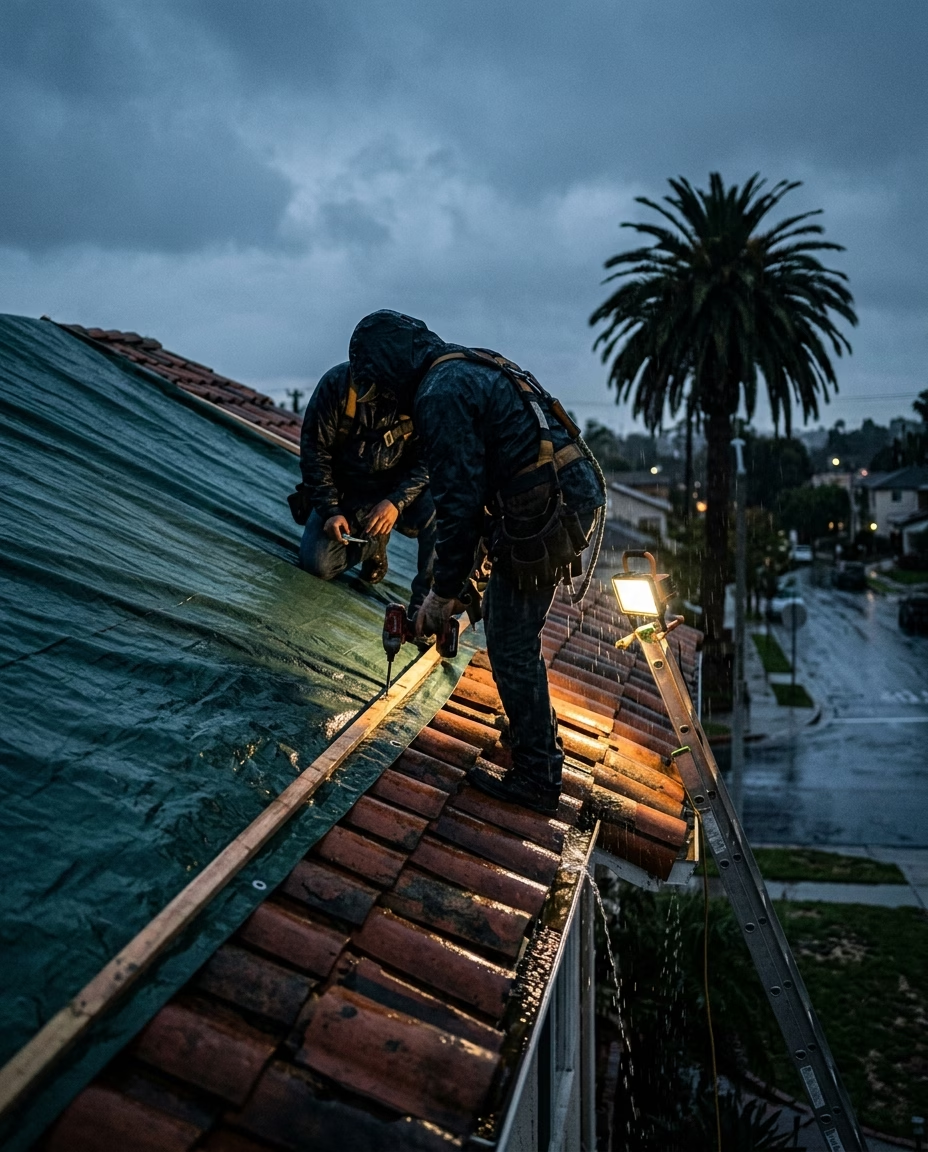
An emergency roof repair often takes two trips. Trip one is emergency roof tarping: Los Angeles rain can return before a deck dries, so the cover has to outlast it. Trip two waits for that dry deck, when the damaged area can be opened, repaired at its cause and tested before we leave.
Trip one // Seal it off
01 // Your call
Tell us where the water shows
Say which room is wet and what covers the roof. On that same call you learn what the first visit includes, so nothing the emergency roofer does that day is a surprise.
02 // Arrival
On the roof once it is safe
Emergency roof repair jumps ahead of routine jobs. A crew reaches you the day you call, during our hours, unless wind or lightning makes the climb unsafe, and then the visit takes the first safe window.
03 // The cover
Heavy sheeting, fastened tight
Heavy tarp goes over the damaged area, battens hold it flat and its edges are fastened down against the wind. This is a temporary roof repair, made to carry the house through the rest of the storm.
04 // The record
Pictures you can check yourself
We photograph each hole, crack and loose piece, then send the images to you, so the reason behind every line of the written scope is plain to see.
Trip two // Lasting work
01 // Dry day
Waiting on a dry deck
While the tarp keeps the weather out, we wait for a dry deck, because opening a wet one seals moisture under new work. The permanent emergency roof repair is then scheduled for a dry day that suits you.
02 // In writing
Every item listed before work
Before work starts, a written scope names each part to repair or replace, the material for it and the reason it is on the list.
03 // The fix
Repaired where the water entered
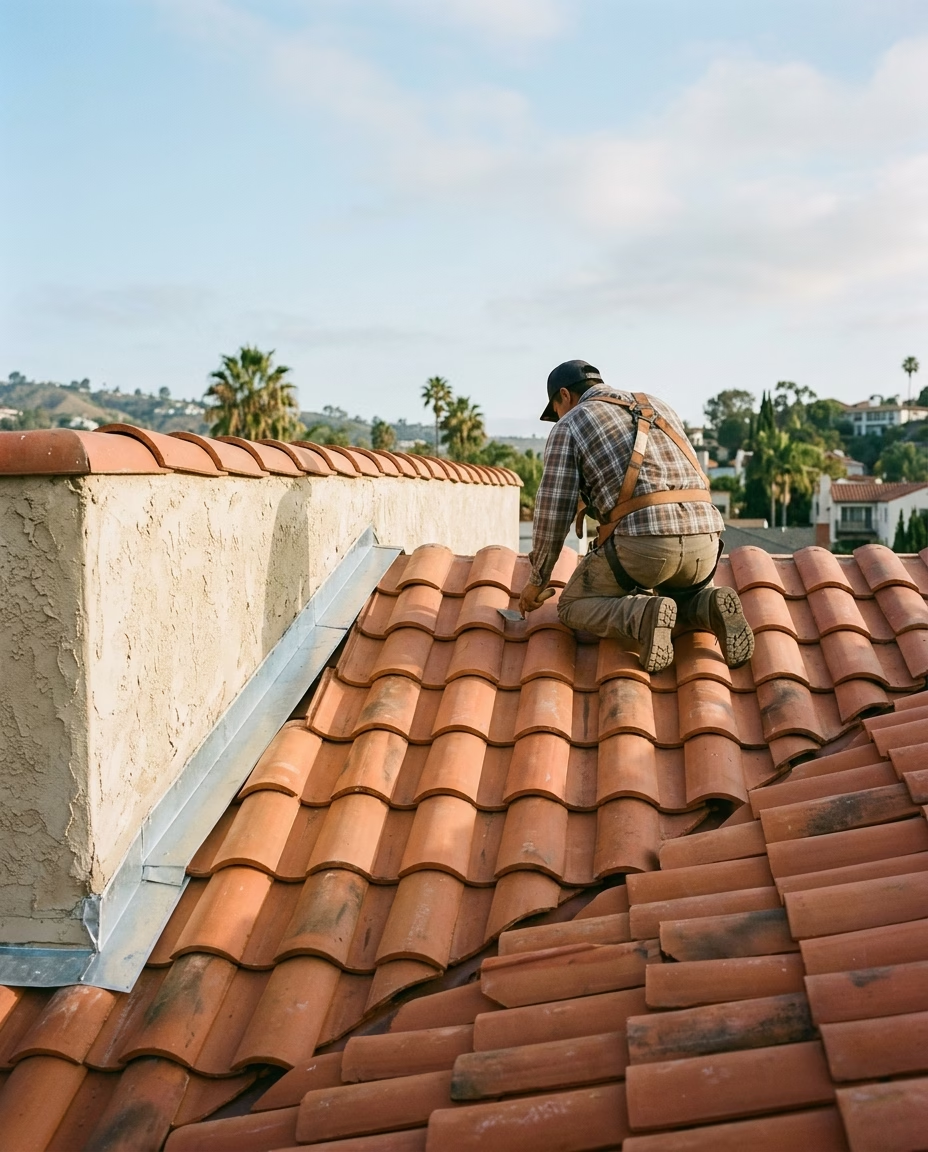
The emergency roofer swaps broken tile for matching pieces and sets them back in their rows, replaces torn shingles and bent flashing, and checks the felt below before the surface goes back down.
04 // Proof
Hose test, then a 20-year warranty
Water runs over the repaired area until it is clear the seal holds, and only then do the ladders come down. Our written 20-year workmanship warranty then covers the work.
Tile, shingle, flat // Storm wear
Storm damage roof repair, one roof type at a time
Storm damage roof repair Los Angeles homes need depends on what covers them. Tile cracks and slides, asphalt shingles crease and tear, and flat roofs flood at their drains, so emergency roof repair on each of them starts in a different place.
Clay and concrete tile
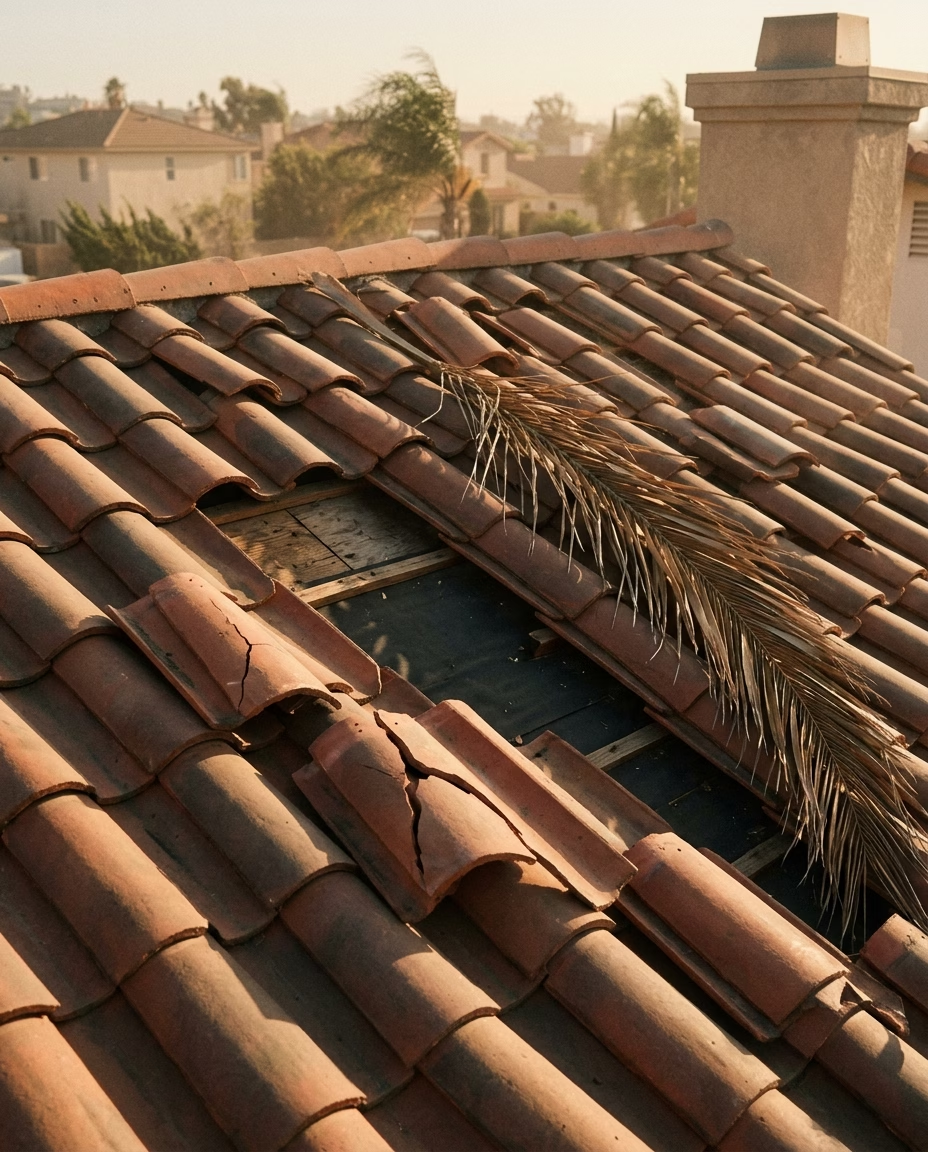
Gaps where tiles used to sit
Clay and concrete tile is heavy and brittle. It can blow off, but more often it slides out of line or cracks where it is fastened, and from the ground the roof can still look intact. The felt under the tile is what keeps water out, so every gap leaves it working alone. Once the gap is covered, our crew resets or replaces the pieces and checks that felt, as in any roof repair in Los Angeles.
Asphalt shingle
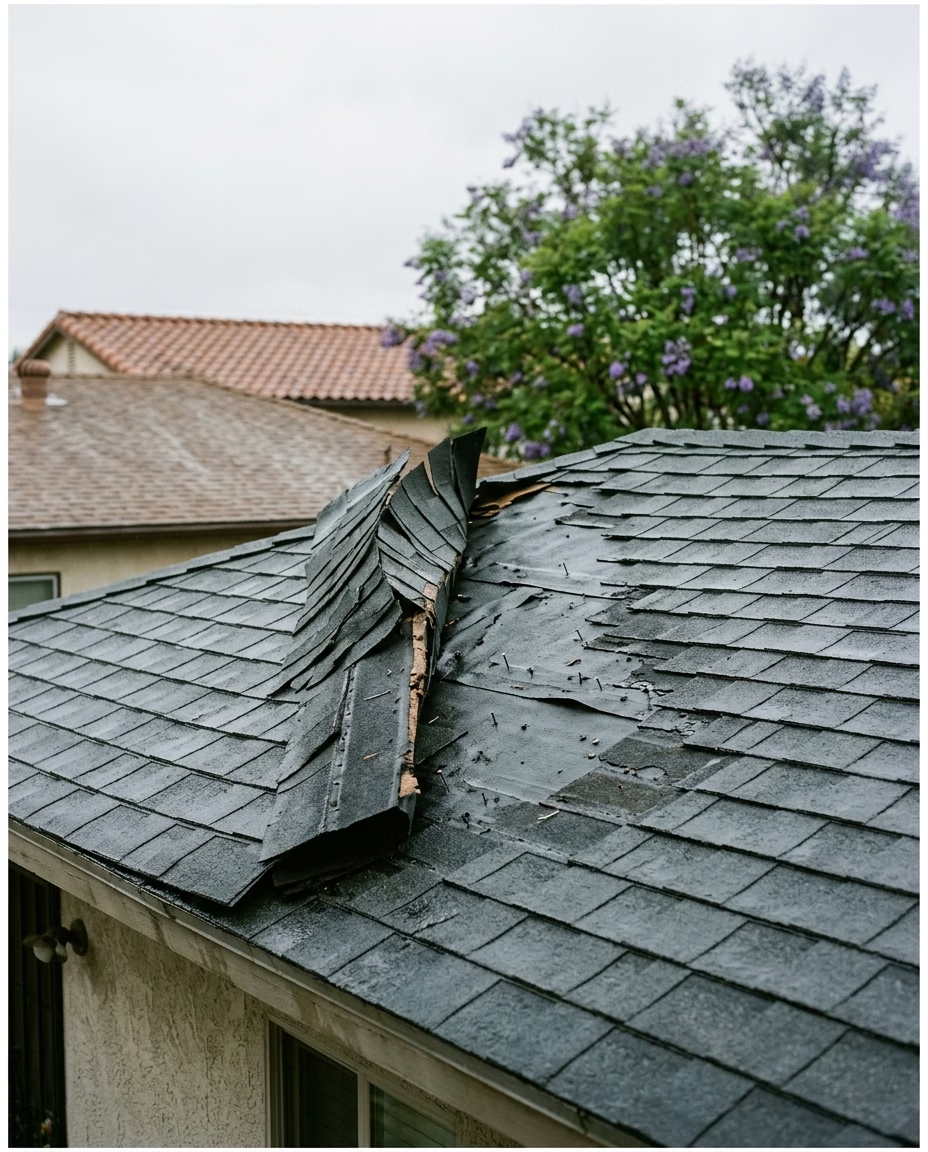
Shingles creased by the wind
Each asphalt shingle is glued to the course below by a strip of sealant. A hard gust can break that bond, and a shingle that folds back far enough is creased for good, even if it settles back flat by morning. That is why an emergency roofer walks the entire slope, not only the obvious bald spot.
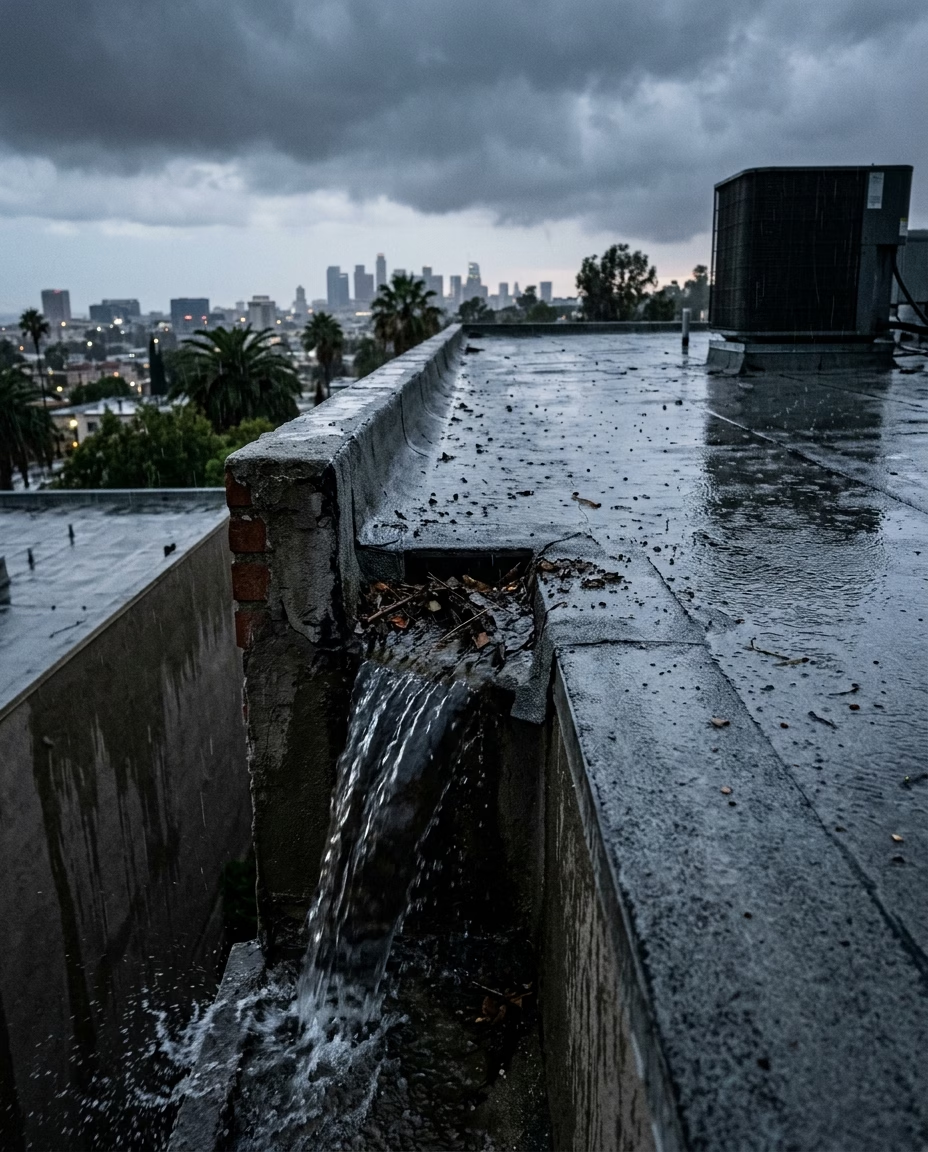
Flat and low slope
Drains, seams, edge metal
On a flat or low-slope roof the weak points are the drains, the seams and the edge metal, and one storm can test all three. Clearing the outlet comes before anything else, and flat roofing repairs wait until the membrane is dry enough to seal.
Rain and wind // Month by month
When Los Angeles storms find the weak spots in a roof
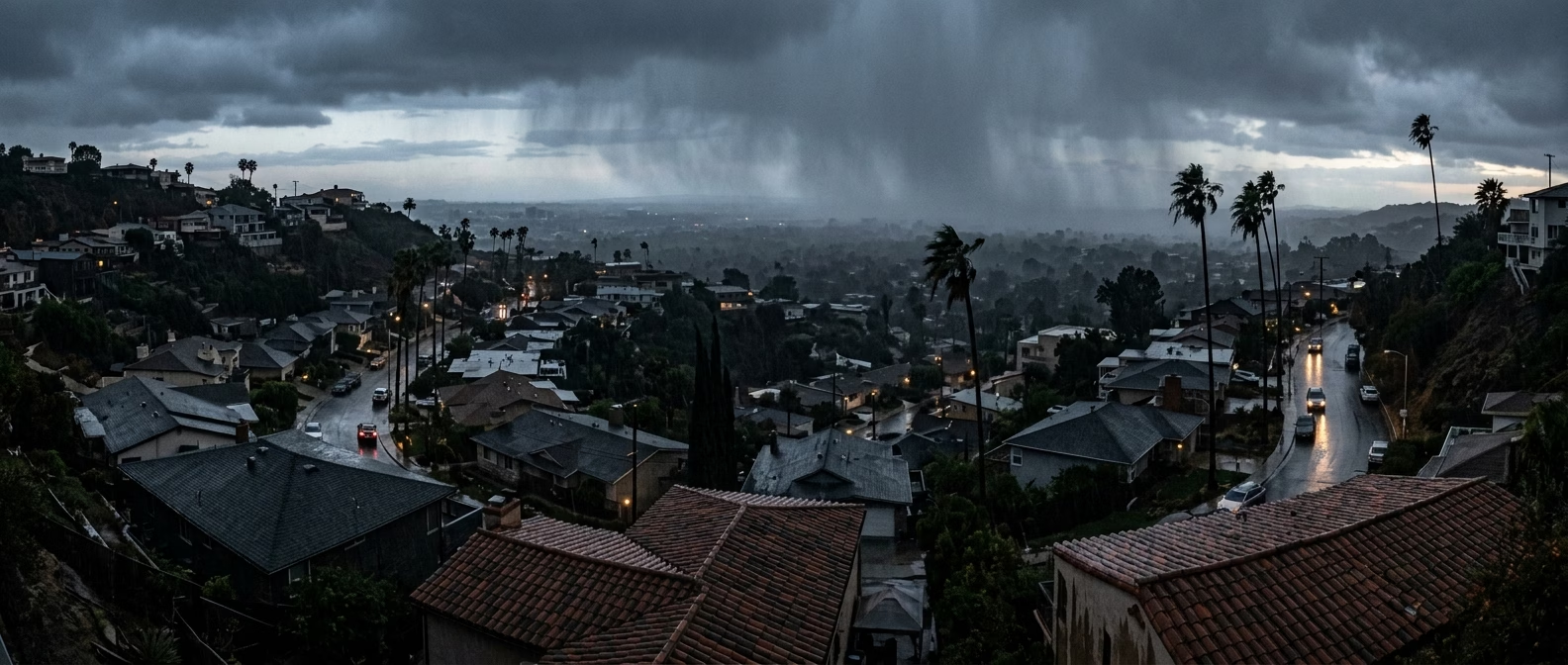
The calendar below shows the pattern: rain arrives in the cooler half of the year and the heaviest storms usually cluster in midwinter. The riskiest storm is often the first one, because it lands on tile, shingle and flashing that have spent the whole summer drying out.
Jan
Feb
Mar
Apr
May
Jun
Jul
Aug
Sep
Oct
Nov
Dec
Rainy months
Heaviest storms
Offshore winds
Wind does its damage quietly. Hot, dry gusts blowing in from the desert are most common in the cooler months and can loosen a roof weeks before any rain arrives, and that loose tile or bent flashing usually goes unnoticed until water finds it. Book a full roof inspection for the dry months, and those faults get fixed as small repairs, long before a storm turns one into an emergency roof repair at the worst possible moment.
Waiting for us // Stay safe
What to do if your roof leaks during a storm
Start indoors: catch the water, move what you can and follow the indoor steps on our roof leak repair page. Outside, these four rules keep everyone safe until help arrives.
Roof
Leave the climbing to us
Please do not go up to look: a wet roof gives no warning before a foot slips. What helps most is a clear path to the damaged side of the house, so the emergency roofer can start the moment the truck parks.
Edges
Stay out from under the damage
Treat the ground below a damaged eave as a drop zone: pieces of tile, a loose gutter or a split limb can let go hours after the wind dies down. Move cars and keep children and pets on the other side of the house.
Power
Treat fallen lines as live
Wires can carry current even when the lights in the house are out. If a branch is lying across one, stay well away, call the utility and mention it when you call us, so the crew knows to wait.
Yard
Give the water a way out
Rain pouring out of a downspout should run away from the house, not pool against it. A rake can clear leaves from an outlet at ground level, while gutters and anything above head height can wait until the rain stops.
Dry again // Next decision
Once the leak stops: is one emergency roof repair enough?
Look at the trip-one photographs. Damage confined to one area of otherwise sound material calls for a standard roof repair, and that is what we will recommend. Brittle material and tired underlayment on most slopes mean the next storm will just find the next weak spot, and then a full roof replacement is the lasting answer.
Credentials
License #1100046
Bonded and insured. Look the number up yourself on the Contractors State License Board website before the crew arrives.
Crew
Own crews only
Both trips are made by our own crews. No subcontractors, from the tarp to the water test.
Service area
Across Los Angeles
Our emergency roofing services cover tile, shingle and flat roofs in Los Angeles and the surrounding areas.
Hours
Open seven days
A leak found at 9 in the evening still reaches a person: the phones stay on until 10 PM, every day of the week.
Shared roofs // Who calls
Rented, shared or HOA roof: who calls the emergency roofer?
When the roof is not yours alone, the quickest repair starts with the person who can approve the work. This is who usually makes the call, and what we need from each of them to put a crew on the roof.
Owners
You own the house
Call us directly. You approve the cover on the spot, see the photographs before the written scope and decide on the rest of the emergency roof repair after reading it.
Landlords
You own a rental
Ask tenants to report a leak the minute it starts, then call the emergency roofer yourself or tell us who will meet the crew. The photographs come to you, so you can see the damage without driving over.
Renters
You rent your home
Tell your landlord or property manager first, because the owner approves roof work. Then protect your things: move them away from the drip and photograph any damage for your own records.
Associations
Your HOA owns the roof
In many condo and townhome communities the roof belongs to the association, so the manager or the board places the call. We work through them and send photographs the board can review.
Storm season // Hire with care
How to hire an emergency roofer after a storm
After a large storm, storm damage roofers knock on doors and leave flyers in every mailbox. Many are capable, some hold no license at all, and the Contractors State License Board is blunt about the risk: contracting without a license in a declared disaster area is a felony. Whichever emergency roofer Los Angeles homeowners choose, these four checks take a few minutes.
License
Look the number up first
Ask for the license number and check it on the Contractors State License Board website before anyone climbs your roof. A licensed emergency roofing contractor will give it to you on the spot.
Contract
Get the scope in writing
The board advises a written contract, checked references and more than one written proposal. A tarp can go on today, while the permanent emergency roof repair waits until you have compared them.
Pressure
Take time to decide
Once the roof is covered, an emergency roofer has no reason to press for a same-day signature. The board warns against rushing and against hiring the first contractor who happens to knock.
Payment
Pay as the work gets done
The board also advises paying as the work moves forward, never ahead of it, and never in cash. Stage payments tied to finished work protect you if anything goes wrong.
Questions // Plain answers
Emergency roof repair questions, answered plainly
What people ask us most often when water is already coming in, with the short answer first.
What counts as a roof leak emergency?
Any damage that lets water in now, or will at the next rain. That covers a ceiling leak during a storm, a roof opened by wind, a limb on the roof and water rising on a flat roof. A faded stain that stays dry can wait for a regular visit instead of emergency roof repair.
Can you fix a roof leak in the rain?
Partly. In steady rain the emergency roofer covers the damage with a battened tarp to stop the water, but a permanent repair needs a dry deck or it traps moisture under new material. The cover goes on during the storm and the real fix follows on a dry day.
How long can a tarp stay on a roof?
A well-fastened, battened tarp can hold for several weeks, which is enough to get through a storm and the dry spell after it. It is still a cover, not a repair. Sun and wind wear it down, so book the permanent emergency roof repair as soon as the deck dries.
Tree fell on roof: what comes first?
Safety. Get everyone out of the rooms under the impact, stay clear of any wires and call the utility if a line is down. Then call us. We check the deck and framing, photograph the damage and cover what can be covered, and the roof repair follows once a tree crew lifts the trunk off.
How fast can an emergency roofer come?
The same day, during our hours, when the roof is safe to climb. An active leak moves ahead of scheduled work, so the timing depends on where the crews are that day. On the phone you get an honest arrival window, not a promise nobody could keep.
Is a temporary roof repair enough?
For the storm, yes. For the years ahead, no. A tarp or a sealed patch stops the water for now, but the broken tile, torn shingle or split seam beneath it is still there. The permanent repair fixes that cause and is water tested before the crew leaves.
What if my roof fails after 10 PM?
Our phones are answered from 7 AM to 10 PM, every day. Overnight, move valuables away from the water, catch the drip, switch off any wet circuit and stay off the roof. Call at 7 AM and the active leak is first in line for emergency roof repair that morning.
I rent my home. Who calls the roofer?
Your landlord or property manager, since the owner approves the work. Give them the room, the time the drip started and a photo, so they can describe the leak when they call.
Which roofs get emergency roof repair?
Tile, asphalt shingle and flat roofs. The first visit stops the water on any of them, and the permanent repair uses material suited to that roof.
How do I check a roofing license?
Use the license lookup on the Contractors State License Board website: enter the number and read the record that comes up. Ours is CSLB #1100046, and any emergency roofer you consider should give you theirs.
Phone or form // Your choice
Emergency roof repair Los Angeles: one call, or the form
When water is already inside or the roof is open, a call to 747-298-6407 is the quickest way into our emergency roof repair services, any day from 7 in the morning until 10 at night. Damage that is still dry inside can go through the form: tell us what you see and we will arrange a visit and a written scope. Behind both is one emergency roofing company: Los Angeles homes get our own crews and a license number anyone can check.
Damage report // Online
Call
Service area
Los Angeles and surrounding areas
License
CSLB #1100046, bonded and insured
Hours
7 AM until 10 PM