Seasonal roof care // LA
Roof Maintenance Los Angeles:
small faults caught early
Most roofs here wear out quietly, one small gap at a time: a split pipe boot, a tile knocked out of line, a valley packed with leaves. A roof tune-up each fall finds those faults while the roof is still dry. We work through six zones, clear the gutters, drains and scuppers, photograph every finding and send a report written in plain English.
Photos of every finding
Tile, shingle, flat, metal
Licensed, CSLB #1100046
Roof maintenance Los Angeles guide
Upkeep, not repair
Roof maintenance and repair are two different jobs
Repair fixes damage that is already there. Preventive roof maintenance keeps the damage from starting: the roof is cleared, checked and photographed on a schedule, so a fault is found while it is still small. Three faults we meet often show the difference, from the first sign to the week it would reach a ceiling.
First sign
A cracked pipe boot
Every summer bakes the rubber boot that seals a plumbing vent, and in time it splits where it hugs the pipe.
Months later
Rain follows the pipe down through the gap, soaks the deck and shows up as a stain, often a room away from the vent.
On the visit
Each pipe boot and vent collar is checked by hand, and a cracked seal goes into the report with its own photo.
First sign
A clogged roof valley
Wind drops eucalyptus leaves, palm fiber and grit where two slopes meet, and the pile grows with every gust.
Months later
The dam holds water on the roof and pushes it sideways, past the valley metal and into the underlayment below.
On the visit
On the visit, every valley is raked clean by hand and the gutters below it are emptied, giving rain a clear run off the roof.
First sign
A tile knocked loose
One windy night is enough to rock a clay tile off its batten or put a crack across its face.
Months later
Sunlight now reaches the underlayment beneath, which is not made to sit in direct sun, so the next heavy rain finds a weak spot.
On the visit
Our crew covers every slope on foot and notes each tile that has moved or broken, with a photo and the repair it calls for.
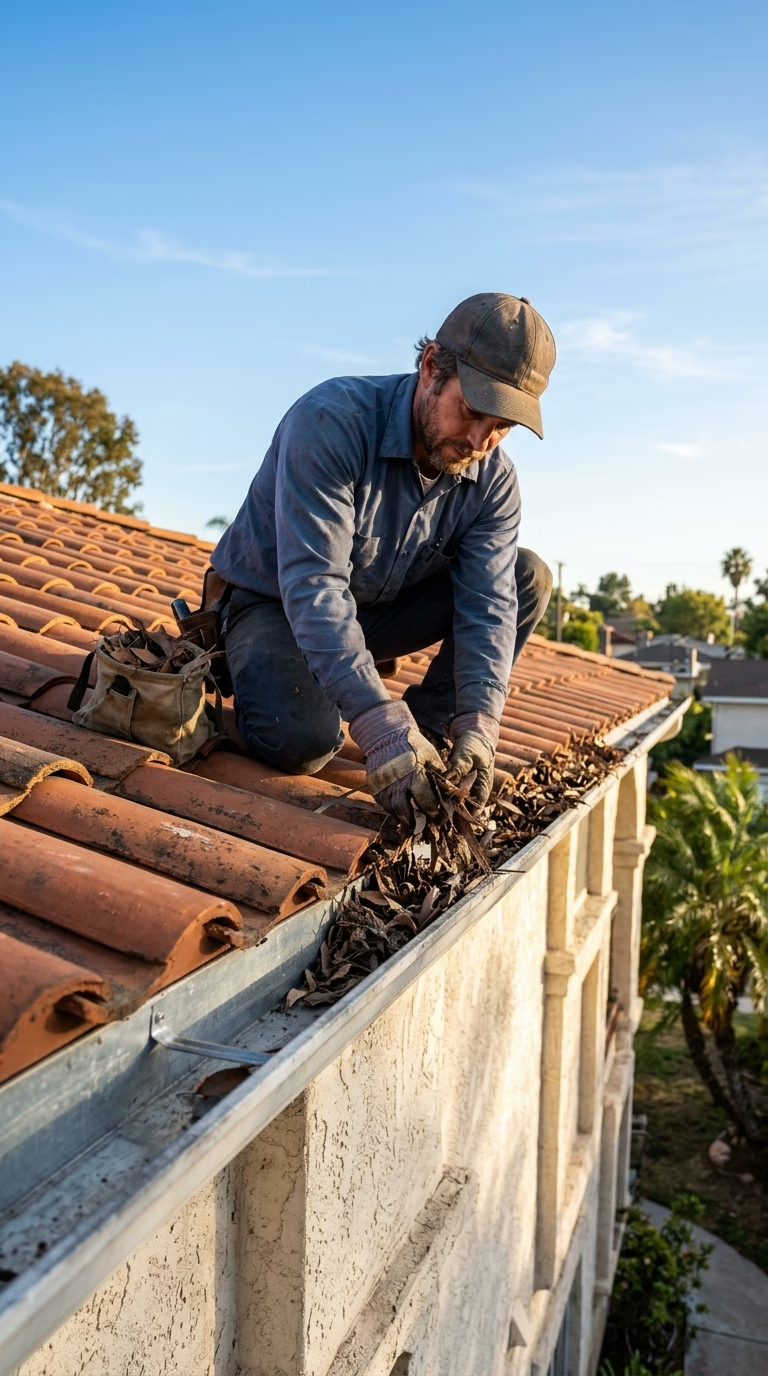
Six zones, one route
The roof tune-up checklist, zone by zone
A roof maintenance checklist only works when it runs the same way on every roof. A roof tune-up with us covers six zones in the order water crosses the roof, and each zone is cleared where needed and photographed before the crew moves on.
Zone 1 of 6
Peaks and hip lines
Ridges and hips catch every gust first, so each cap is checked for a tight fit and for mortar that has started to split.
Zone 2 of 6
Open roof slopes
Wear spreads across the wide middle of each slope, in tiles that have drifted or broken and in shingles with curled edges, bald patches or nails working up.
Zone 3 of 6
Valley channels
Two slopes pour their water into one channel here. We clear it by hand and look along its metal liner for corrosion or a seam pulling apart.
Zone 4 of 6
Openings in the roof
Plumbing vents, exhaust fans and solar brackets all pierce the roof. Each opening gets its seal checked, and nests or leaves under the panels are noted.
Zone 5 of 6
Joints at the walls
Any spot where the roof butts against a wall, a chimney or a skylight is a seam water will find. We look for cracked caulk and bent metal at each one.
Zone 6 of 6
The drainage path
This is the exit for every drop on the roof. We scoop the gutters out, make sure each downspout runs clear, open every outlet on a flat section and trace the water to the ground.
Best time to book
A roof calendar built around the rainy season
Roof maintenance in Los Angeles works best when it is booked by the calendar, not after a leak. Here the stress comes in three forms: summer heat that lasts for months, gusty dry winds from fall into winter, and a few months of rain that hit every seam at once. That pattern sets the roof maintenance Los Angeles homes need: one full visit in early fall and a short check after strong wind.
Twelve months // Los Angeles
Prime tune-up window
Quick check after wind
First heavy rain
September // October
Book the roof tune-up early
Early fall is the window: the summer dust is still on the roof and the storms have not started. Every zone gets its full pass, and the water paths are opened before they are needed.
After strong winds
Look again after wind
Dry offshore winds in fall and winter can pull up a ridge cap or peel back flashing in a few hours. One short stop after a windy night finds that damage before the rain does.
During the first storm
See where the water goes
A real downpour shows what dry weather hides. Walk the house once while it rains, look up at the ceilings and out at the downspouts, and write down anything that looks wrong so we check those spots first.
March // April
A second spring visit
Older roofs and roofs shaded by big trees need more attention. From its fifteenth year on, or with heavy branches above it, a roof earns a spring visit too, to clear winter debris and catch anything the rain opened.
Material by material
Roof maintenance services for each type of roof
Tile, shingle, flat and metal roofs age in different ways under the same sun, so our roof maintenance services add checks for each material on top of the six zones. Anything that goes past upkeep becomes its own job, and our roofing services in Los Angeles cover everything from a repair to a new roof.

Barrel and flat tile
Tile, clay or concrete
A tile roof can last for decades, yet the underlayment beneath it usually gives out long before the tiles do. On a roof tune-up, each slope is checked for pieces that have moved or split, for gaps in the ridge mortar, and for leaves trapped above the tiles where they dam water and send it under the tiles.
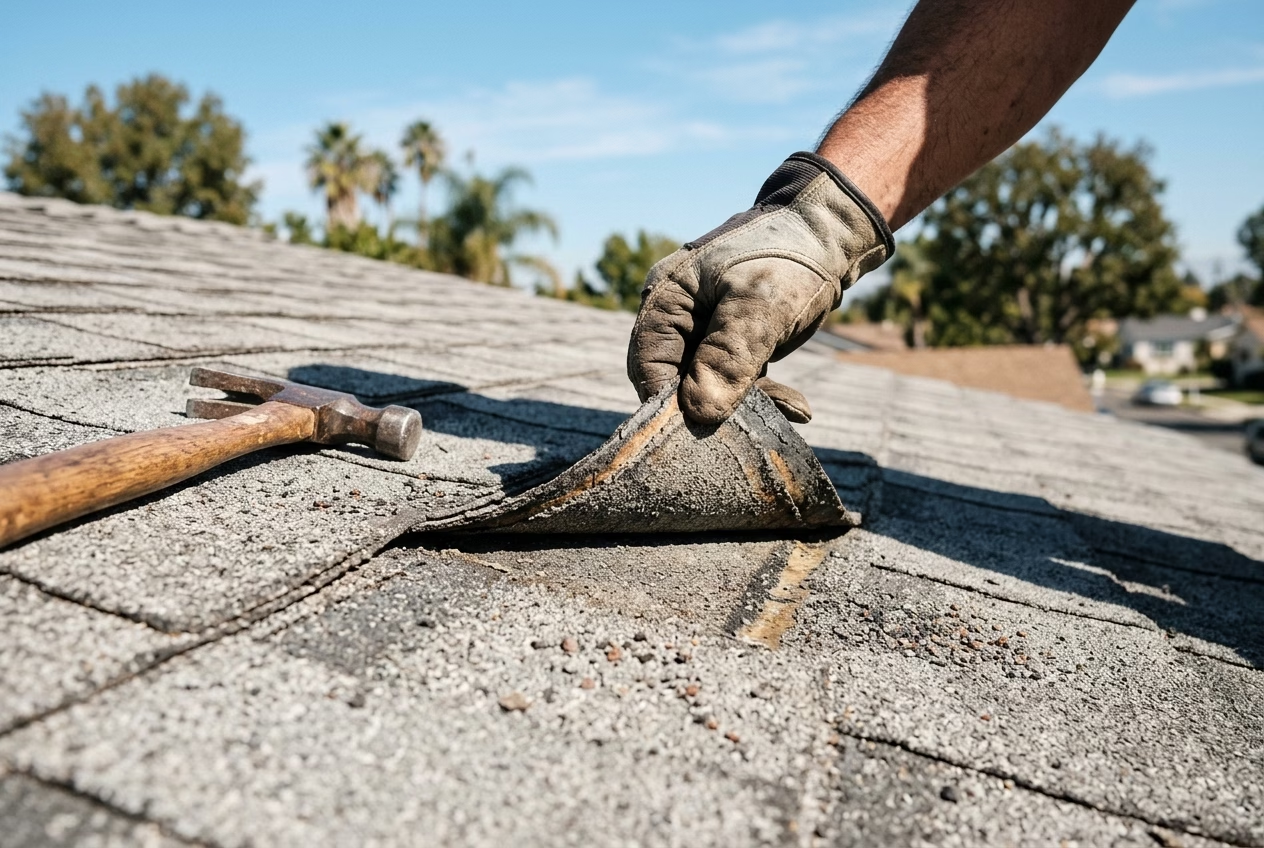
Three-tab and laminate
Asphalt shingles
Shingles dry out and stiffen after years in the sun, and a stiff tab snaps instead of bending in the wind. We check for curled corners, patches of lost granules and nails rising under the surface.
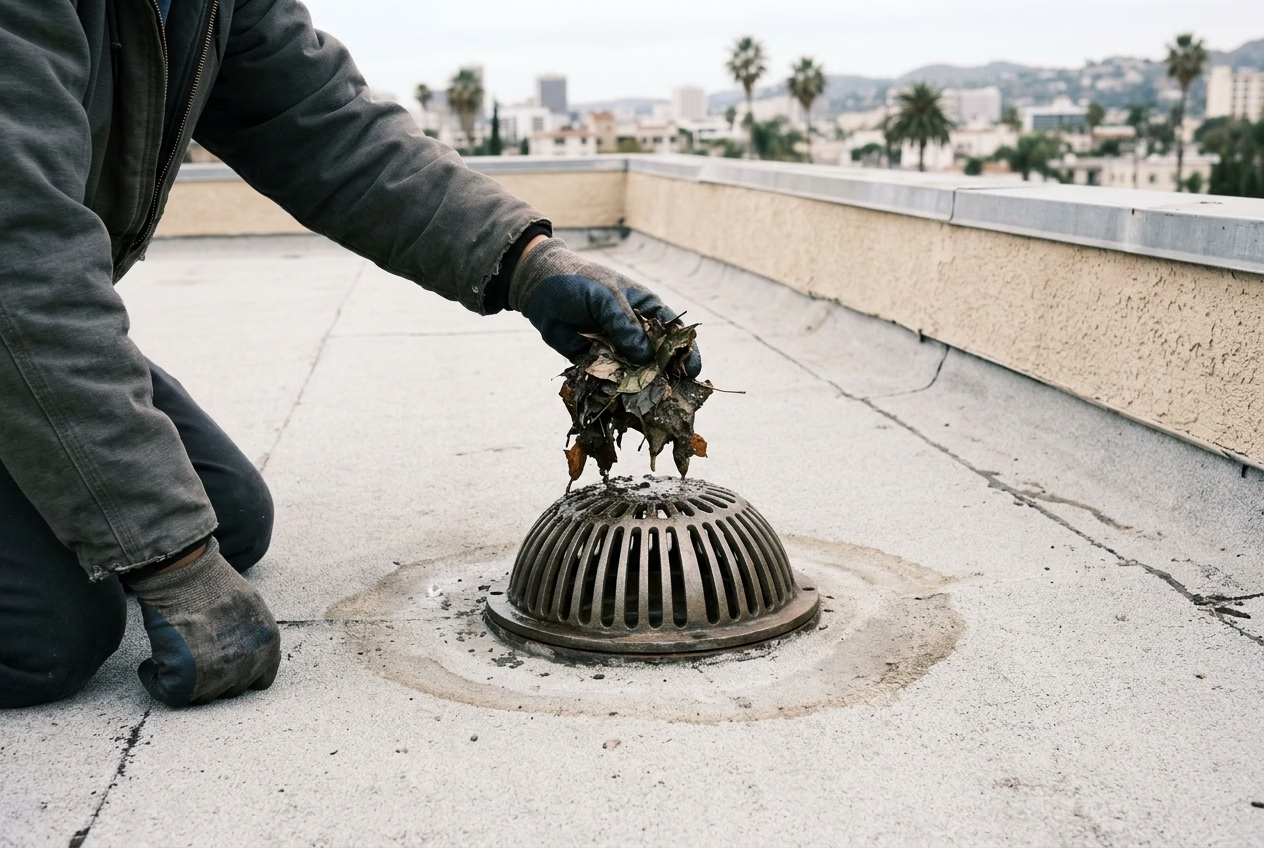
Low slope and flat
Low-slope roofs
On a flat roof, trouble starts where water sits. Puddles that last two days after rain point to a sag or a clogged outlet, so we clear every drain, walk the seams and flag a roof coating gone thin.

Rooftop solar arrays
Panels and mounts
A solar array is bolted through the roof at every mount, and its panels shade a gap where nests and leaves pile up. We look over the flashing at each mount in reach and note what has collected.
On the day
Los Angeles roof maintenance, start to finish
Every roof gets the same five steps from us, and you see what we see. Repairs are a separate job for our roof repair crew, working from your photos. If water is getting in right now, call for emergency roof repair instead. Plenty of names come up for roof maintenance near me, and a good roof maintenance company leaves you with facts, never pressure.
Example report page
Zone 3 // Roof valleys
Debris out, metal intact.
Good for now
Zone 4 // Vent boot
Boot collar starting to split.
Watch this
Zone 6 // Scupper outlet
Outlet seam open at the drain.
Fix soon
First
You tell us what you have seen
Tell us about anything odd before the visit, such as a water mark on a ceiling, a drip near a window in the last storm or a flapping sound in the wind. The crew checks those spots first.
Second
Six zones, always in order
Every roof tune-up follows one route, ridge first and drainage last, so nothing gets missed and this visit can be compared with the last.
Third
Debris cleared as we go
Anything that blocks water is removed during the visit, from leaf piles in the valleys to the grit that settles in a flat roof drain, so rain leaves the roof the way it was built to.
Fourth
Each finding photographed in place
Photos are taken at each finding, not from a distance afterward. The framing shows the damage itself and enough of its surroundings that you can tell which part of the roof it is on.
Last
Photos and notes you keep
When the roof tune-up is finished, the photos come to you, each marked good for now, watch this or fix soon. Each one lists the work we would recommend, and nothing is booked until you say so. Need a single written assessment instead of ongoing care? That is what our roof inspection service covers.
Standing schedules
Several buildings, one roof maintenance plan
Keeping one house on schedule takes no effort. Twelve buildings on one calendar take a system. Our roof maintenance services for landlords, managers and HOA boards give every building a fixed visit date and its own photo report, the kind of roofing maintenance Los Angeles owners can plan around instead of chasing.
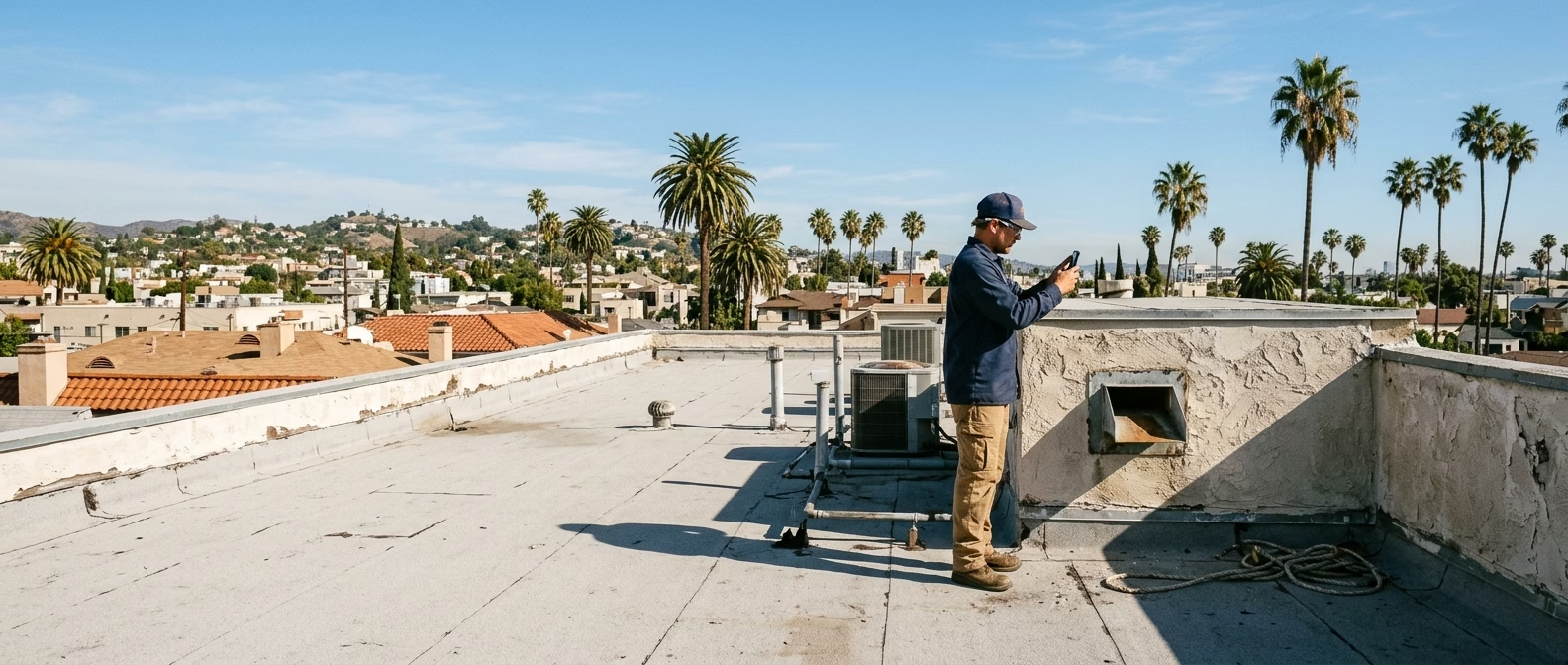
Single homes
Annual roof maintenance
Residential roof maintenance for one house needs a single roof tune-up every fall, plus a spring visit once the roof turns fifteen or when big trees hang over it.
Rentals and managers
All buildings, one plan
Tenants rarely look up. A plan puts every rental roof on the calendar and sends the owner a separate set of photos after each visit, so problems surface before anyone complains.
HOA boards
Every roof in the HOA
Each roof in the community gets its own grades and photos, which lets the board compare buildings side by side and decide which work comes first.
Shops and offices
Stores and warehouses
Larger flat roofs on business buildings follow a commercial schedule, set out on our commercial roofing services page.
Your part
Roof tune-up visits: what you can check in between
For everyday roof maintenance, Los Angeles homeowners can do more than they think. Most warning signs show up from the ground or from inside the house, and none of them needs a ladder. These six checks take a few minutes after a storm or a windy night. Anything you notice goes into the next roof tune-up, or straight to our phone if water is coming in.
From the yard
Lines and edges
Stand back and look along the ridge and the eaves. A sag, a gap in a row of tiles or a lifted edge is easy to spot from across the street.
In the rain
Gutters at work
During a steady rain, watch the gutters. Water spilling over the front edge, or a downspout that stays dry, usually means a clog the next roof tune-up should clear.
Indoors
Ceilings and walls
Look at ceilings near outside walls, around vents and in closets on the top floor. A new stain or bubbling paint points to a leak that is already active.
In the attic
Daylight and damp
If the attic is safe to enter, look for daylight through the roof boards, damp insulation or dark marks on the wood after rain, and note where you saw them.
Around the house
Branches and debris
Limbs that touch the roof scrape it in the wind and drop leaves into the valleys. Keep an eye on branches hanging low over the roof, most of all over the gutters.
Stay off the roof
Leave it to a roofer
Tile cracks under a step in the wrong place, and dusty or wet slopes are easy to slip on. A climb can cause the very damage you want to prevent, so keep your checks to the ground and the attic.
Honest limits
When roof maintenance services stop being enough
Maintenance slows the wear, but it cannot reverse age. A point comes where each roof tune-up only delays a bigger decision, and a straight answer about that point is part of the job.
Keep this roof
A roof in mid-life
The surface is sound, faults are few and local, and each report reads mostly good for now. Regular roof maintenance services keep it there and stretch its working life.
Plan a new roof
Wear across every slope
When the same fault turns up on every slope, such as brittle shingles everywhere or tiles cracking row after row, the material itself has worn out.
Keep this roof
One leak, one cause
A single leak traced to a pipe boot, a valley or one flashing joint is a repair job, and our roof leak repair team fixes that cause and leaves the rest of the roof alone.
Plan a new roof
Leaks in many rooms
New leaks each season, in different rooms, usually mean the underlayment has failed across the whole roof. Patching one spot at a time just moves the water to the next weak one.
Keep this roof
Sound tile, tired layers
When the tiles are still sound and only the layer beneath them is spent, the same tiles can go back down over new underlayment instead of a whole new roof.
Plan a new roof
Past its working life
A roof near the end of its expected life, with soft spots underfoot or a sagging deck, is a replacement question, and our roof replacement page lays out what that job involves.
Owner questions
Roof maintenance Los Angeles: straight answers before you book
Ten common questions about roof maintenance, each with a direct answer up front.
What does roof maintenance include?
Our roof maintenance services cover six zones on every visit: the ridge and hips, the open slopes, the roof valleys, every pipe and vent, the flashing at walls, and the gutters, drains and scuppers. Blockages are cleared and each finding is photographed for your report.
How often should a roof get maintenance?
For most roofs, a single fall visit is enough. Age and shade decide how often to do roof maintenance beyond that. Once a roof turns fifteen, or when large trees shade it, add a spring visit.
Is a roof tune-up the same as a repair?
No. A roof tune-up is upkeep, and nothing is torn out. A repair replaces or seals what is already damaged, planned from the report once you have seen the photos.
When should I book a roof tune-up?
Book it for September or October, before the first storm and while the roof is still dry. A short extra visit after a strong dry wind is worth booking too, since wind can lift tile and flashing in a single night.
Does roof maintenance extend roof life?
It does, within limits. Clearing the water paths and catching small faults early keeps them from spreading into the underlayment below. It cannot make a worn-out roof new again, and the report says plainly when a roof is reaching that point.
Does maintenance fix an existing leak?
Not by itself. A visit traces the likely cause and records it with photos. An active leak is a repair job for our roof leak repair crew, and water coming in during a storm should be called in right away as an emergency.
What report do I get after a visit?
Every finding gets its own photo, a plain-language note and one of three grades: good for now, watch this or fix soon. You keep the report, and it doubles as a dated record of how the roof was cared for.
Should I maintain my own roof?
From the ground and in the attic, yes. Watch the gutters in the rain, look for ceiling stains and keep branches off the roof. Walking on the roof is best left to a roofer, who knows where tile can take a step and where it cracks.
Do you offer a roof maintenance plan?
Yes. A plan bundles our roof maintenance services for single homes and for owners with several buildings, rentals or an HOA. Each roof gets a set visit date and its own photo report after every visit.
How do I vet roof maintenance near me?
Check two things in any list of roof maintenance services near me: a state license number and a written report with photos. Ours is CSLB #1100046, we cover any address in Los Angeles, and our phone, 747-298-6407, is answered every day from 7 AM to 10 PM.
Next step
Set a date for your roof tune-up
Phone 747-298-6407 any day between 7 AM and 10 PM, or use the form to tell us where the property is and what the roof is made of. If you searched for “roof tune up near me,” any Los Angeles address is in our service area. Once a date is set, the crew works through all six zones and your photos follow when the visit ends.
Roof maintenance // Los Angeles
Call
Service area
Los Angeles and surrounding areas
License
CSLB #1100046, bonded and insured
Hours
7 AM until 10 PM